February 21, 2026
Are Skittles Halal? The Truth About Red 40 & Shellac (E904)
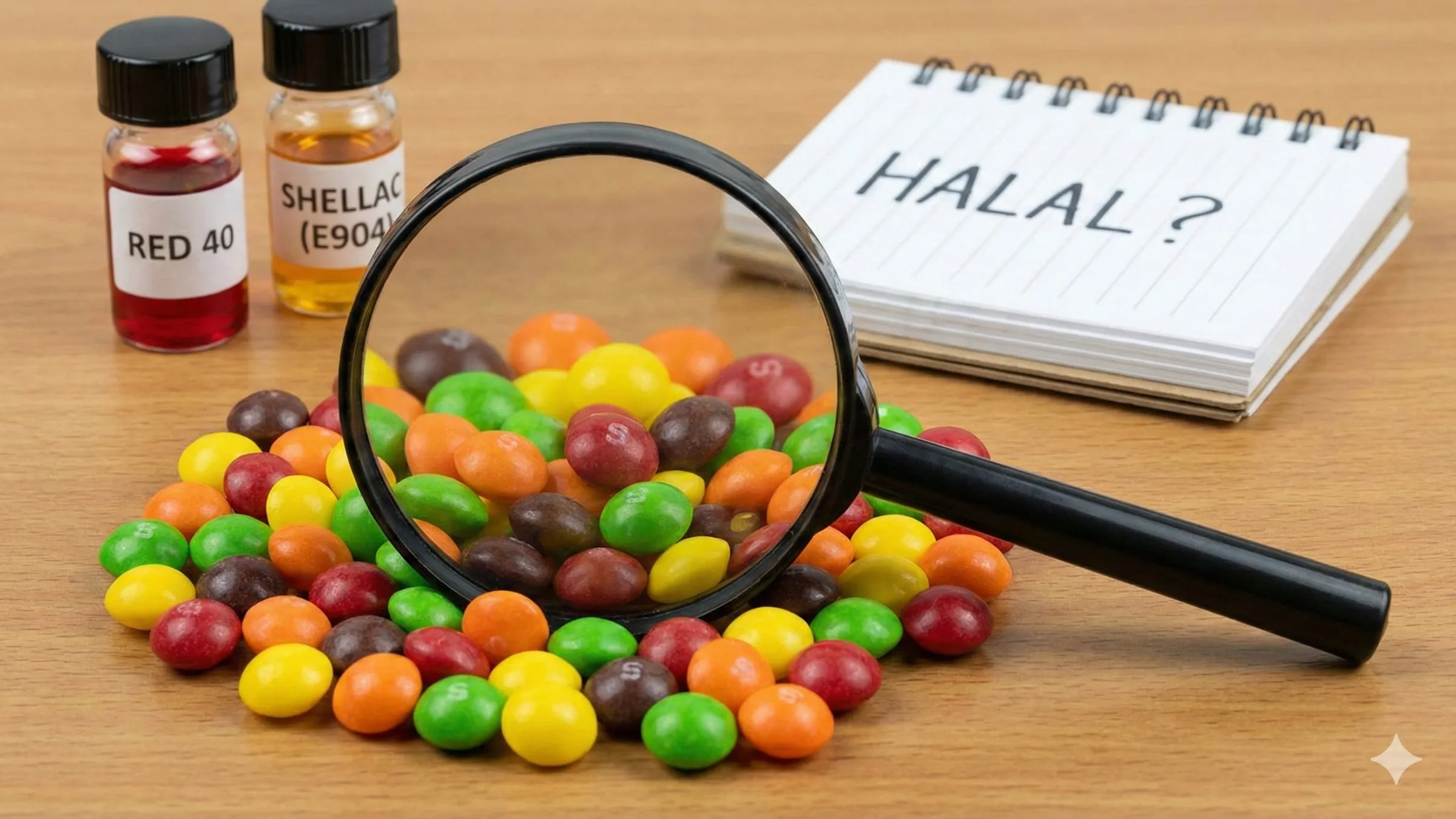
Walking down the candy aisle of a Western supermarket can be a frustrating experience for Muslims. The shelves are packed with vibrant colors, new flavors, and tempting snacks—but behind the bright packaging lies a complex web of hidden ingredients.
You want to buy a bag of Skittles. But the playground rumors are loud. People claim they are made with pork fat or colored with crushed beetles.
Here is the definitive truth: Standard Skittles are 100% Halal and Vegan.
They removed gelatin entirely. However, the rumors exist for a reason, and there is one specific type of Skittles you must avoid.
Let us break down exactly what goes into these rainbow candies, so you never have to guess again.
For a wider look at navigating the snack aisle, check out our Guide to Popular Brands and Fast Food .
Trap 1: The Ghost of Pork Gelatin
The number one reason Muslims have to avoid popular candies is Gelatin.
In the United States, the UK, and Europe, commercial gelatin is overwhelmingly derived from pork skin and bones, making it strictly Haram. Before 2010, standard Skittles actually contained this gelatin.
The big change: Mars Wrigley updated their formula. They swapped the animal gelatin for modified corn starch. Today, standard Skittles are completely plant-based.
⚠️ The Skittles Gummy Warning
While the hard-shell Skittles are safe, the brand recently launched Skittles Gummies. These do contain gelatin. Because Mars Wrigley does not use certified Halal beef gelatin in Western markets, Skittles Gummies are Haram.
Need help checking your other snacks? Read our Complete Guide to Halal Candy and Snacks.
Trap 2: The Red Candy Dilemma (Carmine vs. Red 40)
Do the red Skittles get their color from crushed bugs?
To get a vibrant red or pink color, many brands use Carmine (also known as Cochineal Extract or E120). This dye is made by boiling and crushing female insects. The majority of Islamic scholars classify insects as Haram for consumption.
Do Skittles use Carmine? No.
Skittles get their red color from synthetic dyes. In the US, they use Red 40. In Europe and the UK, they use Allura Red AC (E129). According to the FDA, Red 40 is derived from petroleum.
While health experts debate artificial dyes, from a strict Islamic Fiqh perspective, petroleum-based dyes contain zero animal derivatives and are perfectly Halal.
(Want to learn more about bug extracts? Read our Deep Dive on E120 / Carmine ).
Trap 3: The Shiny Shell (Shellac vs. Carnauba Wax)
If a candy isn’t chewy, it’s usually hard, shiny, and brightly colored. But that visual appeal often comes with a hidden cost to your Halal diet.
Many shiny candies are coated in Shellac (E904), or “Confectioner’s Glaze.” Shellac is a resin secreted by the lac bug. It is heavily debated among scholars (Mushbooh) because bug parts are often crushed during the scraping process.
Do Skittles use Shellac? No.
Look for snacks coated in Carnauba Wax , which comes from palm tree leaves and is 100% Halal. Skittles use Carnauba wax to achieve their famous gloss.
Stop Reading Labels. Start Scanning.
Memorizing the difference between Pectin and Gelatin, or Carnauba Wax and Shellac, is exhausting. Plus, brands change their recipes based on the country you are in.
With the Tayib app, you don’t need to be a food scientist. Just point your phone’s camera at the ingredient list of any snack.
Tayib’s AI instantly reads the text, cross-references our massive database of E-Numbers and additives, and gives you a clear Halal, Haram, or Mushbooh verdict.
Tired of Playing Candy Roulette?
Let AI do the heavy lifting. Tayib scans the ingredient list and detects hidden pork, alcohol, and bugs in seconds. Your peace of mind is one tap away.
Download TayibFrequently Asked Questions: Are Skittles Halal?
Do standard Skittles have pork gelatin?
No. Standard hard-shell Skittles removed gelatin entirely and are now Halal-friendly. They use modified corn starch instead.
Are Skittles Gummies Halal?
No. Unlike the original candy, Skittles Gummies usually contain gelatin. In Western countries, this is overwhelmingly derived from pork or non-Zabiha beef. Always check the label.
Is Red 40 Halal?
Yes. Red 40 is a synthetic food dye made from petroleum. Because it contains no animal or insect derivatives, it is considered Halal for consumption.
Do Skittles use Shellac or Confectioner's Glaze?
No. Standard Skittles use Carnauba Wax for their shiny coating. Carnauba Wax comes from palm tree leaves and is 100% Halal.
Are Skittles Vegan?
Yes. In the United States, the UK, and Europe, standard Skittles do not contain dairy, gelatin, or insect-derived dyes, making them suitable for a Vegan diet.
Do Skittles contain Carmine (E120)?
No. Carmine is an insect-derived dye that the majority of Islamic scholars classify as Haram. Skittles use synthetic, plant-safe dyes instead.
Are Wild Berry Skittles Halal?
Yes. Just like the original flavor, Wild Berry Skittles use plant-based ingredients and synthetic dyes, making them Halal in most Western countries.
Are Sour Skittles Halal?
Yes. Sour Skittles are coated in citric acid and use the same Halal-friendly base ingredients as standard Skittles. They do not contain animal products.
Do Skittles contain alcohol in their flavorings?
Most modern commercial candies use synthetic flavorings. While trace amounts of alcohol used purely as a solvent in natural flavors are highly debated, Skittles are generally considered safe. You can scan the label with the Tayib app to check for specific alcohol derivatives.
Why did Skittles change their recipe?
Many brands are moving away from gelatin to cater to vegan markets. Skittles removed animal-derived gelatin to appeal to a broader range of dietary restrictions, which directly benefits Muslim consumers.
Are Skittles Kosher certified?
While standard Skittles are plant-based, they do not always carry an official Kosher certification in the United States. However, their base ingredients are completely acceptable for Halal diets.
Can I trust the Skittles recipe in the Middle East?
Food regulations vary globally. A brand might use synthetic Red 40 in the US (Halal) but switch to a different dye elsewhere. Always read the label or use the Tayib scanner to be completely sure.

Written by Tayib
Founder & Halal Food Analyst
Tayib is dedicated to making Halal consumption transparent and stress-free. Through rigorous ingredient analysis, E-number decoding, and direct contact with brands, we help the Muslim community make informed and safe choices every day.
Read our strict verification methodology