January 20, 2025
Can a Phone Actually Be Used as a Halal Scanner? The Tech Explained
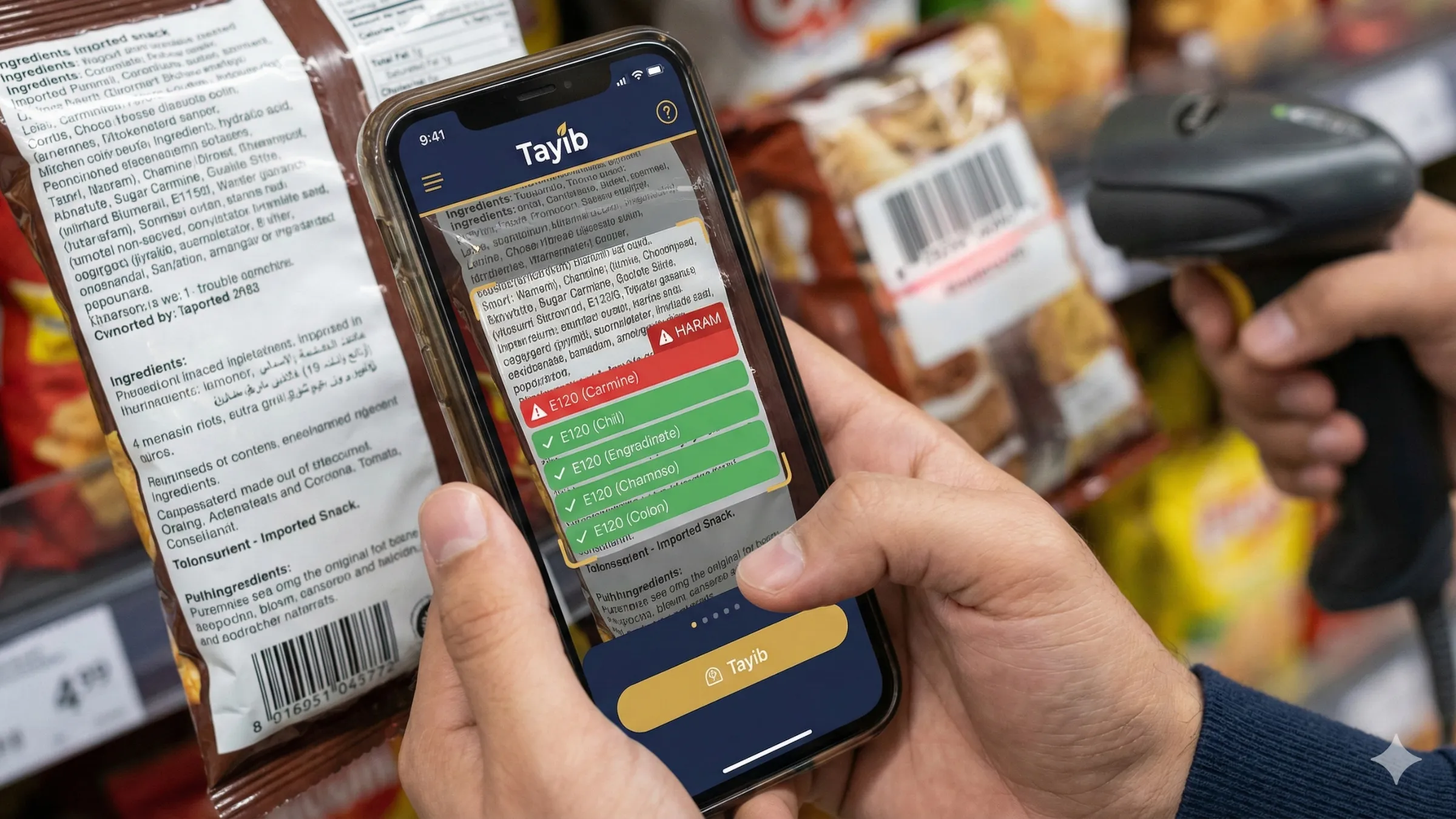
We use our phones for everything: banking, navigation, photography. But for millions of Muslims around the world, the “holy grail” of smartphone utility is simple:
Can I point my phone at a food product and instantly know if it is Halal?
The short answer is yes. But the technology behind how it works makes a massive difference in whether you are getting a reliable answer or a dangerous guess.
Not all “Halal Scanners” are created equal. Let’s break down the technology inside your pocket.
The Old Tech: The Barcode Reader (Database Lookup)
For the last 10 years, “Halal Scanner” apps have mostly been barcode readers.
How it works:
- You scan the black-and-white UPC/EAN code.
- The app sends that number to a server.
- The server checks a database (like OpenFoodFacts) to see if someone has manually tagged that number as “Halal” or “Haram”.
Why it fails:
- Missing Data: If the product is new, imported, or niche, the database doesn’t know it. You get a “Product Not Found” error.
- Regional Differences: A barcode for a bag of chips in the UK might be vegetarian, but the exact same barcode in the US might contain beef tallow. A global database often confuses these.
- Outdated Recipes: Manufacturers change ingredients all the time without changing the barcode. The database might say “Safe” based on a label from 2022, while the 2026 version holds pork gelatin.
A barcode scanner is only as smart as its database. And databases are often outdated.
The New Tech: AI & OCR (The “Tayib” Method)
This is where the modern smartphone shines. Your phone camera is not just a barcode reader; it is a high-definition eye capable of reading text just like a human.
This technology is called OCR (Optical Character Recognition), paired with Artificial Intelligence. This is the technology we built into Tayib.
How it works:
- You point your camera at the ingredients list (the fine print), not the barcode.
- The app “reads” the text in real-time (e.g., “E120”, “White Wine Extract”, “Gelatin”).
- The AI analyzes these words against Islamic dietary rules instantly.
Why it is superior:
- No Database Needed: It reads what is actually in your hand right now. If the recipe changed yesterday, the app sees it today.
- Works on Everything: Imported Korean noodles? Local bakery cookies? As long as there is text, the phone can read it.
- Detects Nuance: It can spot chemical names that hide haram ingredients (like “L-Cysteine” or “Shellac”) that a simple database tag might miss.
Want to test this technology?
Turn your phone into an AI-powered Halal detector right now.
Download Tayib for iOSBeyond the Lens: The “Fiqh” Engine
Having a phone that can read “Carmine” is great. But a truly useful Halal scanner needs to understand context.
Is Ethanol always Haram? What if it’s 0.05% in a vanilla extract? Is Gelatin always Haram? What if it’s from fish?
A phone becomes a true Halal tool when the software allows you to customize the settings based on your Madhab (school of thought) or personal level of strictness.
Conclusion
So, can a phone be used as a Halal scanner?
If you rely on old barcode technology, your phone is just a library card catalog—useful, but limited. If you use modern AI text recognition, your phone becomes a knowledgeable companion that reads every label for you in milliseconds.
The hardware in your pocket is ready. You just need the right software to unlock it.
To learn more about our mission and how we are building the future of Halal technology, visit our Homepage.
Ready to scan?

Written by Tayib
Founder & Halal Food Analyst
Tayib is dedicated to making Halal consumption transparent and stress-free. Through rigorous ingredient analysis, E-number decoding, and direct contact with brands, we help the Muslim community make informed and safe choices every day.
Read our strict verification methodology