November 26, 2025
The Muslim's Survival Guide to Eating Out: How to Spot Hidden Haram in "Safe" Restaurant Foods
We’ve all been there. You are out with colleagues or friends at a mainstream, non-Halal restaurant. You scan the menu, your stomach rumbling.
You know you can’t have the steak. So, you pivot to the “safe” options: the Filet-O-Fish, the veggie wrap, or just a large basket of french fries.
You say “Bismillah” and eat, hoping for the best.
But in modern commercial kitchens, what looks Halal on the surface often hides significant Haram risks underneath. Speed and cost-cutting often mean cross-contamination is the norm, not the exception.
Here is your survival guide to navigating the four biggest danger zones when eating out.
Danger Zone #1: The Deep Fryer (Cross-Contamination)
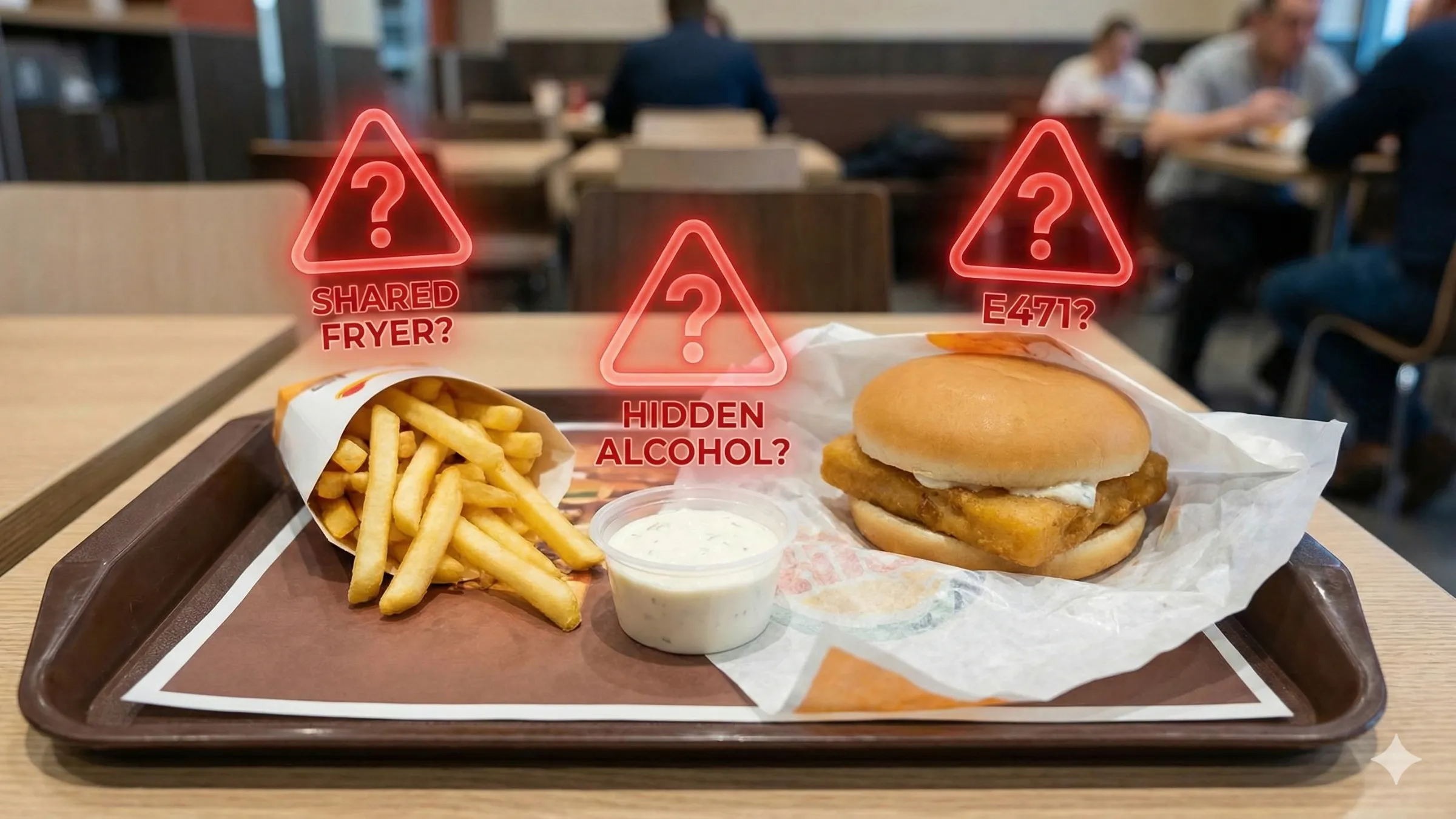
This is the most common trap. You order french fries, onion rings, or a fried fish sandwich. The ingredients themselves are Halal.
The Hidden Risk: The oil. In many fast-food joints and busy kitchens, to save time and money, everything goes into the same fryer vat. Your Halal french fries are likely swimming in the same oil that just cooked pork sausage, bacon, or non-Zabiha chicken nuggets.
While some Madhabs are lenient on minute cross-contamination, consuming potatoes fried directly in pork fat is widely considered Haram.
The Question to Ask: “Do you have a separate, dedicated fryer for vegetarian items, or is it shared with meat products?”
Danger Zone #2: The “Gourmet” Bun & Cheese
You order a high-end veggie burger. It looks delicious on a shiny brioche bun with melted cheddar.
The Hidden Risk:
- The Bun: Brioche buns are enriched with butter and eggs. Sometimes, industrial bakeries use L-Cysteine (E920) made from human hair or pig bristles to soften the dough, or brush the top with non-Halal animal fats for shine.
- The Cheese: As discussed in previous articles, many cheeses like Parmesan or Gruyère are made with Animal Rennet (from non-Zabiha calves).
Danger Zone #3: Sauces, Dressings, and Marinades
You order a healthy garden salad. It seems like the safest bet on the menu.
The Hidden Risk: The dressing. Many vinaigrettes, especially Dijon-based ones, contain white wine or white wine vinegar that still holds residual alcohol. Creamy sauces often use emulsifiers like E471 (possibly animal-derived) or gelatin to maintain texture.
That innocent-looking pink sauce on your fish sandwich? It might get its color from E120 (Carmine insects).
The Question to Ask: “Does this sauce contain any alcohol, wine vinegar, or animal-based thickeners like gelatin?”
Danger Zone #4: Desserts (The Final Trap)
You finished your meal and want something sweet. A slice of cheesecake or a chocolate mousse.
The Hidden Risk:
- Gelatin: Almost universally used in mousses, cheesecakes, and panna cotta to give them structure.
- Alcohol: Tiramisu is soaked in espresso and often Marsala wine or rum. Fruit tarts are often glazed with gelatin.
The Ultimate Solution: Your Pocket Scanner
Eating out shouldn’t feel like navigating a minefield. While asking the waiter is important, they often don’t know the scientific ingredients of pre-packaged restaurant sauces or buns.
This is where Tayib becomes your essential dining companion.
When the waiter brings those little packets of mayonnaise, ketchup, or salad dressing, don’t guess. Pull out your phone.
Tayib’s AI scanner can read the tiny ingredient text on restaurant packets instantly, spotting hidden alcohol, carmine, or doubtful emulsifiers before you open them.
Eat with confidence, even outside your home. Download Tayib for iOS today.

Written by Tayib
Founder & Halal Food Analyst
Tayib is dedicated to making Halal consumption transparent and stress-free. Through rigorous ingredient analysis, E-number decoding, and direct contact with brands, we help the Muslim community make informed and safe choices every day.
Read our strict verification methodology