May 29, 2026
Halal Bacon: The 2026 Guide to the Best Pork Alternatives
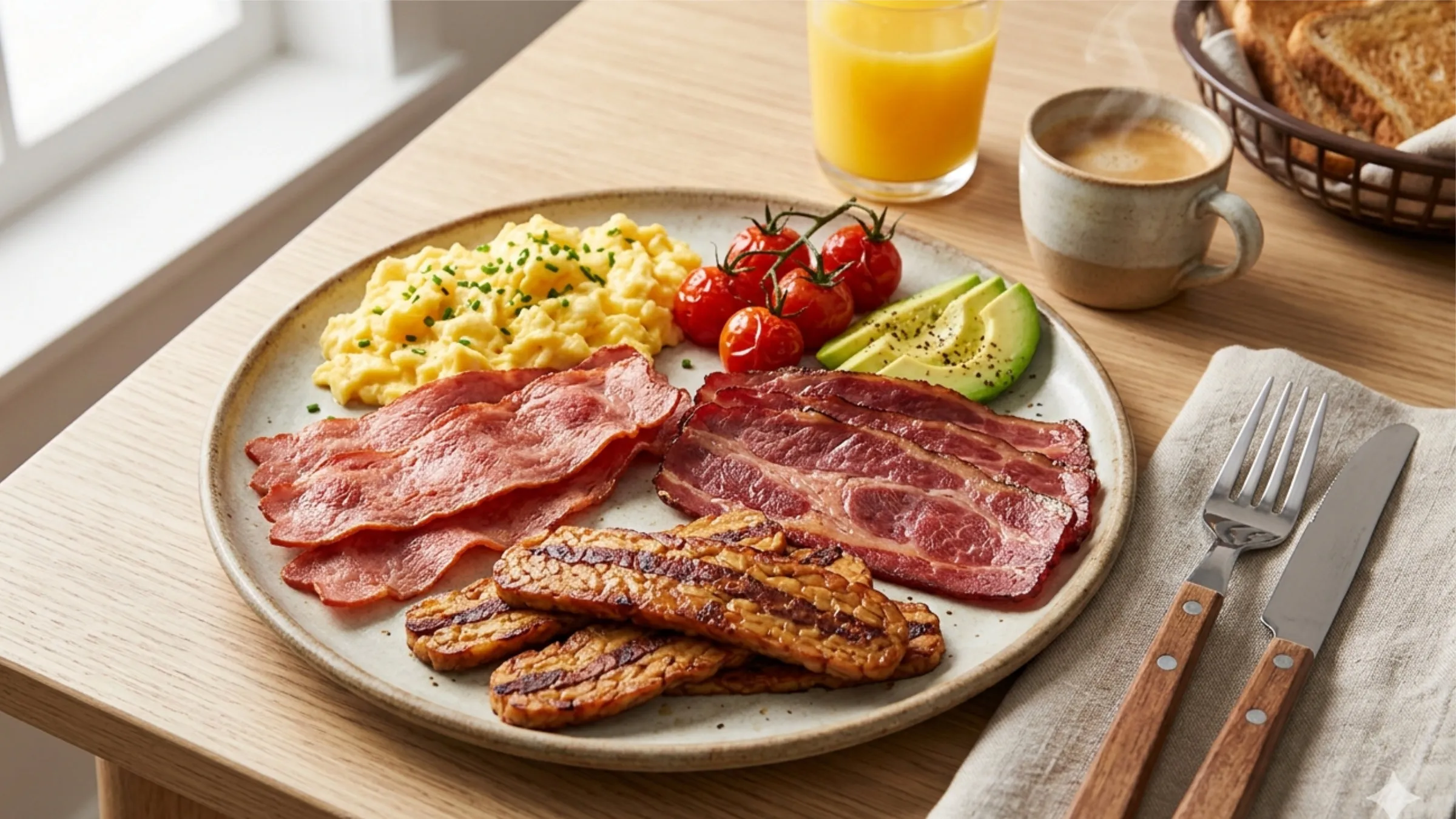
Bacon is everywhere. It is wrapped around hot dogs, piled high on burgers, and cooked into breakfast sandwiches.
For a Muslim following a Halal diet, bacon is usually the ultimate forbidden food.
Here is the bottom line: Traditional bacon is made from pork, which is strictly Haram. However, “Halal bacon” exists. Food companies now make incredibly realistic bacon strips using Zabiha-slaughtered turkey, beef, and even plant-based ingredients. You can enjoy the smoky, salty crunch without breaking any Islamic dietary laws.
Scan Supermarket Meats Instantly
Stop guessing in the meat aisle. Let Tayib's AI scan the packaging to detect hidden pork or non-Zabiha ingredients in seconds.
As part of our Ultimate Guide to Halal Ingredients, we are breaking down the world of Halal bacon. Here is how to find the best alternatives and avoid the hidden traps in restaurants.
Why is Traditional Bacon Haram? 🚫
The word “bacon” traditionally refers to cured meat sliced from the belly or back of a pig.
The Quran explicitly forbids the consumption of pork. It is the most well-known rule of the Halal diet. Therefore, any product containing pork meat, pork fat (lard), or pork derivatives (like certain gelatins) is absolutely Haram.
Want to know how pork hides in other foods? Read our Ultimate Guide to Hidden Haram Ingredients.
The 3 Types of Real Halal Bacon ✅
Food science has advanced rapidly. You no longer have to miss out on the crispy texture and smoky flavor.
If you are shopping at a Halal butcher or a well-stocked supermarket, look for these three safe alternatives:
1. Turkey Bacon (The Most Popular)
Turkey bacon is the closest replacement for the real thing. It is made from chopped, seasoned, and smoked turkey meat formed into strips. The Halal Catch: You cannot buy any turkey bacon. It must explicitly state it is Halal. The turkey must be slaughtered according to Islamic Zabiha rules. Standard supermarket turkey bacon (like Butterball or Oscar Mayer) is not Zabiha, making it Haram.
2. Beef Bacon (The Richest Flavor)
Beef bacon is made from the cured and smoked belly of a cow. Because cows have a higher fat content than turkeys, beef bacon gets much crispier and tastes richer. The Halal Catch: Again, the cow must be Zabiha slaughtered. Look for trusted Halal brands like Midamar or Halal Farms.
3. Vegan “Facon” (The Plant-Based Option)
Plant-based bacon is booming. Brands use soy, tempeh, or wheat protein (seitan) mixed with heavy smoky seasonings to mimic the taste of meat. The Halal Catch: Because it contains zero animal products, Vegan bacon completely bypasses the Zabiha slaughter requirements. It is a fantastic, worry-free Halal option.
Curious if other Vegan foods are safe? Read our guide: Vegetarian is Not Always Halal.
The “Smoky Flavor” Trap in Snacks ⚠️
What if you are not buying actual meat? What if you want to buy “bacon-flavored” potato chips or crackers?
This is where the food industry gets tricky.
Many “bacon-flavored” snacks do not contain any actual meat. They get their flavor from Liquid Smoke and a heavy mix of salt, yeast extract, and spices. If a snack relies on Liquid Smoke and artificial flavorings, it is generally Halal-suitable.
However, you must be careful. Some high-end snacks use actual pork fat or pork powder to enhance the flavor. The FDA allows companies to hide these under the generic term “Natural Flavors.”
If a snack says “Bacon Flavor” but lacks a Vegetarian or Halal logo, it is Mushbooh (Doubtful). You should put it back on the shelf.
We wrote a deep dive on this exact issue. Read The Truth About Natural Flavors.
The Restaurant Trap: Cross-Contamination
You are at a local cafe and they offer “Turkey Bacon.” Is it safe to order?
Usually, no.
Even if a restaurant buys Halal-certified turkey bacon, they often cook it on the exact same flat-top grill where they just cooked pork bacon. The pork grease will soak into your Halal turkey. This is called cross-contamination, and it makes your food Haram.
Unless you are at a dedicated Halal restaurant, you must ask the chef to cook your turkey bacon in a separate, clean pan.
Want to master eating out? Read our Halal Survival Guide for Eating Out.
Stop Guessing in the Supermarket
Meat labels are confusing. A “Turkey Bacon” package might look safe until you realize the meat isn’t Zabiha, or the casing uses animal derivatives.
You should not have to guess if your breakfast is Halal.
You just need Tayib.
Tayib is your personal AI Halal scanner. Do not rely on outdated barcode apps. Just point your phone’s camera at the back of any meat package or snack bag.
Tayib’s smart OCR AI reads the actual text instantly. It spots non-Zabiha meat warnings. It flags doubtful natural flavors. It tells you immediately if the product is Halal, Haram, or Mushbooh.
Is That 'Bacon' Snack Safe?
Don't let hidden pork fat ruin your meal. Let Tayib's AI scan the physical ingredient list and detect Haram additives instantly.
Download TayibFrequently Asked Questions: Halal Bacon
Is turkey bacon Halal?
Only if the turkey was slaughtered according to Islamic Zabiha rules. Standard turkey bacon sold in Western supermarkets (like Oscar Mayer) is not Zabiha and is therefore Haram.
What is Halal bacon made of?
Halal bacon is usually made from cured and smoked beef belly or seasoned turkey meat. It can also be made from plant-based proteins like soy or wheat (Vegan bacon).
Is beef bacon Halal?
Yes, provided the beef comes from a cow that was slaughtered ethically according to Islamic law (Zabiha). If the cow was conventionally slaughtered, the beef bacon is Haram.
Are bacon-flavored chips Halal?
It depends. Many cheap bacon-flavored snacks use 'Liquid Smoke' and plant spices, making them Halal (or Vegetarian). However, some use actual pork fat powder hidden under 'Natural Flavors'. Always scan the label with Tayib.
What does 'smoky bacon flavor' mean?
In snacks, smoky bacon flavor is usually a chemical mixture of yeast extract, salt, paprika, and liquid smoke (condensed wood smoke). If there is no real pork, the flavoring is Halal.
Is Kosher bacon Halal?
Generally, yes. Kosher law strictly forbids pork. Kosher 'bacon' is usually made from beef or turkey. Since the Kosher slaughter method is very similar to Halal Zabiha, most Islamic scholars permit Kosher beef or turkey bacon.
Is vegan bacon Halal?
Yes. Because vegan bacon (often called 'Facon') contains absolutely no animal products, it completely bypasses the Zabiha slaughter requirements. It is a 100% safe Halal option.
Does McDonald's serve Halal bacon?
In the US, UK, and Europe, McDonald's serves real pork bacon, which is strictly Haram. However, in Muslim-majority countries (like the UAE or Malaysia), McDonald's serves Halal-certified beef or chicken bacon.
Can I eat Halal bacon cooked in a regular restaurant?
You must be very careful. If a restaurant cooks your Halal turkey bacon on the same grill used to cook pork bacon, the cross-contamination makes your meal Haram. Always ask for it to be cooked in a separate pan.
How does the Tayib app detect Haram bacon?
Tayib uses advanced OCR AI. You point your camera at the ingredient text. The AI reads the ingredients, cross-references them with our Halal database, and flags if the meat lacks Zabiha certification or if 'Natural Flavors' are doubtful.

Written by Tayib
Founder & Halal Food Analyst
Tayib is dedicated to making Halal consumption transparent and stress-free. Through rigorous ingredient analysis, E-number decoding, and direct contact with brands, we help the Muslim community make informed and safe choices every day.
Read our strict verification methodology