January 15, 2025
Halal Fine Dining in Paris: Michelin Stars You Can Actually Eat At
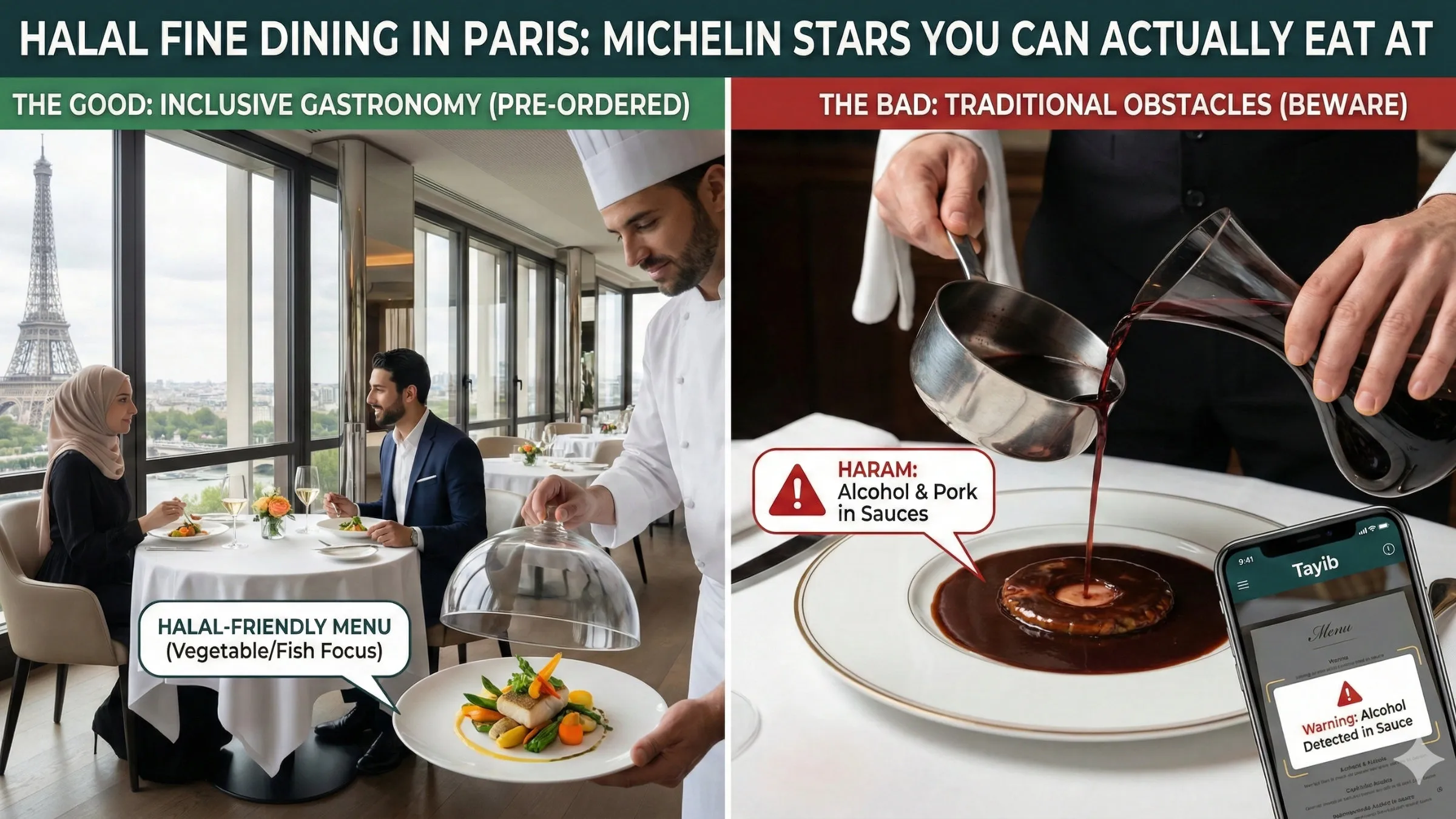
Paris is the city of lights, love, and butter. It holds more Michelin stars than any other city in the world.
But for the Muslim traveler, Paris presents a paradox. You are surrounded by the world’s best food, yet you often find yourself eating at the same Lebanese or Moroccan restaurants you could find back home.
Why? Because traditional French cuisine is built on two pillars that are difficult for Muslims: Pork fat (Lard) and Wine sauces (Red wine reduction, White wine deglazing).
However, the landscape is changing. The top chefs in Paris are increasingly focusing on vegetables, seafood, and lighter, water-based extractions.
If you are willing to spend €300+ per person, you can experience true French gastronomy. You just need to know where to book and what to say.
Dining in the City of Lights?
Don't let the menu intimidate you. Scan the cheese list and the chocolates for hidden alcohol with Tayib.
Download TayibThe “French Sauce” Problem 🍷
In a standard French bistro, the Coq au Vin is obviously Haram. But even the “Fish with White Butter Sauce” (Beurre Blanc) usually starts with a reduction of white wine and vinegar.
- The Myth: “The alcohol cooks off.”
- The Reality: In French haute cuisine, sauces are often finished with fresh wine or Cognac at the very end to preserve the aroma. It does not evaporate.
Deep Dive: Understand the chemistry of cooking with wine in our guide The Alcohol & Istihlak Debate.
Therefore, you cannot just walk in and order fish. You need a Bespoke Menu.
The Concierge List: 3 Michelin Experiences
These restaurants are accustomed to elite international clientele (Gulf Royals, Diplomats) and treat dietary restrictions with extreme seriousness.
1. Arpège (3 Stars) - The Vegetable Kingdom 🥕
Chef Alain Passard is the king of vegetables.
- The Angle: He famously removed red meat from his menu years ago. While he serves poultry/fish now, his “Gardener’s Lunch” (Vegetable Tasting Menu) is world-famous.
- Why it works: You avoid the meat issue entirely.
- The Request: Email in advance to request “No Alcohol in cooking.” His kitchen uses vegetable extractions and herbal infusions that are naturally alcohol-free and mind-blowing.
2. Le Meurice Alain Ducasse (2 Stars) - The Palace 👑
Located opposite the Tuileries Garden, this is the height of opulence.
- The Angle: Alain Ducasse’s philosophy of “Naturalness” focuses on fish, vegetables, and grains.
- The Halal Hack: They do NOT serve Halal meat by default. However, if you book a private salon or notify them well in advance for the main room, the kitchen can prepare a Seafood Menu where the sauces are based on fish stock and citrus, not wine.
3. Kei (3 Stars) - The Japanese Fusion 🇯🇵🇫🇷
Chef Kei Kobayashi brings Japanese precision to French food.
- The Angle: Japanese-French fusion relies less on heavy wine reductions and more on Dashi, Soy, and Yuzu.
- The Halal Hack: The “Menu Prestige” focuses heavily on Langoustines, Seabass, and Caviar.
- Warning: Check the Wagyu. Even if it is Japanese Wagyu, the sauce might be wine-based.
Steak Alert: Is that Kobe beef actually Halal? Read our Japanese Wagyu Guide.
The “Halal French” Revolution (Non-Michelin but Premium)
If you absolutely crave a Halal Beef Filet or Duck Confit without the alcohol risk, you must leave the Michelin guide and visit the new wave of “Halal French” gastronomy.
These are 100% Halal kitchens (no alcohol, Zabiha meat) doing high-end French food.
- Le Confidentiel (Champs-Élysées area): The pioneer. White tablecloths, gold service. You can finally eat Foie Gras (Halal), Escargots (Halal style), and Filet de Boeuf Rossini.
- L’Échappée Belle: Modern French bistro style. Perfect for a “date night” where you want the full Parisian vibe—Steak Frites, Tartare—with zero compromise.
The Cheese Cart Trap 🧀
At the end of a Michelin meal, the Chariot de Fromages arrives. It is tempting.
- The Risk 1: Washed Rind Cheeses. Many pungent French cheeses (like Époisses or Munster) are washed in Marc de Bourgogne (Brandy) or Wine during aging.
- The Risk 2: Animal Rennet. Traditional AOC cheeses must use animal rennet.
Learn to spot it: Which cheeses are safe? Read our Cheese & Rennet Guide.
The Solution: Stick to Chèvre (Goat Cheese) or Comté (often safe), and explicitly ask: “Which of these were washed in alcohol?”
The Email Template to Secure Your Table
Do not rely on OpenTable notes. Send this email to the reservation desk:
“Bonjour. We would like to book a table. We strictly do not consume Alcohol (including in sauces/cooking), Pork (including Gelatin/Lard), or Meat that is not Halal certified. We would be delighted to experience a Seafood or Vegetarian tasting menu, provided the chef can substitute wine-based sauces with non-alcoholic alternatives (jus, citrus, stock). Is this possible?”

Written by Tayib
Founder & Halal Food Analyst
Tayib is dedicated to making Halal consumption transparent and stress-free. Through rigorous ingredient analysis, E-number decoding, and direct contact with brands, we help the Muslim community make informed and safe choices every day.
Read our strict verification methodology