September 18, 2025
Halal Food Guide to Tokyo: Ramen, Wagyu & The 7-Eleven Survival Guide
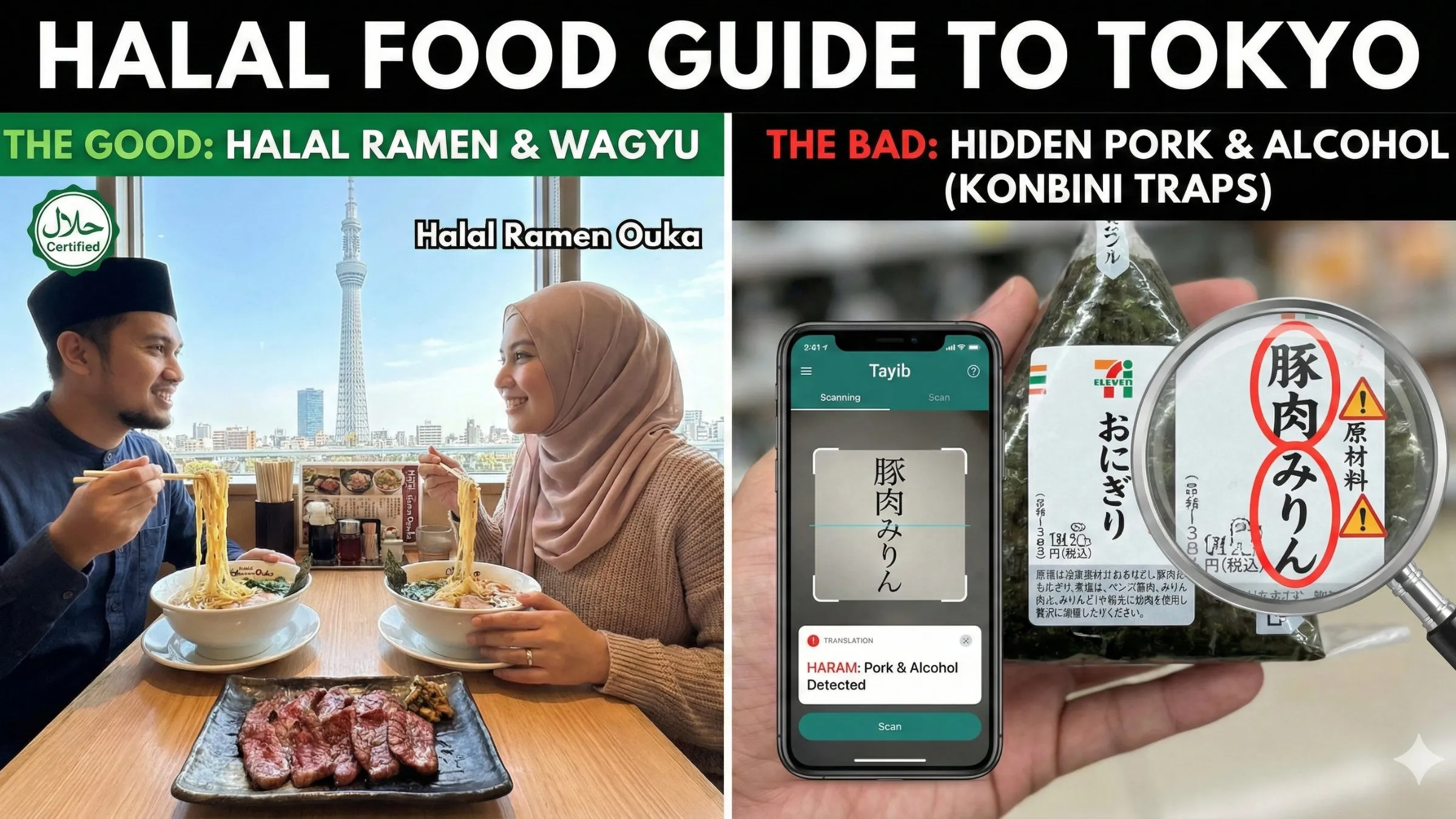
Tokyo is a dream. The neon lights of Shinjuku, the quiet temples of Asakusa, and the organized chaos of Shibuya Crossing.
But for a Muslim traveler, Tokyo can quickly turn into a nightmare of hunger.
Japan is widely considered the most difficult developed country for Halal food. Why? Because Pork (Butaniku) and Alcohol (Sake/Mirin) are the foundations of Japanese cuisine. They are in the broth, the sauces, and even the snacks.
You cannot just “ask for no pork.” The pork is often invisible—dissolved into the soup stock (Tonkotsu) or hidden in the emulsifiers of your convenience store rice ball.
Here is how to survive and thrive in Tokyo.
General Overview: Difficulty Level 🔴 (Very Hard)
Verdict: 5/5 Difficulty (Expert Mode).
In London or New York, you can read the ingredients. In Tokyo, unless you read Kanji (Japanese characters), you are blind. Almost all soy sauce contains alcohol. Almost all ramen broth is pork-based. Even the “Vegetable Tempura” is often dipped in a batter containing egg and… yes, sake.
Pre-Flight Check: Do not land in Narita Airport without a plan. Download the Best Halal Apps for Travel to help you navigate.
The Language Trap: Kanji You MUST Memorize
You will spend a lot of time staring at labels in 7-Eleven. Memorize these three symbols. If you see them, put the item back.
- 豚肉 (Butaniku): PORK. This is the enemy #1.
- 酒 (Sake): ALCOHOL. Used in cooking wines.
- みりん (Mirin): SWEET RICE WINE. Used in Teriyaki sauce, Sushi rice seasoning, and almost all brown sauces.
- ラード (Raado): LARD. Used in breads and pastries.
- ゼラチン (Zerachin): GELATIN. Used in puddings and gummies.
Top 5 Halal Restaurants (The “Must-Eats”)
Tokyo has an amazing, growing Halal scene. You just need to know where to go.
- Halal Ramen Ouka (Shinjuku): The holy grail. This is usually the first stop for Muslim tourists. They serve a rich, sea-bream based broth that rivals any non-Halal ramen. Tip: It’s small, so book in advance.
- Gyumon (Shibuya): Want to try authentic Japanese BBQ (Yakiniku)? This place serves Halal Wagyu Beef. It’s expensive, but grilling that marbled meat yourself is an unforgettable experience.
- CoCo Ichibanya (Halal Branches): “CoCo Ichi” is Japan’s most famous curry chain. Warning: Standard shops use pork sauce. You MUST go to the specific “Halal Certified” branches in Akihabara or Shinjuku (Kabukicho).
- Sushiken (Asakusa): The first Halal-certified Sushi restaurant in Tokyo. Finally, you can eat sushi without worrying if the rice vinegar contains Mirin or if the soy sauce has alcohol.
- Luxor Bar (Shinjuku): A hidden gem for when you crave variety, offering Halal Italian and Japanese fusion.
Konbini Guide: Surviving 7-Eleven, Lawson & FamilyMart
You will be hungry at midnight. Japanese convenience stores (Konbini) are legendary, but dangerous.
The Safe List (Generally):
- Salmon Onigiri (Rice Ball): usually safe, but check for emulsifiers.
- Pickled Plum (Ume) Onigiri: 100% Vegan.
- Egg Salad Sandwich: ⚠️ WARNING. Many egg sandwiches use ham or margarine containing animal fats. Only buy if you can verify the ingredients.
- Meiji “Oishii” Milk: Just pure milk.
- Soyjoy Bars: Many flavors are plant-based (check for shortening).
The Trap:
- Instant Ramen: almost ALL instant noodles in Konbini contain pork extract. Do not buy them unless they have a green “Halal” mark (rare, but found in some tourist spots).
Did you know? Soy Sauce is the hidden killer in Japan. Read our guide on Is Soy Sauce Halal? to understand why standard Kikkoman is problematic here.
The Solution: The Camera Translator
You are standing in Lawson holding a Strawberry Cream Sandwich. The label says: 原材料名: 小麦粉, クリーム, 洋酒, ショートニング…
You don’t know that 洋酒 means “Western Liquor” and ショートニング means “Shortening” (likely animal).
Don’t play Russian Roulette with your food.
Use Tayib to scan the Japanese text. Our OCR (Optical Character Recognition) reads the Kanji, translates it instantly, and highlights the Haram ingredients in red. We specifically detect the Japanese terms for “Shortening (Animal Origin)” and “Mirin.”
Lost in Translation?
Don't let a Kanji character ruin your trip. Scan Japanese labels instantly with Tayib.
Download Tayib for JapanFinal Tip
Japan is challenging, but rewarding. Plan your meals around the Halal restaurants in Asakusa (the Halal hub of Tokyo), and for everything else, keep your scanner ready. Itadakimasu!

Written by Tayib
Founder & Halal Food Analyst
Tayib is dedicated to making Halal consumption transparent and stress-free. Through rigorous ingredient analysis, E-number decoding, and direct contact with brands, we help the Muslim community make informed and safe choices every day.
Read our strict verification methodology