September 12, 2025
How to Identify Halal Products in the USA? The Ultimate Grocery Guide
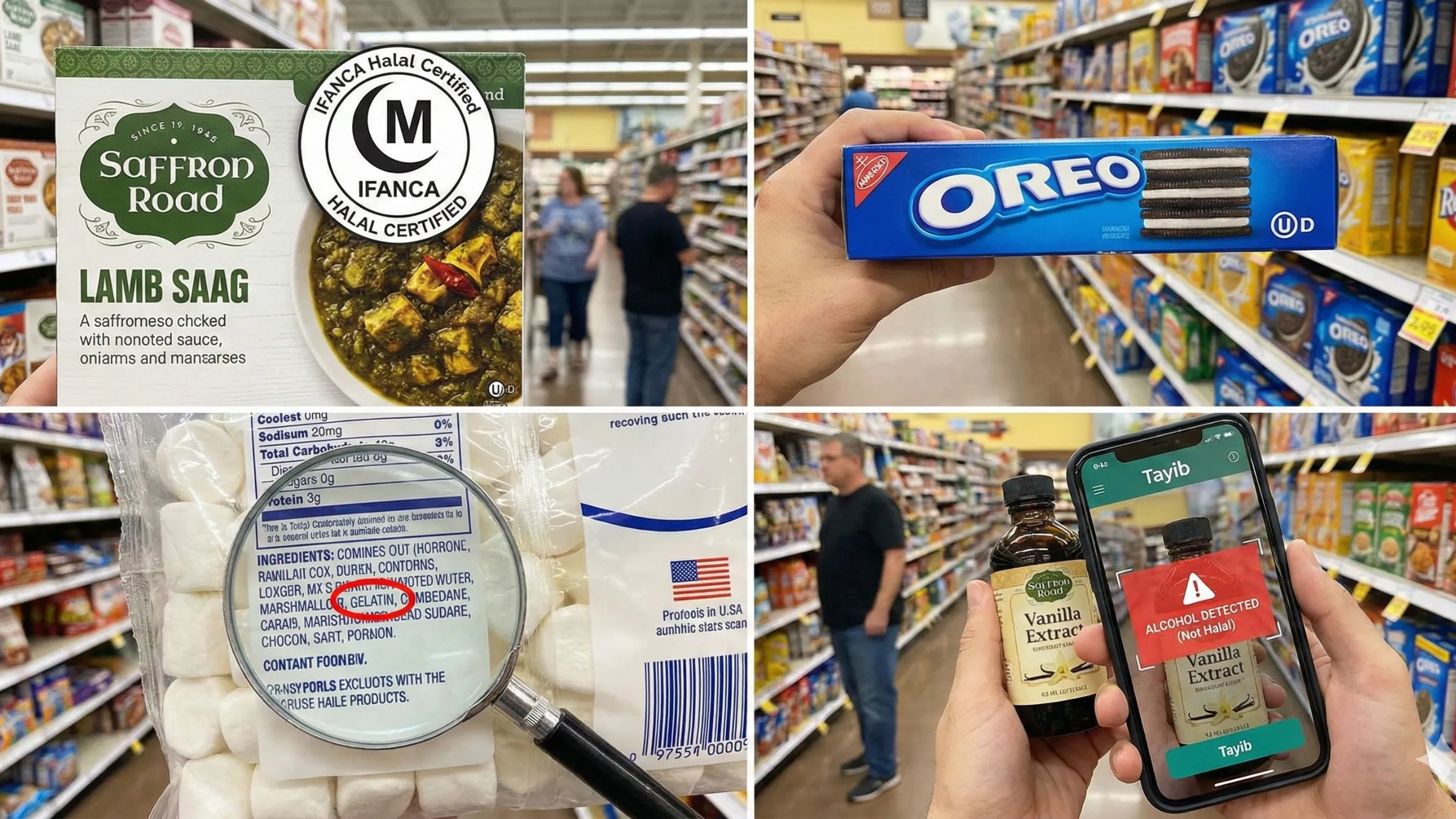
Walking into an American supermarket like Walmart, Kroger, or Whole Foods is an overwhelming experience. The aisles are massive, the choices are endless, and the ingredients lists are incredibly complex.
For Muslims in the USA, the question is constant: “How do I know if this is Halal?”
Unlike in Muslim-majority countries, there is no government-mandated “Green Dot” to signify Halal compliance. You are often left to be a detective in the snack aisle.
Whether you are a tourist, a student, or a resident, here are the four proven methods to identify Halal products in the US, ranging from the obvious to the high-tech.
Method 1: The “Crescent M” (Official Certification)
The easiest, but unfortunately rarest, method is finding a certification logo.
Organizations like IFANCA (Crescent M), HFSAA, and ISWA certify products in the US. You will typically find these logos on:
- Meat products: Brands like Saffron Road or Crescent Foods.
- Ethnic sections: Imported goods often carry these seals.
The Problem: 95% of mainstream American snacks (Oreos, Cheetos, cereals) do not pay for Halal certification, even if their ingredients are technically Halal. If you only look for the logo, you will starve.
Method 2: The “Kosher” Hack (Use with Caution!)
The United States has a massive Kosher food industry. Because Jewish dietary laws share many similarities with Islamic laws (no pork, strict slaughter rules), many Muslims use Kosher symbols as a shortcut.
Look for symbols like the OU (Orthodox Union), Kof-K, or Star-K.
What it tells you:
- Pork-Free: A Kosher symbol guarantees 100% no pork.
- Gelatin-Safe: It usually means the gelatin is fish-based or beef-based (though not necessarily Zabiha).
The Danger Zone: Kosher does NOT equal Halal.
- Alcohol: Jewish law allows alcohol. A product can be Kosher certified but contain wine or vanilla extract with 35% alcohol.
- Meat: Most scholars agree that Kosher meat slaughter is distinct from Zabiha Halal. Relying on Kosher meat is a topic of debate among scholars.
Verdict: Useful for chips and cookies, but you still need to check for alcohol.
Method 3: The Ingredient Detective (The Hard Way)
If there is no Halal or Kosher symbol, you have to read the dreaded ingredient list. In the US, manufacturers use scientific terms that hide the source of ingredients.
The “Big 3” to Watch Out For:
- Gelatin: In the US, unless it says “Beef” or “Fish,” assume it is Pork. It’s in Pop-Tarts, marshmallows, and many yogurts.
- Red 4 (Carmine/Cochineal): This bright red food coloring is made from crushed beetles. It is widely used in candies and juices.
- Vanilla Extract: By FDA definition, pure vanilla extract in the US must contain at least 35% alcohol. Look for “Natural Vanilla Flavor” instead, or scan it to be safe.
Method 4: The Modern Way (AI Scanning)
Let’s be honest: standing in an aisle trying to remember if “Mono- and diglycerides” are plant-based or animal-based is exhausting.
The most effective way to identify Halal products in the USA today is not by memorizing chemistry, but by using technology.
Tayib is designed specifically for the US market. It understands the nuances of American labeling laws.
- It knows that “Enzymes” in US cheese can be pork-derived.
- It spots “L-Cysteine” in bagels (often made from human hair or duck feathers).
- It filters out the Alcohol that Kosher symbols ignore.
Shop US Supermarkets with Confidence
Don't guess with American labels. Scan the text and get an instant Halal/Haram verdict.
Download Tayib for iOSSummary
Identifying Halal products in the USA requires vigilance.
- Look for Halal Certification (Best).
- Look for Kosher Symbols (Good for pork, but check for alcohol).
- Watch out for Gelatin and Red 4.
- Use Tayib to scan the ingredients and catch what your eyes might miss.
Welcome to America. The food is great, you just need the right tool to enjoy it safely.

Written by Tayib
Founder & Halal Food Analyst
Tayib is dedicated to making Halal consumption transparent and stress-free. Through rigorous ingredient analysis, E-number decoding, and direct contact with brands, we help the Muslim community make informed and safe choices every day.
Read our strict verification methodology