August 20, 2025
How to Know if Gelatin is Halal in the USA? (The Pork Problem)
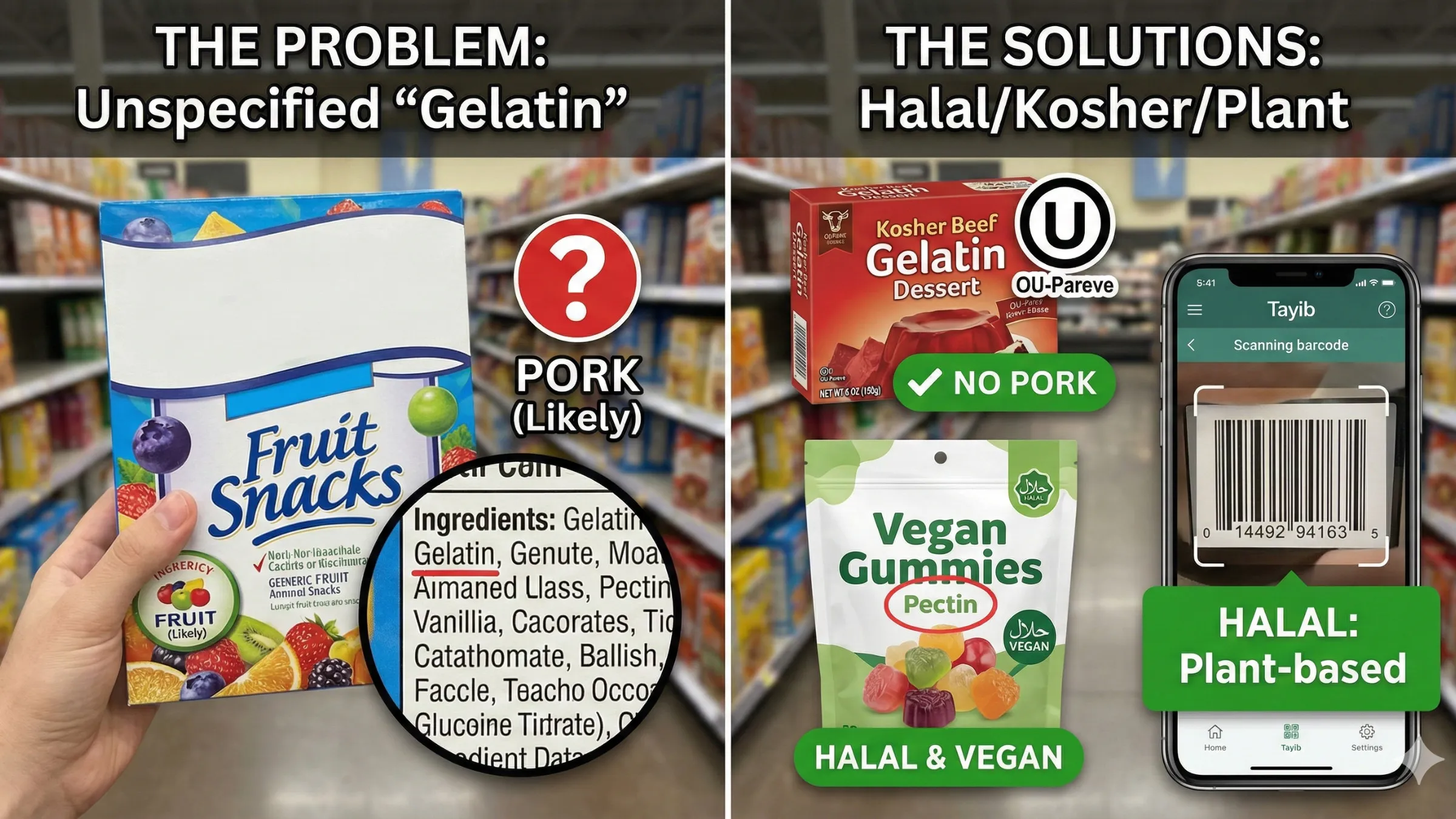
You pick up a bag of gummy bears, a box of Pop-Tarts, or even a bottle of vitamins. You scan the ingredients list and spot that one dreaded word: Gelatin.
It doesn’t say “Pork Gelatin.” It doesn’t say “Beef Gelatin.” It just says “Gelatin.”
For Muslims in the USA, this single word is the source of endless frustration. Is it Halal? Is it Haram?
In the United States, labeling laws regarding animal sources are surprisingly vague. Here is the cold, hard truth about gelatin in America and how you can identify what is safe to eat.
The Default Rule: Assume It Is Pork
Here is the most important rule for the US market: If the label simply says “Gelatin” with no other descriptor, it is almost certainly Pork.
Why? Economics. In the US food industry, pork skin is the cheapest and most abundant source of collagen used to make gelatin. Beef gelatin is more expensive and usually reserved for specialty products.
Unless the package explicitly states “Beef Gelatin” or “Fish Gelatin,” you must assume it is Haram.
The 3 Ways to Find Safe (Halal) Gelatin
So, does this mean you can never eat gummies or yogurt again? No. You just need to know how to spot the exceptions.
1. The “Kosher” Loophole (The Best Hack)
Since Jewish dietary laws strictly forbid pork, a Kosher certification is the fastest way to verify that gelatin is pork-free.
Look for symbols like the OU, Kof-K, or Star-K on the package.
- If you see a Kosher symbol: The gelatin is likely derived from beef (non-Zabiha, but accepted by many scholars as distinct from pork) or fish.
- Important Note: Some strict Halal observers prefer to avoid Kosher beef gelatin because the animal was not slaughtered according to Islamic rites (Zabiha). However, for the vast majority of Muslims, Kosher gelatin is considered an acceptable alternative to pork.
2. The “Plant-Based” Alternatives
The safest route is to avoid animal gelatin entirely. Fortunately, the US market is shifting towards plant-based options. Look for these words in the ingredient list instead of “Gelatin”:
- Pectin (Derived from fruit)
- Agar-Agar (Derived from seaweed)
- Carrageenan (Derived from red seaweed)
- Modified Corn Starch (Common in sour gummies)
If you see these, the texture agent is 100% Halal and Vegan.
3. The “Fish Gelatin” Niche
Occasionally, usually in vitamins or specialty dietary supplements, you will see “Fish Gelatin” listed. This is 100% Halal.
The “Vegetarian” Trap
Be careful with the word “Vegetarian” on cheese, but trust it on candy. If a bag of marshmallows says “Vegetarian” or “Vegan,” it means they did not use animal gelatin. These are safe to eat.
However, be warned: Vegetarian is not always Halal, and “Organic” does NOT mean Halal. Organic pork gelatin is still pork gelatin.
Tired of Guessing “Pork or Beef”?
Tayib’s AI detects the hidden source of gelatin and highlights plant-based alternatives instantly.
Download Tayib for iOSConclusion
Navigating the gelatin minefield in the USA is simple if you follow this hierarchy:
- Does it say Pectin/Agar? (YES = Halal)
- Does it have a Kosher Symbol? (YES = No Pork)
- Does it just say “Gelatin”? (YES = Avoid! It is likely Pork)
Don’t let a vague label compromise your diet. Check for the Kosher sign, look for plant alternatives, or let Tayib scan the fine print for you.
Frequently Asked Questions: Is Gelatin Halal?
What does it mean if the ingredients just say 'Gelatin' in the USA?
In the United States, if the label simply says 'Gelatin' without specifying the source, you should assume it is pork gelatin. Pork skin is the cheapest and most widely used source for commercial gelatin in American food manufacturing, making it Haram.
Is bovine (beef) gelatin Halal?
Bovine gelatin is 100% Halal if the cattle were slaughtered according to Islamic rites (Zabiha). If the beef gelatin comes from non-Zabiha animals, scholars differ. Some scholars argue the severe chemical transformation (Istihala) makes it permissible, while stricter scholars say it remains Haram. Most Halal certification boards require Zabiha beef.
Is Kosher gelatin Halal?
Kosher gelatin guarantees that the product contains absolutely zero pork, which makes it acceptable to many Muslims. However, Kosher beef gelatin is not Zabiha slaughtered. If you strictly consume only Zabiha meat, you should also avoid Kosher beef gelatin and opt for Kosher fish gelatin or plant-based alternatives instead.
Are standard marshmallows Halal?
Standard American marshmallows (like Kraft or Jet-Puffed) contain pork gelatin and are strictly Haram. To enjoy marshmallows, you must look for Vegan brands (like Dandies), Kosher-certified fish gelatin marshmallows, or explicitly Halal-certified brands.
What are the best Halal alternatives to gelatin?
The safest 100% Halal alternatives are plant-based. Look for Pectin (derived from fruits), Agar-Agar (from seaweed), Carrageenan, or modified corn starch. If a gummy candy uses these instead of gelatin, it is Halal and Vegan.

Written by Tayib
Founder & Halal Food Analyst
Tayib is dedicated to making Halal consumption transparent and stress-free. Through rigorous ingredient analysis, E-number decoding, and direct contact with brands, we help the Muslim community make informed and safe choices every day.
Read our strict verification methodology