July 23, 2025
The "Invisible Alcohol" Epidemic: Why Ethanol is Hiding in Your Vanilla, Soy Sauce, and Mouthwash
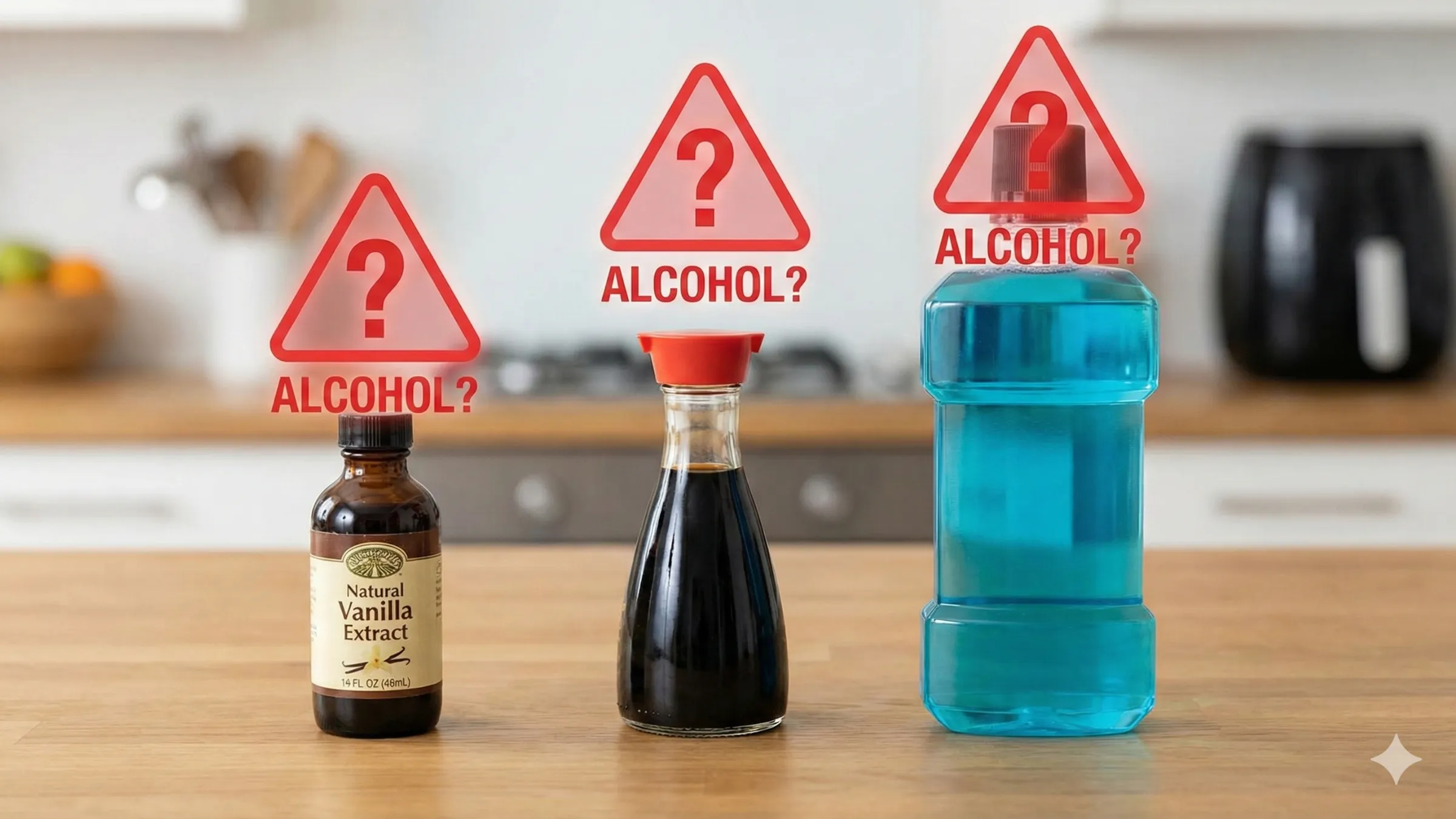
As a Muslim, avoiding alcohol (Khamr) is second nature. You don’t browse the wine aisle, and you check drinks for “alc/vol” percentages.
But what if I told you that your kitchen pantry and your bathroom cabinet likely contain alcohol right now?
In modern manufacturing, ethanol isn’t just for drinking. It is a powerful chemical solvent, a preservative, and a byproduct of fermentation used in thousands of “innocent” products.
Here are the three most common places where invisible alcohol is hiding in your home.
1. The Baking Trap: “Natural” Vanilla Extract
You want to bake a cake for Eid. You buy “All Natural Vanilla Extract.” It sounds pure and wholesome.
The Shocking Truth: By law in the United States and many Western countries, for a product to be labeled “Vanilla Extract,” it must contain a minimum of 35% alcohol by volume. That’s stronger than many liqueurs!
The alcohol is used to extract the flavor compounds from the vanilla bean. While most of it bakes off in the oven, raw batter, certain coffee syrups, or uncooked desserts (like puddings) still contain significant amounts.
Tayib Tip: Look for “Vanilla Flavoring” (often made with glycerin, not alcohol) or “Vanilla Bean Paste” instead of “Extract.”
2. The Savory Trap: Soy Sauce & Dijon Mustard
You are making a stir-fry or a sandwich. You reach for the soy sauce or the fancy mustard.
The Shocking Truth:
-
Soy Sauce: Traditional soy sauce is made through fermentation, a process that naturally creates alcohol (usually 1-3%). While not added intentionally to intoxicate, it is chemically present. Read our full deep-dive on the Soy Sauce debate here.
-
Dijon Mustard: Authentic Dijon mustard is traditionally made with white wine (verjuice). If you aren’t careful, you might be consuming residual wine in your condiments.
3. The Hygiene Trap: Mouthwash & Sanitizers
It’s not just about what you eat. It’s about what you put in—and on—your body.
The Shocking Truth: That fresh sting you feel when you use a popular mouthwash? That’s alcohol. Many leading brands in the medicine and hygiene aisle contain over 20% ethanol to kill bacteria. While you don’t swallow it, coating the inside of your mouth with intoxicants is highly problematic for many scholars.
The Fiqh Dilemma: A Grey Area
This topic is exceptionally confusing because Islamic scholars differ on the ruling of “minute amounts of non-intoxicating alcohol.”
- Stricter View (often Hanafi): Liquid ethanol itself is considered Najis (impure). Consuming it, even in tiny amounts in vanilla extract, is forbidden if it was originally derived from Khamr sources.
- Lenient View: If the alcohol is synthetic, or present in such small quantities that it cannot intoxicate even if consumed in large amounts, it may be permissible for necessity or lack of alternatives.
The Solution: Don’t Be a Chemist, Be a Scanner.
You shouldn’t have to debate complex Fiqh rulings in the middle of the grocery store aisle while holding a bottle of vanilla.
This is why Tayib was invented.
Tayib doesn’t just force one opinion on you. Our AI scanner detects hidden ethanol carriers in ingredient lists instantly.
Most importantly, Tayib allows you to customize your settings based on your Madhab. If you follow a stricter opinion, Tayib will flag vanilla extract as Red (Avoid). If you follow a more lenient one, it might flag it as Orange (Mushbooh/Caution).
Stop guessing about invisible alcohol. Download Tayib and let technology handle the complexity.
Frequently Asked Questions: Hidden Alcohol in Food
Does natural vanilla flavor have alcohol?
Pure 'Vanilla Extract' legally requires at least 35% alcohol to extract the flavor from the bean. However, 'natural vanilla flavor' or 'vanilla flavoring' might use vegetable glycerin or propylene glycol instead of ethanol. It is highly recommended to check the label for an 'alcohol-free' claim or scan it with the Tayib app to be sure.
Is soy sauce with naturally occurring alcohol Halal?
This depends on your Madhab and scholarly opinion. Traditional naturally brewed soy sauce contains about 1.5% to 2% alcohol purely as a byproduct of fermentation. Many scholars consider this Halal because the alcohol is not added intentionally and cannot intoxicate you in realistic quantities. However, stricter interpretations advise avoiding it. Always ensure 'alcohol' or 'wine' is not explicitly listed as an added ingredient.
Is Dijon mustard Halal?
Authentic Dijon mustard is traditionally manufactured using white wine or verjuice (unripened grape juice). If the ingredients list white wine, spirit vinegar with residual alcohol, or wine vinegar, it is considered Haram by most scholars. Look for standard yellow or brown mustards that use distilled white vinegar instead.
Does mouthwash contain Haram alcohol?
Many mainstream mouthwashes (like original Listerine) contain high levels of denatured alcohol (ethanol) to kill bacteria. While it is not intended for drinking, many Muslims prefer to avoid putting intoxicants in their mouths. Fortunately, there are many 'alcohol-free' mouthwashes readily available today that use alternative antibacterial agents.

Written by Tayib
Founder & Halal Food Analyst
Tayib is dedicated to making Halal consumption transparent and stress-free. Through rigorous ingredient analysis, E-number decoding, and direct contact with brands, we help the Muslim community make informed and safe choices every day.
Read our strict verification methodology