January 12, 2026
The Bubble Tea Dilemma: Is Your Boba Addiction Secretly Haram?
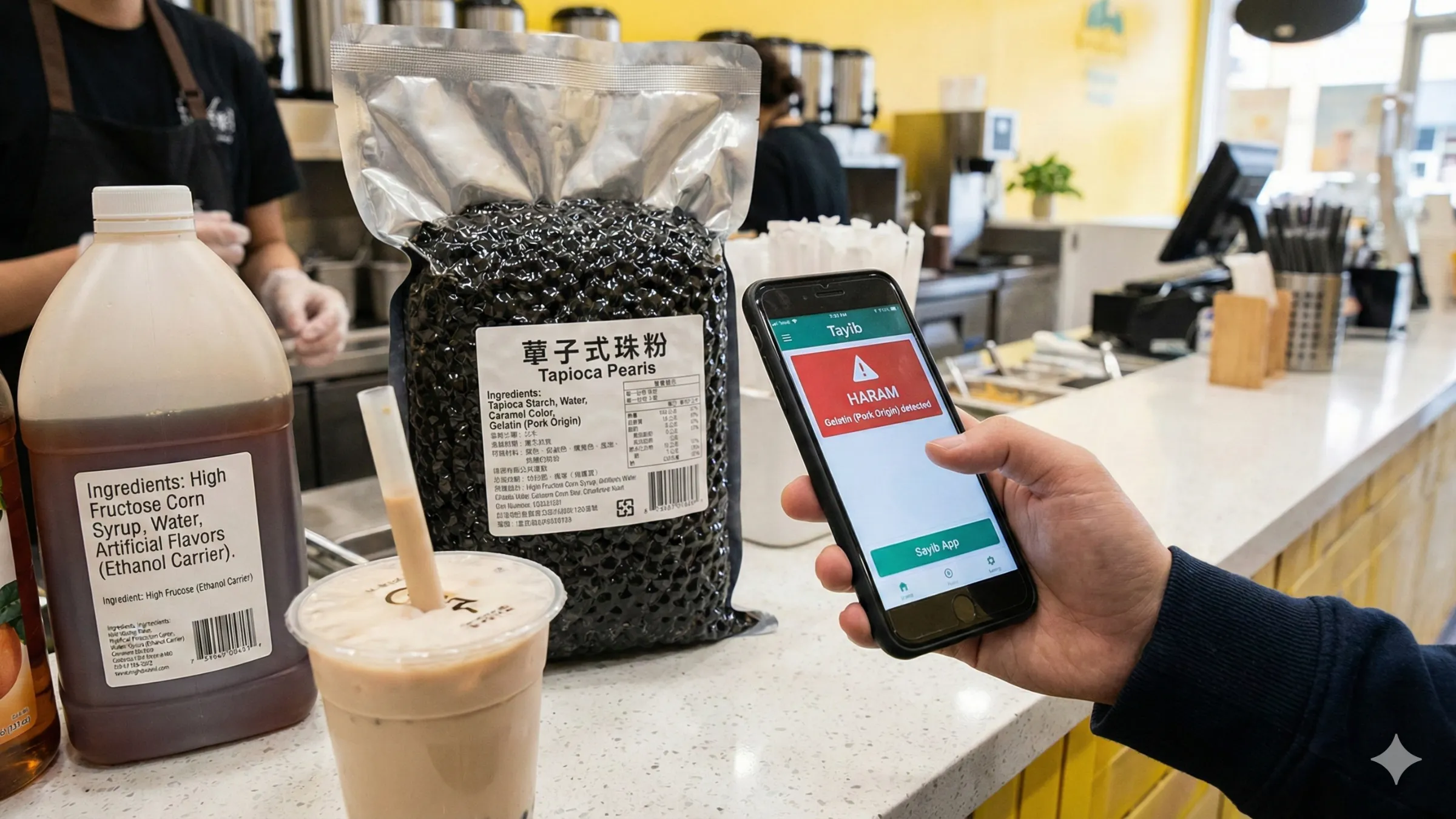
Chewy pearls. Sweet, creamy milk tea. The satisfying “pop” as your wide straw punctures the plastic seal.
Bubble Tea (or Boba) has gone from a Taiwanese specialty to a global obsession. It’s the go-to hangout drink for students and young professionals everywhere. On the surface, it seems incredibly innocent. It’s just tea, milk, and tapioca balls made from cassava root, right?
Usually, yes. But often, no.
The massive demand for boba has led to industrial cost-cutting that introduces surprising, and potentially Haram, ingredients into your favorite drink.
The real problem with Bubble Tea isn’t just what’s inside it; it’s that you are handed a plain plastic cup with zero ingredient information printed on it.
Here is the breakdown of the hidden dangers lurking behind the counter of your local boba shop.
Danger #1: The Pearls (Not Always Just Tapioca)
Traditional boba pearls are made from tapioca starch (from the cassava plant) and brown sugar. This base is naturally vegan and Halal.
However, to get that perfect “chew” (known as “QQ” in Taiwan) uniformly and cheaply, manufacturers sometimes cut corners.
The Threat: Gelatin. Some cheaper brands of industrial tapioca pearls use gelatin as a texturizing agent to ensure consistency and chewiness. As we’ve explored in other articles, generic gelatin often comes from pork skin or non-Zabiha beef bones.
If the shop buys the cheapest bulk pearls available, your vegetarian drink might contain animal products. This is a classic example of The Vegetarian Trap we’ve warned about before.
Danger #2: The Syrups (The Hidden Alcohol Trap)
Unless you are ordering plain brewed tea, the flavor in your drink comes from concentrated industrial syrups—mango, passion fruit, strawberry, etc.
The Threat: Ethanol as a Solvent. Real fruit is expensive and spoils quickly. Industrial fruit syrups rely heavily on artificial flavors. As we detailed in our exposé on the “Invisible Alcohol Epidemic”, ethanol is the most common solvent used to carry these flavors.
While the amount in your final cup is minute and won’t intoxicate you, many Muslims prefer to avoid any products where alcohol is used as an intentional ingredient in the manufacturing process.
Danger #3: The Powders (Dairy Doubt)
Many milk teas, especially flavors like Taro or Matcha, are made using pre-mixed powders rather than fresh milk.
The Threat: Non-Halal Whey or Emulsifiers. These powders often contain whey powder (which can come from cheese made with animal rennet) or emulsifiers like Mono- and Diglycerides, which can be derived from animal fats if not specified as vegetable-based.
The Dilemma: How Do You Check an Unlabeled Cup?
This is the biggest challenge with Boba. You can’t turn the cup around and scan a barcode.
If you ask the barista “Is this Halal?”, they might say “Yes, it’s just tea!” because they genuinely don’t know the complex science of industrial food production. They are just mixing what’s supplied to them.
The only way to be sure is to see the original industrial packaging.
You have to ask the shop to show you the big bag of tapioca pearls or the bottle of syrup behind the counter. This can be awkward, and even if they agree, the labels might be from Taiwan or China, covered in text you can’t read.
This is where Tayib changes the game.
A standard barcode scanner is useless on a Taiwanese bulk ingredients bag. But Tayib’s AI-powered OCR reads text just like you do.
If you are bold enough to ask the shop to see the ingredients, Tayib can scan that industrial label instantly, even if it’s in Chinese characters or complex English scientific terms. It will flag the hidden gelatin in the pearls or the ethanol carrier in the syrup in seconds.
Don’t sip in doubt. Download Tayib and ensure your boba trend is truly Halal.

Written by Tayib
Founder & Halal Food Analyst
Tayib is dedicated to making Halal consumption transparent and stress-free. Through rigorous ingredient analysis, E-number decoding, and direct contact with brands, we help the Muslim community make informed and safe choices every day.
Read our strict verification methodology