March 10, 2026
Is Buldak Ramen Halal? The Hidden Meat Extract Warning (2026)
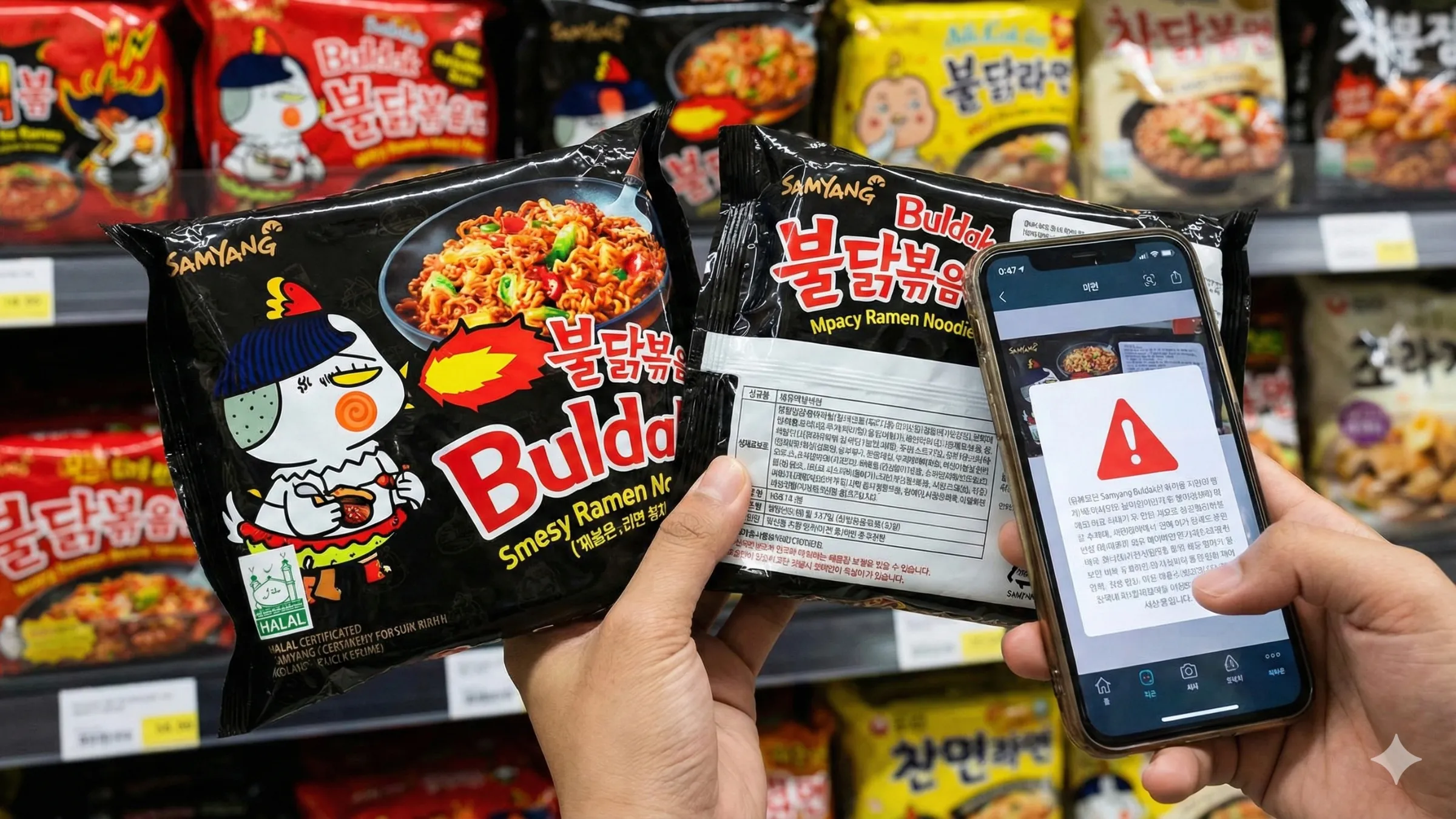
You have seen the “Fire Noodle Challenge” on TikTok. The bright packages of Samyang Buldak spicy noodles are everywhere.
But as a Muslim standing in the supermarket, you have one burning question. Can I eat this?
[2026 Update] Here is the bottom line: It depends entirely on the version you buy. The specific “Export” versions with an official Halal logo are 100% safe. However, the standard “Domestic” versions imported directly from South Korea are Haram or highly doubtful.
Uncertified versions often contain non-Zabiha meat extracts, hidden alcohol, and animal rennet.
As part of our Ultimate Muslim Guide to Popular Brands, we are breaking down exactly how to read a Buldak Ramen packet so you do not accidentally eat a Haram version.
Trap 1: “Domestic” vs. “Export” Versions
The biggest trap with Korean snacks is the two-version system. Companies often make two completely different recipes for the exact same product.
- The Export Version (Safe): Samyang makes specific Halal-certified noodles for Muslim countries like Malaysia and Indonesia. These are made in separate, dedicated factories. You will see a recognized Halal logo from the Korea Muslim Federation (KMF) or the Indonesian MUI directly on the front of the packaging.
- The Domestic Version (Danger): These are made for the South Korean market. South Korea does not legally prioritize Halal rules for domestic food. These versions often use non-Zabiha meat, pork derivatives, or alcohol.
The Danger: Many Western supermarkets and Asian grocers import the cheaper domestic version. The packet looks almost identical. But the ingredients are completely different.
Reading Korean labels is hard
Instantly translate and detect Haram ingredients in imported noodles with the Tayib app.
Trap 2: Real Meat Extracts
When a Halal-certified noodle says “Chicken Flavor,” it uses purely artificial, plant-based flavorings.
But the uncertified domestic versions are different. If you translate the Korean label, it often lists real “Chicken Extract Powder” or “Beef Bone Concentrate.”
Unless stated otherwise, meat in South Korea is not slaughtered according to Islamic rites. Consuming extracts from non-Zabiha animals is Haram.
Want to know what other popular brands hide non-Zabiha meat? Read our Halal Shopping at Costco Guide.
Trap 3: Hidden Alcohol and Cheese Rennet
If you avoid the meat extracts, you still have to worry about the sauce and the cheese powder.
- The Alcohol Risk: Korean cuisine relies heavily on fermented soy sauces and flavoring syrups. These can contain residual ethanol (alcohol) from the fermentation process. Uncertified sauce packets often contain this hidden alcohol. Read more in our guide to the Invisible Alcohol Epidemic.
- The Cheese Risk: Buldak Carbonara and Cheese flavors are incredibly popular. But the cheese powder in uncertified packets might use animal rennet extracted from calf stomachs. If the calf was not slaughtered properly, the cheese is Haram. Confused about cheese? Read our Is Cheese Halal? Rennet Guide.
Stop Guessing: Use the Best Halal Scanner App
If you find a packet with a clear KMF or MUI Halal logo, you are safe to eat it.
But what if the packet is entirely in Korean? Traditional halal check barcode scanner apps will fail. Imported products from Asian grocers are rarely in global English databases, meaning a simple barcode scan won’t save you. You cannot guess the ingredients based on a picture of a cartoon chicken.
This is exactly why you need Tayib.
Recognized by thousands of Muslims as the best halal scanner app, Tayib’s smart OCR AI does not rely purely on barcodes. Just point your phone’s camera at the Korean text on the back of the packet.
Tayib acts as your personal halal ingredient checker and halal food checker. It instantly translates the text and flags hidden pork, non-Zabiha meat extracts, and alcohol in seconds.
Translate and Scan in Seconds
Don't take a risk on a spicy trend. Let Tayib's AI read the foreign labels for you. Instantly detect hidden alcohol, non-Zabiha meat, and animal rennet before you buy.
Download TayibFrequently Asked Questions: Is Buldak Ramen Halal?
Is the chicken flavor in Buldak real chicken?
It depends on the version. The Halal-certified export version uses artificial flavorings or strictly certified Halal chicken extracts. The domestic Korean version frequently uses real chicken extracts or beef bone concentrates from non-Zabiha animals, making it Haram.
Is Samyang Cheese or Carbonara ramen Halal?
Only if it has an official Halal certification logo (like KMF or MUI) on the front packaging. If there is no logo, it is highly doubtful (Mushbooh). Uncertified versions may contain non-Zabiha meat extracts and animal rennet in the cheese powder.
Does Buldak use animal rennet in its cheese flavors?
In the domestic, uncertified versions of Buldak Cheese or Carbonara, the manufacturer does not specify the source of the enzymes used. This means there is a high risk it contains animal rennet. The officially Halal-certified export versions use safe, microbial enzymes.
How do I know if my Buldak ramen is the Halal export version?
Look for a recognized Halal logo on the front of the packaging. If the packet is written entirely in Korean (Hangul) and has no Halal stamp, it is almost certainly the domestic version. Use the Tayib app's OCR feature to translate and scan the Korean ingredients to be safe.
Does the spicy red sauce contain hidden alcohol?
The domestic versions of Korean instant noodles often use traditional fermented soy sauces that can contain residual ethanol (alcohol). The Halal-certified export versions are specially formulated to be 100% alcohol-free.
Does Buldak ramen contain pork?
Most Buldak flavors do not use pork as a primary ingredient, but uncertified domestic versions may be produced in facilities that handle pork or use pork-derived gelatin. Always look for the Halal logo to ensure zero cross-contamination.
Can I trust the KMF Halal logo on Samyang noodles?
Yes. The Korea Muslim Federation (KMF) is a recognized Islamic authority. Their certification guarantees that the product was made in a separate, pork-free facility using only permissible ingredients.
Why do Western supermarkets sell the non-Halal version?
Many Western supermarkets and Asian grocers use third-party importers. These importers often buy the cheaper domestic versions directly from South Korea rather than sourcing the specific export versions meant for Muslim countries.
Is Samyang 2x Spicy Nuclear Ramen Halal?
Like the original flavor, the 2x Spicy version is only Halal if it carries the official KMF or MUI Halal logo on the package. Do not consume it without verifying the certification mark.

Written by Tayib
Founder & Halal Food Analyst
Tayib is dedicated to making Halal consumption transparent and stress-free. Through rigorous ingredient analysis, E-number decoding, and direct contact with brands, we help the Muslim community make informed and safe choices every day.
Read our strict verification methodology