March 14, 2025
Is Cheese Halal? The Shocking Truth About Animal Rennet & Hidden Pork Enzymes
Pizza. Macaroni and cheese. A simple grilled cheese sandwich.
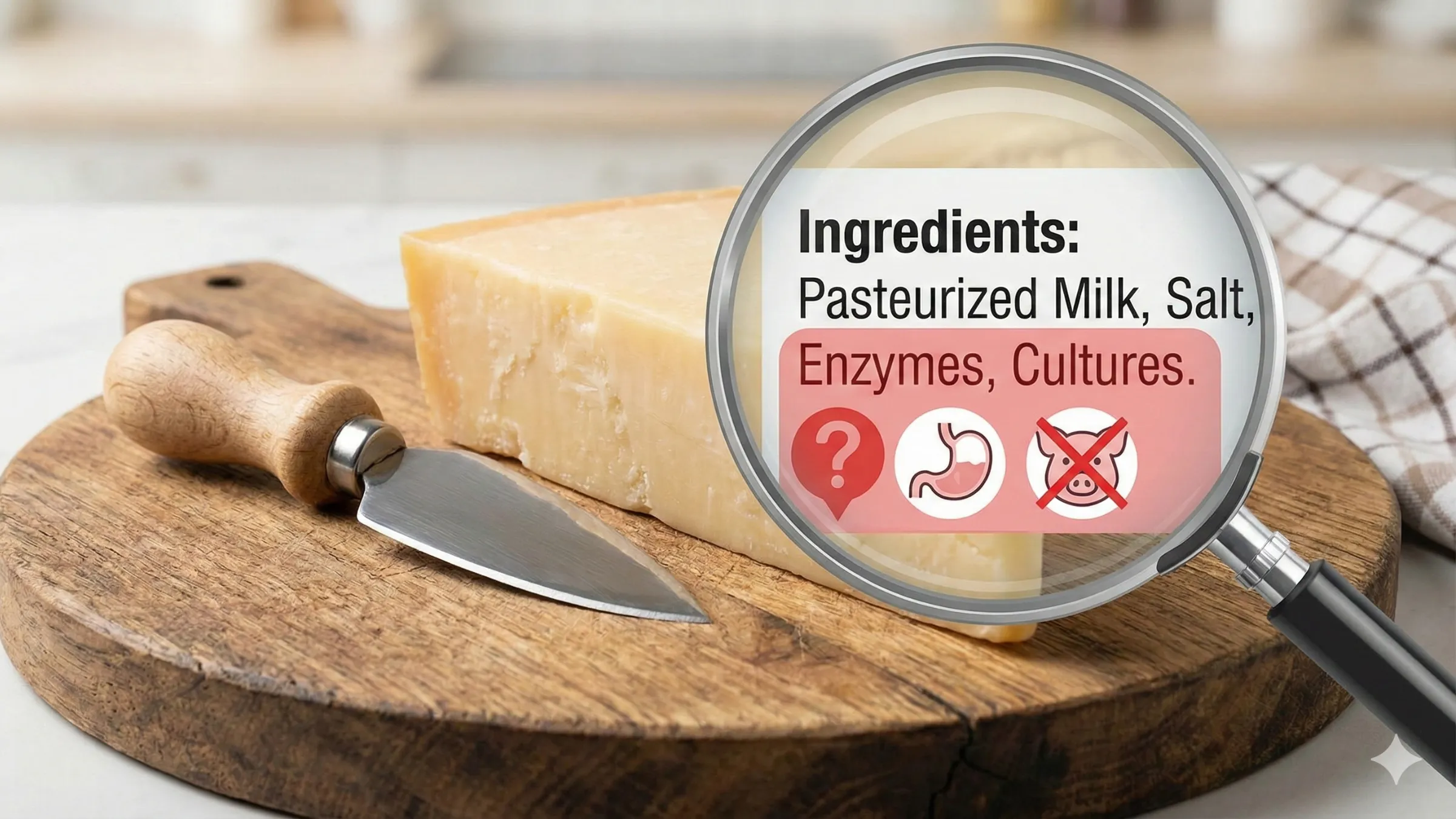
Cheese is one of the most beloved foods in the world. It seems innocent enough. The ingredient list usually just says milk, salt, cultures, and enzymes.
Milk is Halal. Salt is Halal. So, cheese should be completely fine, right?
Here is the bottom line: Just because a cheese does not contain visible meat does not mean it is Halal. The secret ingredient used to turn liquid milk into solid cheese is called rennet. If this rennet comes from plants or microbes, the cheese is Halal. If it comes from unslaughtered calves or pigs, it is Haram or Mushbooh (doubtful).
As part of our Ultimate Guide to Halal Ingredients, we are breaking down the “Cheese Trap.” Here is exactly how to navigate the dairy aisle without compromising your faith.
The Core Problem: What is “Rennet”?
To make cheese curdle, cheesemakers historically used rennet. Rennet is a complex of enzymes produced in the stomachs of unweaned calves. It helps the baby cows digest their mother’s milk.
The Halal Issue with Traditional Rennet: For a calf’s stomach (and the enzymes inside it) to be Halal, the animal must be slaughtered according to Islamic Zabiha rites.
In the vast majority of Western industrial cheese production, this rennet comes from calves slaughtered conventionally.
- The Strict View: According to the Shafi’i and Hanbali schools of thought, this makes the rennet Maytah (carrion). Therefore, it is strictly Haram. Recognized authorities like HMC UK classify non-microbial animal rennet as unacceptable.
- The Lenient View: The Hanafi school has a more lenient view on rennet from non-Zabiha animals (as long as it is not a pig). However, many cautious Muslims across all schools prefer to avoid it completely to remove all doubt.
The Sneakier Threat: Pork Pepsin
It gets worse. Sometimes, manufacturers do not use calf rennet at all.
To save money, cheaper cheese brands use pepsin. Pepsin is an enzyme derived directly from pig stomachs. It is a very cheap coagulant.
The Halal Verdict: Any ingredient derived from a pig is universally and unequivocally Haram in all schools of Islam.
Want to know what other foods hide pork? Read our guide on the 5 Sneakiest Haram Ingredients.
The Labeling Nightmare: Vague “Enzymes”
The biggest problem is not just the ingredient itself. It is the label.
In the US and Europe, food laws allow manufacturers to simply list “Enzymes” or “Rennet” on the back of the package. They do not have to specify the source.
- Does “Enzymes” mean safe microbial rennet made in a lab?
- Does it mean traditional calf rennet from a non-Zabiha animal?
- Does it mean pork pepsin?
You cannot tell from the label alone. This ambiguity lands most supermarket cheeses squarely in the Mushbooh (Doubtful) category.
This same vagueness applies to E-numbers. Check our Complete Guide to Halal E-Numbers to learn more.
Which Cheeses Are the Riskiest?
Not all cheeses are created equal. Here is a quick risk assessment.
- Highest Risk (Almost always Animal Rennet): Traditional, protected European cheeses. Authentic Parmigiano-Reggiano (Parmesan), Grana Padano, and Gorgonzola are required by European law to use traditional animal rennet.
- Variable Risk (Check the label): Cheddar, Colby, and Monterey Jack. Big supermarket brands often switch between animal and microbial sources depending on price and supply.
- Safer Bets: Soft cheeses like Cream Cheese, Cottage Cheese, and Ricotta generally use bacterial cultures or acids (like vinegar) instead of rennet.
Buying cheese for a large family? Read our Halal Shopping at Costco Guide to find bulk Halal options.
The Solution: Stop Guessing. Start Scanning.
Fortunately, modern food science has created safe alternatives. Microbial Rennet (made from fungi or bacteria) and Vegetarian Rennet (plant-based) are 100% Halal.
But how do you find them without a degree in dairy science?
This is why you need Tayib in the dairy aisle.
Do not stand in the supermarket Googling “Is Brand X cheddar Halal?” for 20 minutes. Brands change their recipes constantly.
Tayib’s smart OCR AI cuts through the vagueness. Just point your phone’s camera at the ingredient list. It instantly flags generic “Rennet” as a red flag. It instantly highlights safe keywords like “Microbial Enzyme” or “Vegetable Rennet”. It gives you a clear Halal or Haram verdict in seconds.
Enjoy Your Pizza Without the Doubt
Don't let hidden animal enzymes ruin your meal. Let Tayib's AI scan the cheese label and instantly detect non-Zabiha rennet and pork pepsin before you buy.
Download TayibFrequently Asked Questions: Halal Cheese & Rennet
Is animal rennet Halal?
It depends on the source and your Madhab. If the rennet comes from a calf slaughtered Zabiha, it is Halal. If it comes from a non-Zabiha animal, Shafi'i and Hanbali scholars consider it Haram, while the Hanafi school generally permits it (if not from a pig).
Are 'enzymes' on a cheese label Halal or Haram?
The generic term 'enzymes' is Mushbooh (doubtful). It could refer to Halal microbial enzymes, doubtful non-Zabiha calf rennet, or strictly Haram pork pepsin. It is highly recommended to verify the brand or look for a 'Suitable for Vegetarians' label.
Are microbial enzymes or microbial rennet Halal?
Yes, absolutely. Microbial rennet is produced using fungi, bacteria, or mold rather than animal stomachs. Because it is completely microbe-based and contains no meat, it is 100% Halal.
Does authentic Parmesan cheese use Halal rennet?
Usually, no. Authentic Parmigiano-Reggiano from Europe is legally bound by tradition to use animal calf rennet. Unless specifically certified Halal, this rennet comes from non-Zabiha animals, making the cheese doubtful or Haram for strict Muslims.
Can supermarket cheese actually contain pork?
Yes. To cut costs, some commercial cheese manufacturers use pork pepsin as a coagulating enzyme instead of calf rennet. Any cheese made with pork-derived enzymes is strictly Haram.
Is Cheddar cheese Halal?
It varies by brand. Many modern cheddar brands use Halal microbial rennet because it is cheaper to mass-produce. However, traditional farmhouse cheddars often use animal rennet. Always check the label.
What is vegetable rennet?
Vegetable rennet is an enzyme extracted from plants (often thistles or nettles) used to curdle milk. It is 100% plant-based and completely Halal.
Is mozzarella cheese Halal?
Most mass-produced mozzarella (like the kind used on commercial pizzas) uses microbial rennet and is Halal. However, authentic fresh Mozzarella di Bufala from Italy often uses traditional animal rennet.
Is Feta cheese Halal?
Traditional Greek Feta is made from sheep or goat's milk and often uses animal rennet. However, modern supermarket Feta frequently uses microbial enzymes. You must read the specific brand's ingredient list.
Are cheese powders in chips (like Doritos) Halal?
Cheese powders used in chips are highly Mushbooh. They use the same rennet as solid cheese. Furthermore, they may contain whey powder processed with animal rennet. Always scan the snack bag with Tayib.
How does the Tayib app detect Haram cheese?
Tayib uses OCR AI to read the text on the ingredient label. It flags generic words like 'Enzymes' or 'Rennet' as doubtful, and gives a green light to 'Microbial Rennet' or 'Vegetable Enzymes'.
Is whey powder Halal?
Whey is a liquid byproduct of the cheese-making process. Its Halal status depends entirely on the rennet used to make the original cheese. If the cheese used animal rennet, the resulting whey powder is also considered doubtful or Haram.

Written by Tayib
Founder & Halal Food Analyst
Tayib is dedicated to making Halal consumption transparent and stress-free. Through rigorous ingredient analysis, E-number decoding, and direct contact with brands, we help the Muslim community make informed and safe choices every day.
Read our strict verification methodology