February 5, 2026
Is Oreo Halal? The Truth About the World's Favorite Cookie
Twist, lick, dunk. It is a famous ritual.
But for Muslim consumers, there is often a fourth step: Panic.
A few years ago, a viral tweet from the official Oreo account stated: “Oreos are not Halal certified in the USA/Canada.” This sent shockwaves through the community. People threw away packages and swore off the cookie forever.
But here is the truth: “Not Certified” does not automatically mean “Haram.”
The bottom line: The standard Oreo cookie is widely considered Halal-suitable by most Islamic scholars. There is absolutely no pork, no lard, and no animal gelatin inside. They are technically a vegan cookie.
The only point of debate involves the vanilla flavoring. As part of our Ultimate Muslim Guide to Popular Brands, we are breaking down the exact ingredients so you can snack with confidence.
The Good News: Clean Ingredients
Oreos are surprisingly simple. They do not use the usual animal-based suspects that ruin other popular snacks.
1. No Pork Gelatin ✅
Unlike marshmallows or soft gummy treats, the creamy white center of an Oreo does not use gelatin. It gets its texture from cornstarch and soy lecithin.
- Want to know which candies do use pork? Check out our Complete Halal Candy & Snacks Guide.
2. No Animal Lard ✅
Decades ago, many commercial bakeries used lard (pig fat) to make cookies crispy. Today, classic Oreos use plant-based Palm Oil and Canola Oil. There is no animal fat involved.
The Grey Area: Vanilla Extract and Alcohol ⚠️
If Oreos have no pork and no animal fat, why did the company say they are not Halal?
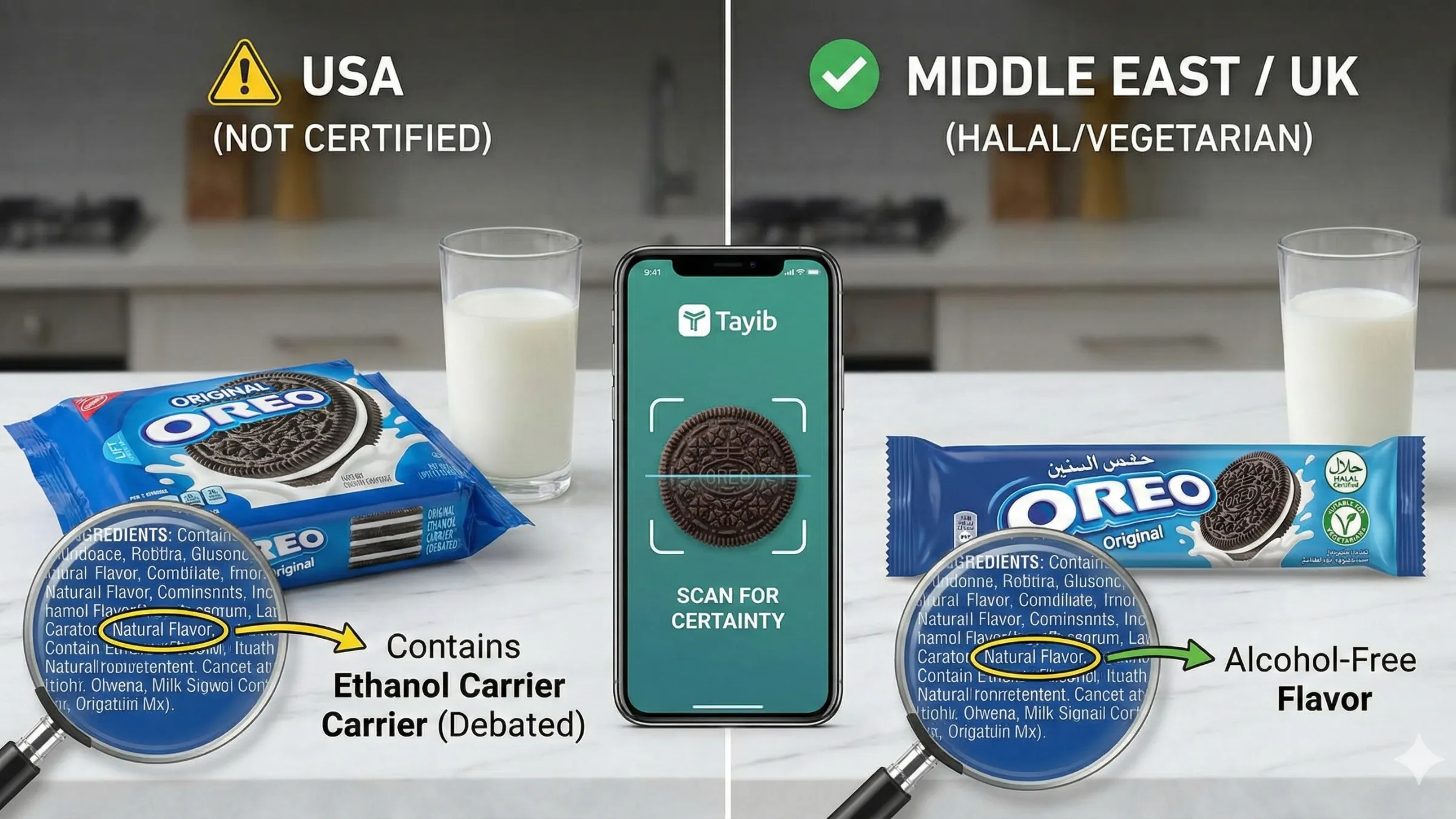
This is where the debate happens. The ingredient list mentions “Natural and Artificial Flavors.” In the US food industry, vanilla extract is extracted using Ethanol (Alcohol).
In fact, the FDA requires vanilla extract to contain a minimum of 35% alcohol .
While the alcohol largely evaporates during the high-heat baking process, minute traces can remain.
Is this Halal?
- The Lenient View (Majority): Many recognized Halal authorities permit this. The alcohol is used merely as a solvent, not as a beverage. The trace amount is completely diluted (Istihlak) and cannot intoxicate you. Therefore, the cookie is Halal.
- The Strict View: Some strict scholars prefer to avoid any product where alcohol was used during processing, regardless of the final percentage.
This debate is very common in modern foods. Read our full guide on the Invisible Alcohol Epidemic.
Geography Matters: US vs. UK vs. Middle East
Just like with other global snacks, where you buy your Oreos changes the ruling.
🇺🇸 USA & Canada
Mondelez (the company that owns Oreo) states that US Oreos are not Halal certified. This simply means they do not pay a Halal agency to inspect their American factories. However, the ingredients remain plant-based (with the vanilla alcohol debate applying).
🇬🇧 UK & Europe
In the UK, Oreos are not Halal certified either. However, they are officially approved by the Vegetarian Society. For most Muslims in the UK, a “Vegetarian” label is sufficient for cookies because it guarantees there are no animal fats.
🇸🇦 Middle East & Asia
If you buy Oreos in Saudi Arabia, the UAE, or Indonesia, they are 100% Halal Certified. The manufacturers use alcohol-free synthetic flavorings and dedicated factory lines to ensure total compliance with local Islamic laws.
The Danger of “Limited Edition” Flavors
The classic black-and-white Oreo is generally safe. But you must be careful with limited edition flavors.
Oreo frequently releases flavors like Red Velvet, Birthday Cake, or seasonal colored creams. These variations often introduce new artificial colors and sprinkles.
The Trap: Red Velvet Oreos might use E120 (Carmine) to get that bright red color. Carmine is made from crushed insects and is considered Haram by the majority of scholars.
- Read our deep dive: The Shocking Truth About E120.
Stop Guessing in the Snack Aisle
The world of supermarket cookies is confusing. You should not have to memorize chemistry or worry about regional factory differences.
Use the Tayib app to scan the package. While the classic Oreo might be safe, that new limited-edition flavor might hide crushed beetles or doubtful emulsifiers. Just point your phone’s camera at the ingredient list. Tayib’s OCR AI instantly reads the text and detects hidden red flags in seconds.
Is That Cookie Actually Safe?
Don't let a viral tweet ruin your snack time. Let Tayib's AI scan the ingredient list and detect hidden pork, alcohol, and insect dyes instantly. Your peace of mind is one tap away.
Download TayibFrequently Asked Questions: Are Oreos Halal?
Do Oreos contain pork gelatin?
No. Standard Oreos do not contain pork gelatin or any other type of animal gelatin. The signature creamy center gets its texture from cornstarch and plant-based soy lecithin.
Does Oreo contain alcohol?
It depends on where you buy them. In the US and Canada, the vanilla flavoring is processed using ethanol (alcohol) as a solvent. While it evaporates during baking, minute traces remain. Most scholars consider this Halal, but strict observers may avoid it.
Is Oreo Halal in the UK?
While Oreos in the UK do not carry an official Halal certification logo, they are approved by the Vegetarian Society. Because they contain zero meat products or animal fats, most Muslims consider them Halal-suitable.
Are Oreo biscuits completely Vegan?
Yes, the classic Oreo recipe does not intentionally include any animal products, dairy, or eggs, making them popular among Vegans. However, they are made in facilities that handle milk, so cross-contamination is possible.
Do Oreos contain dairy or whey powder?
The classic Oreo recipe does not use dairy. However, cross-contact can occur at the factory. From a Halal perspective, incidental cross-contamination with permissible dairy is generally acceptable.
Are Red Velvet Oreos Halal?
You must be cautious. Red Velvet and other brightly colored limited-edition Oreos may use food colorings like Carmine (E120), which is derived from crushed insects and is considered Haram by most scholars. Always scan the ingredients.
Why did Oreo tweet that their cookies are not Halal?
The official Oreo account was referring specifically to the USA and Canada. They simply meant they do not pay a third-party Halal certification board to inspect those specific factories. It does not automatically mean the ingredients are Haram.
Are Oreos in Dubai and Saudi Arabia Halal?
Yes. Oreos manufactured for the Middle Eastern market are 100% Halal certified. They use alcohol-free flavorings to comply strictly with local Islamic regulations.
Is the soy lecithin in Oreos Halal?
Yes. Soy lecithin is a common emulsifier derived entirely from soybeans. It is a 100% plant-based and Halal ingredient.
What is a good Halal alternative to American Oreos?
If you want to avoid the trace alcohol in American Oreos, look for 'Hydrox' cookies (which are strictly Kosher Pareve) or buy imported cookie brands like 'Ulker' from a local Middle Eastern grocery store.

Written by Tayib
Founder & Halal Food Analyst
Tayib is dedicated to making Halal consumption transparent and stress-free. Through rigorous ingredient analysis, E-number decoding, and direct contact with brands, we help the Muslim community make informed and safe choices every day.
Read our strict verification methodology