September 10, 2025
Is Soy Sauce Halal? The Alcohol Debate Explained
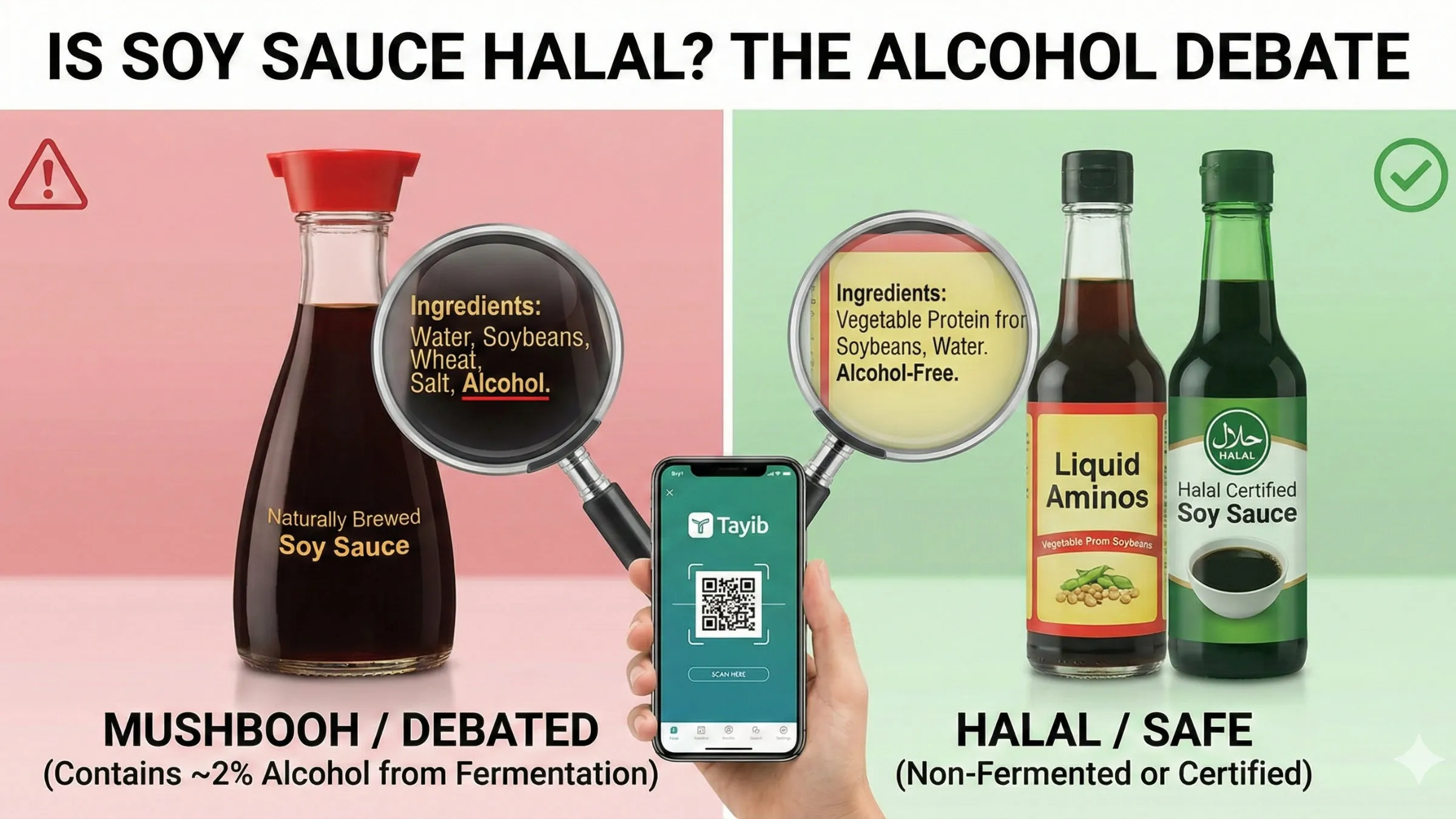
It is the essential condiment for Sushi, Stir-fry, and marinades. But if you have ever turned a bottle of Kikkoman around, you might have seen a scary ingredient listed: Alcohol.
Panic sets in. Is my sushi Haram?
The answer is one of the most debated topics in the Halal food world. It involves understanding chemistry, fermentation, and the Islamic legal concept of Istihlak (transformation/dilution).
Here is everything you need to know about Soy Sauce so you can eat your California Roll in peace.
The Verdict (TL;DR)
- Naturally Brewed (Traditional): ⚠️ Mushbooh (Debated). Contains 1-2% alcohol derived naturally from fermentation. Many scholars allow it (it does not intoxicate), but strict followers avoid it.
- Chemically Produced (Cheap Brands): ✅ Halal. Made with acid-hydrolyzed protein. No fermentation, no alcohol.
- Halal Certified: ✅ Halal. Brands like Kikkoman have specific “Halal” lines where the alcohol is removed or inhibited.
- Liquid Aminos: ✅ Halal. A popular alcohol-free alternative.
Why is there Alcohol in Soy Sauce?
It’s not added to make you drunk. It’s part of the process.
Traditional Soy Sauce (like the classic Kikkoman Red Bottle) is made by mixing soybeans, wheat, salt, and water with a mold culture called Koji.
This mixture is left to ferment for months. During fermentation, the yeasts break down the sugars into Ethanol.
- The Result: A standard bottle of naturally brewed soy sauce contains roughly 1.5% to 2% alcohol by volume.
The Great Debate: Is it Haram?
Since the Quran forbids intoxicants (Khamr), many Muslims see “2% Alcohol” and assume it is forbidden. However, the ruling is nuanced.
View 1: The Strict View (Avoid) 🚫
Some scholars argue that any amount of ethanol derived from fermentation (even if not from grapes/dates) should be avoided to be safe. If you follow this view, you cannot eat standard Kikkoman.
View 2: The Majority View (Permissible) ✅
Many major certification bodies and scholars (including rulings from JAKIM Malaysia and others on Istihlak) allow naturally brewed soy sauce for two reasons:
- It is not an Intoxicant: You physically cannot get drunk on soy sauce. The salt content is so high (15-16%) that you would die of salt poisoning before the alcohol affected your brain.
- Incidental Byproduct: The alcohol is not added from an external source (like pouring wine into sauce); it is a natural result of the soy fermentation, similar to the trace alcohol found in ripe bananas or sourdough bread.
Key Concept: Istihlak refers to a substance that is fully dissolved or transformed into another substance, losing its original characteristics (ability to intoxicate).
Guide to Brands: What to Buy?
If you want to be 100% safe and avoid the debate entirely, look for these types:
1. Kikkoman (The Red vs. Green vs. Halal)
- Red Cap (Traditional): Contains ~2% Alcohol. (Mushbooh).
- Green Cap (Less Sodium): Still brewed. Still contains Alcohol.
- The “Halal” Bottle: Kikkoman produces a specific Gluten-Free Halal Soy Sauce (often made in Singapore or the Netherlands). It has a clear Halal Logo on the label. Buy this one.
2. Bragg Liquid Aminos (The Best Alternative)
This yellow bottle is a staple in health food stores. It tastes exactly like soy sauce but is made from non-fermented soy protein.
- Alcohol Content: 0%.
- Status: 100% Halal and safe.
3. “Synthetic” Soy Sauce (Takeout Packets)
The cheap little packets you get with Chinese takeout often contain no soy fermentation at all. They are essentially colored salt water with caramel flavor.
- Status: chemically processed, but generally Halal (Alcohol-free).
Alternatives to Look For
If you are cooking at home and want depth of flavor without the alcohol risk:
- Coconut Aminos: Sweeter, soy-free, alcohol-free.
- Tamari: Check the label. Some Tamari is alcohol-free, but some is fermented.
- Worcestershire Sauce: ⚠️ WARNING. Usually contains Malt Vinegar (Barley alcohol) and Anchovies. Check for “Halal” or “Vegetarian” versions specifically.
The Solution: Scan the Bottle.
Labels are confusing. “Naturally Brewed” sounds healthy, but it means “Contains Alcohol.” “Hydrolyzed Soy Protein” sounds scary, but it’s often Halal.
Don’t need a chemistry degree to buy sauce.
Use Tayib to scan the bottle. We detect the brewing method and the presence of ethanol. We will tell you if that bottle is the “2% Alcohol” version or the “Halal Certified” version.
Sushi Night?
Don't let the Kikkoman bottle confuse you. Scan it with Tayib to find alcohol-free alternatives instantly.
Check My Soy Sauce
Written by Tayib
Founder & Halal Food Analyst
Tayib is dedicated to making Halal consumption transparent and stress-free. Through rigorous ingredient analysis, E-number decoding, and direct contact with brands, we help the Muslim community make informed and safe choices every day.
Read our strict verification methodology