February 18, 2025
Japanese A5 Wagyu: Why Your '$100 Halal Steak' Might Be Fake
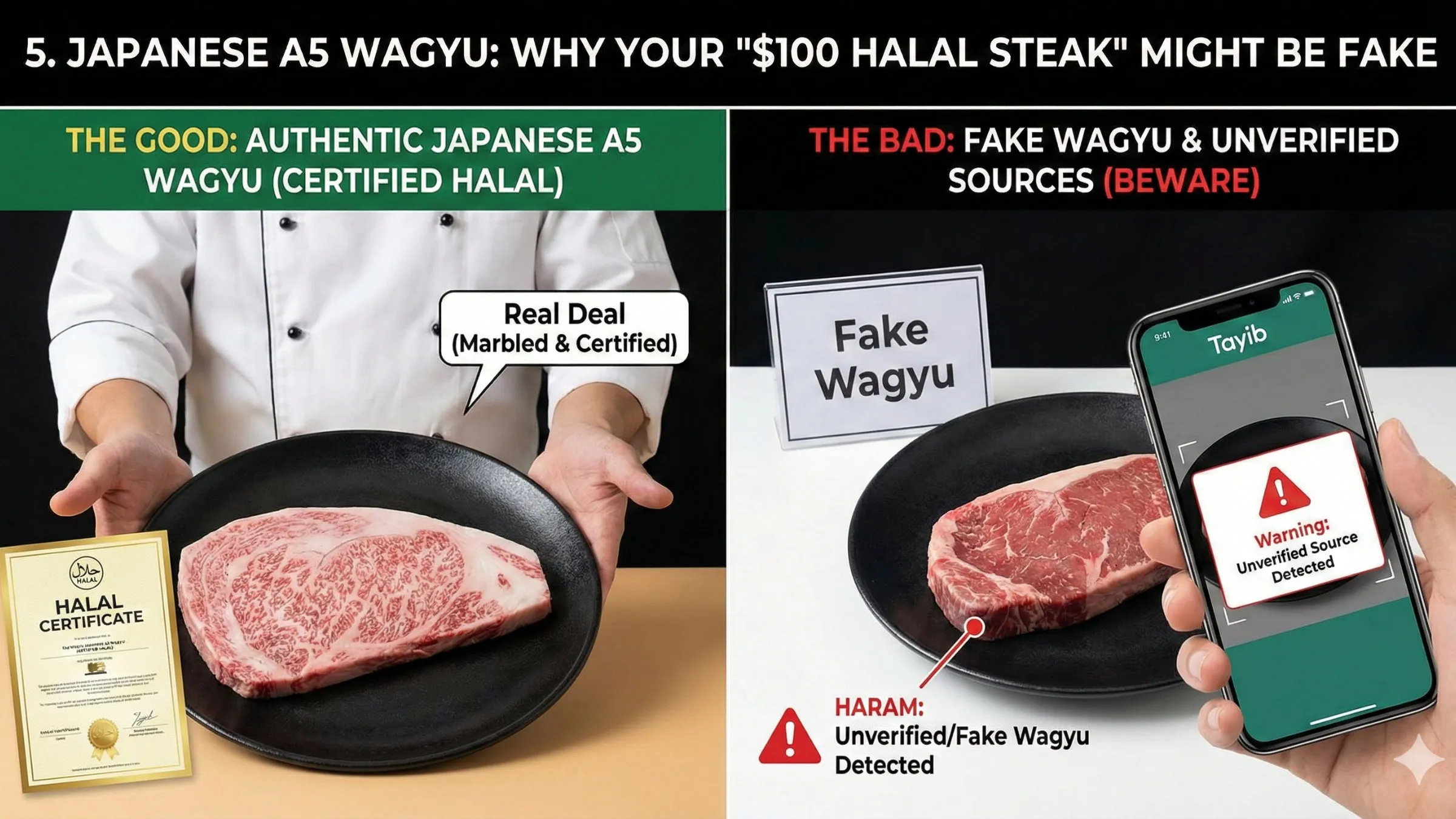
You are at a high-end steakhouse in London, Dubai, or New York. The waiter places a menu in front of you. There it is, the crown jewel: “Halal Wagyu Beef - $150.”
Your mouth waters. You order it. It arrives, sizzling and tender. You pay the bill, happy.
But you might have just been scammed.
In the world of luxury Halal dining, “Wagyu” is the most abused term. Restaurants often sell Australian cross-bred beef (excellent, but worth $40) as Japanese A5 (worth $150+). Or worse, they sell non-Halal Japanese beef and claim it’s Halal “because it’s from Japan.”
Here is how to spot the fake, read the marble score, and ensure your expensive steak is 100% Halal Certified.
The 3 Types of “Wagyu” You Must Know
“Wagyu” just means “Japanese Cow” (Wa = Japanese, Gyu = Cow). But not all Wagyu is created equal.
1. The Holy Grail: Japanese A5 (The Real Deal) 🇯🇵
- Origin: Born, raised, and slaughtered in Japan.
- The Look: It is pink/white, not red. The fat marbling is so intense it looks like snow.
- Halal Status: Rare. Only a few slaughterhouses in Japan (like Sanda Meat Center) are Halal-certified. It is extremely expensive and difficult to export.
- The Taste: It melts instantly. You cannot eat a whole steak; you eat 3-4 ounces.
2. Australian Wagyu (The Most Common) 🇦🇺
- Origin: Japanese cows cross-bred with Australian Angus (usually 50% Wagyu / 50% Angus).
- The Look: Red meat with good marbling, but not “snowy” white.
- Halal Status: Very Common. Australia is a massive exporter of Halal beef. Brands like Westholme or Sher are top tier.
- The Verdict: Delicious, but NOT A5. If you are paying Japanese prices for this, you are being ripped off.
3. American/British Wagyu (The “F1”) 🇺🇸🇬🇧
- Origin: Often mostly Angus with some Wagyu genetics.
- The Look: Looks like a very good Prime steak.
- Halal Status: Depends on the slaughterhouse (Creekstone Farms is a famous Halal supplier in the US).
The “Halal Certificate” Trap 📜
Here is the dirty secret: Many restaurants buy Non-Halal Japanese A5 because it is cheaper and easier to find. They then rely on the customer assuming “It’s beef, so it’s fine.”
Or they lie.
They show you a Halal certificate for their Australian beef (which they use for burgers) but serve you Japanese beef (which is non-Halal) for the steak.
How to verify instantly: Real Halal Japanese A5 comes with a specific Halal Slaughter Certificate from Japan. It will feature:
- The Date of Slaughter: Must be recent (frozen) or very fresh (chilled air-flown).
- The Center Name: Look for “Sanda Meat Center” or “Zen-Noh.”
- The Logo: A recognized Japanese Halal certification body (like MPJA or JHA).
The Concierge Move:
“Excuse me, before I order the A5, may I see the raw meat and its Halal certificate? I want to check the marbling.” Any authentic restaurant will proudly bring the raw slab to your table. If they refuse (“It’s in the kitchen”), be suspicious.
Is “Kobe Beef” ever Halal?
Kobe is a specific brand of Wagyu from the Hyogo prefecture. It is the Rolex of beef.
- Is it Halal? For years, it was impossible.
- The Update: Recently, a few Halal-certified carcasses of Kobe beef have been exported to the Middle East and select cities.
- The Rule: If a restaurant claims “Halal Kobe,” demand the Bronze Statue certificate. Every restaurant selling real Kobe must display a specific bronze statue. No statue = Fake Kobe.
The Sauce Danger (Again!) 🍷
You verified the beef. It is real Halal A5. The chef grills it perfectly. Then he pours a Truffle Jus or Red Wine Reduction over it.
You just ruined a $200 Halal steak.
Japanese A5 is so rich it needs acid to cut the fat. Chefs instinctively reach for wine or soy sauce (which contains alcohol).
- The Order: Ask for the steak “Dry” with “Salt & Pepper Only” or fresh Wasabi on the side.
Soy Sauce Alert: Why is standard soy sauce problematic? Read our Soy Sauce Guide.
Paying for Quality?
Don't let a restaurant charge you A5 prices for F1 beef. Verify the origin and scan the sauces with Tayib.
Download Tayib for Dining
Written by Tayib
Founder & Halal Food Analyst
Tayib is dedicated to making Halal consumption transparent and stress-free. Through rigorous ingredient analysis, E-number decoding, and direct contact with brands, we help the Muslim community make informed and safe choices every day.
Read our strict verification methodology