August 16, 2025
The Shocking Truth About Supermarket Bread: 3 Hidden Haram Ingredients in Your Daily Loaf
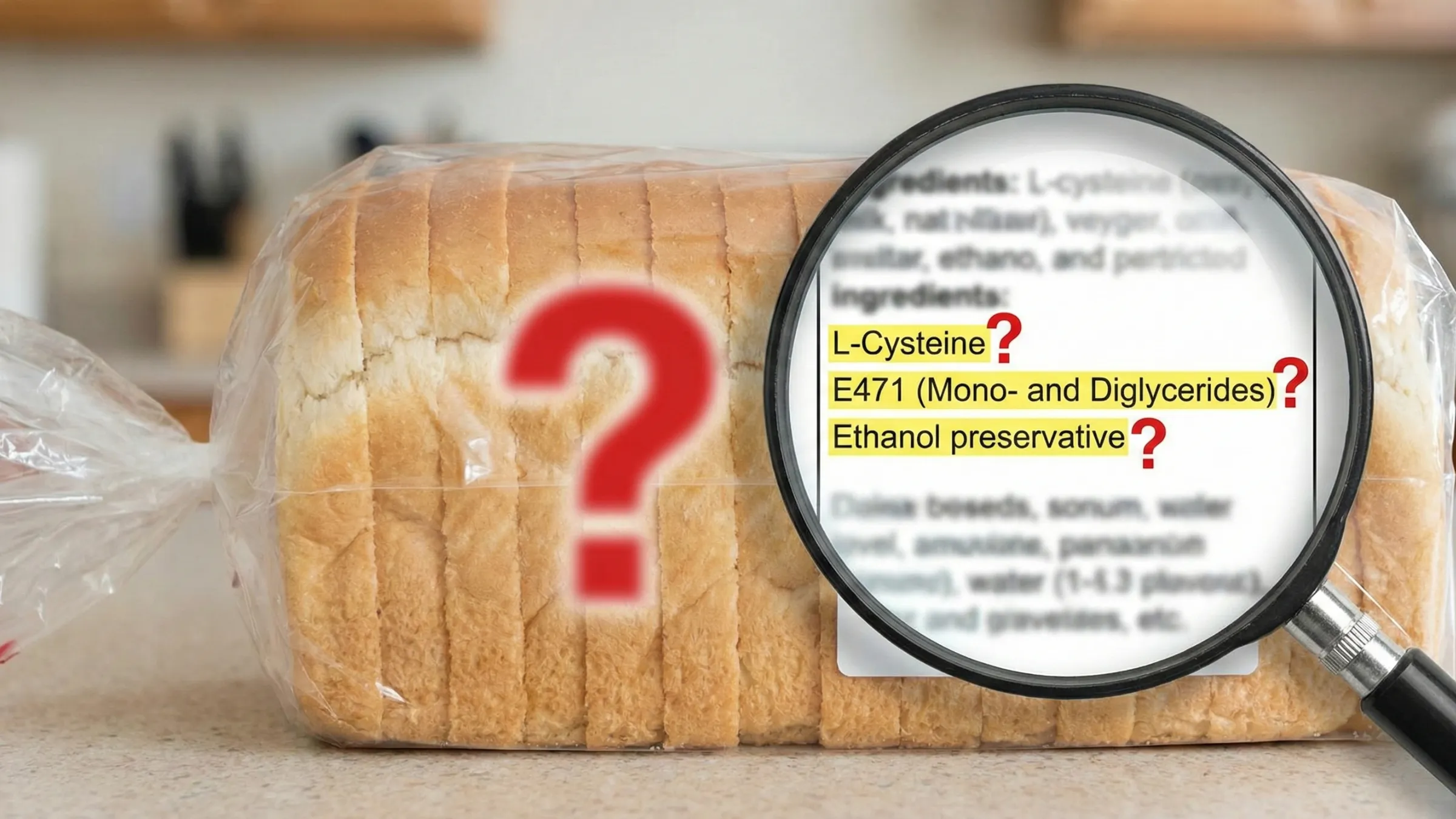
It’s the most basic staple in your kitchen. You use it for morning toast, for your children’s lunch sandwiches, and to mop up gravy at dinner. Bread.
It should be simple: Flour, water, yeast, salt.
If you buy fresh bread from a local, traditional baker, it usually is. But the sliced, packaged, long-lasting bread you buy in the supermarket aisle is a completely different product.
Industrial baking is chemistry, not cooking. To make bread super-soft, perfectly white, and last for weeks without molding, manufacturers add ingredients that would shock most Muslims.
Here are the three biggest Halal risks hiding in your daily loaf.
1. The “Dough Conditioner” Nightmare: L-Cysteine (E920)
We have mentioned this ingredient before, but its primary use is in commercial bakeries. It is used to speed up industrial processing and make dough stretchier and softer.
The Source will turn your stomach:
While synthetic versions exist, the cheapest and most common industrial source of L-Cysteine is derived from dissolved human hair (often sourced from barbershops in Asia) or duck/chicken feathers. Some sources can even be pig bristles.
The Halal Verdict: consuming any part of the human body is forbidden in Islam out of respect for human dignity. Pig derivatives are obviously Haram. Most Halal certifiers reject E920 unless it is proven synthetic.
2. The Invisible Fats: Pan Grease & Release Agents
Sometimes, the Haram ingredient isn’t in the bread dough, but on it.
Industrial bakeries use massive metal tins to bake thousands of loaves an hour. To stop the bread from sticking to the tins, they must be heavily greased.
The Hidden Risk: Bakeries often use hidden fats as release agents. But bread isn’t the only place these sneaky ingredients hide. You would be surprised to find similar animal-based additives in your favorite potato chips and candies. Check out our list of 5 popular snacks with hidden Haram ingredients.
Because these are considered “processing aids” and not direct ingredients, in many countries, they do not have to be listed on the ingredients label. You could be eating bread baked in pork fat without ever knowing it.
Tayib Tip: Look for “Vegetarian” or “Vegan” labels on bread packages, which usually ensures the processing agents were also plant-based.
3. The Alcohol Preservative Spray
Have you ever opened a bag of pre-sliced bread and smelled a faint whiff of alcohol? You aren’t imagining it.
To prevent mold and give bread a shelf life of several weeks, some manufacturers spray the loaves with an ethanol (alcohol) solution or put an ethanol emitter sachet inside the bag right before sealing it.
The Halal Verdict: While much of the alcohol evaporates, residual amounts can remain on the crust. This falls into a grey area of Fiqh regarding minute amounts of non-intoxicating alcohol used as preservatives, but many cautious Muslims prefer to avoid it entirely.
The Solution: Don’t Guess at the Grocery Store
You shouldn’t need a degree in chemistry just to buy a loaf of bread for your family. The ingredient lists on bread packages are long, confusing, and written in tiny print.
This is why Tayib is essential for everyday shopping.
Don’t waste time squinting at labels trying to decipher “DATEM,” “monoglycerides,” or “dough conditioners.”
Use Tayib’s AI scanner. It instantly reads the complex list and flags doubtful emulsifiers like E471 or problematic additives like L-Cysteine, helping you choose the safe, truly Halal loaf in seconds.
Keep your daily bread pure. Download Tayib today.

Written by Tayib
Founder & Halal Food Analyst
Tayib is dedicated to making Halal consumption transparent and stress-free. Through rigorous ingredient analysis, E-number decoding, and direct contact with brands, we help the Muslim community make informed and safe choices every day.
Read our strict verification methodology