November 12, 2025
Skiing in Zermatt & Courchevel: The 'Fondue' Problem
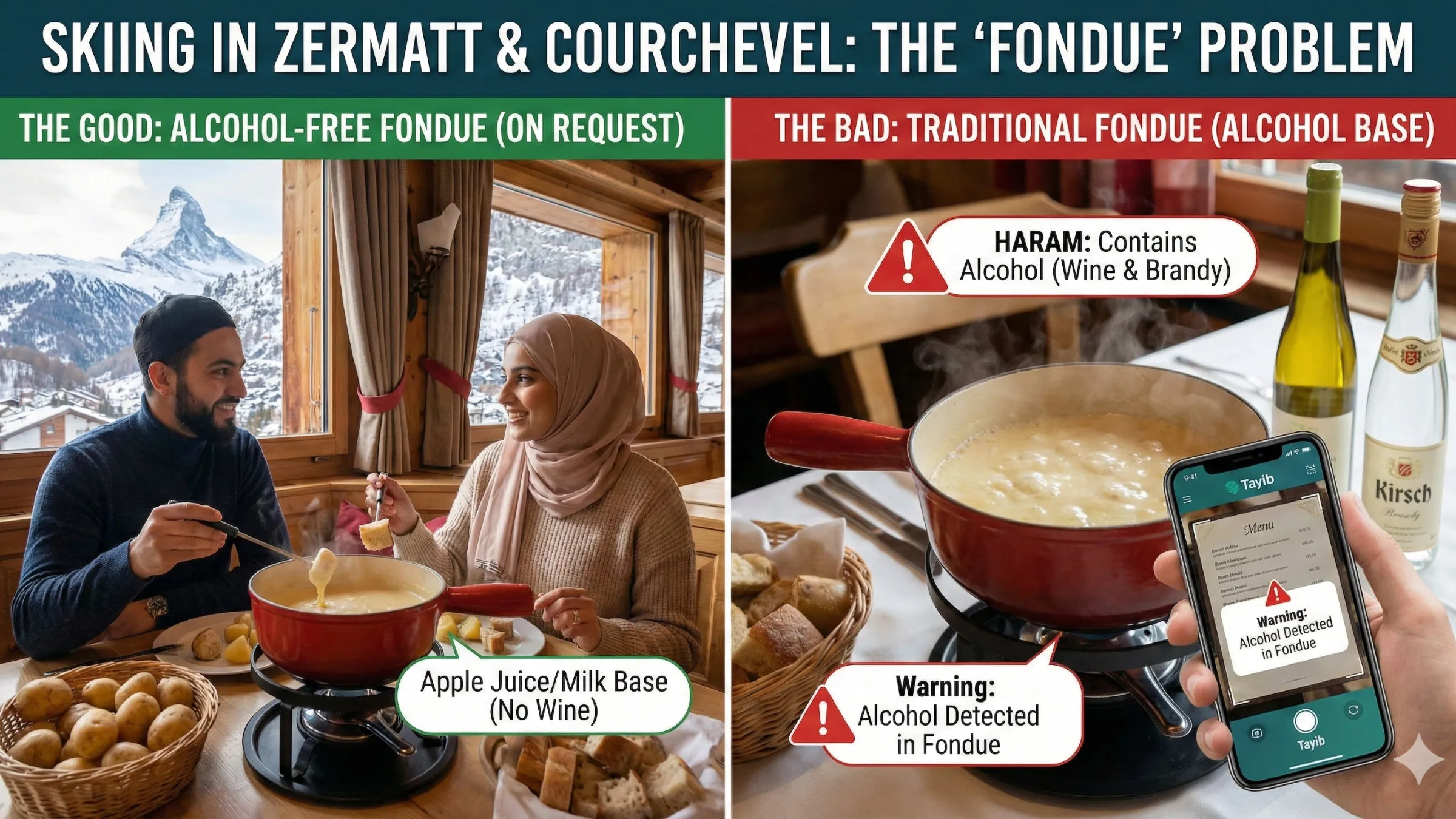
The air is crisp, the Matterhorn is gleaming, and you have just finished a day on the slopes of Zermatt or Courchevel 1850.
You return to your hotel or chalet. The smell of melted cheese is everywhere. It is the quintessential Alpine experience: La Fondue.
But for the Muslim traveler, this pot of gold is often a trap.
While cheese is generally Halal, the traditional Swiss and French preparation of Fondue Savoyarde is heavily reliant on Dry White Wine (Sauvignon or Fendant) and often finished with a splash of Kirsch (Cherry Brandy).
Does the alcohol cook off? Is Raclette safer? And how do you navigate a Michelin-starred menu in the Alps?
Here is your concierge guide to dining in the mountains.
The Chemistry of Fondue: Why it is Usually Haram
To keep the cheese smooth and prevent it from separating, chefs use wine. The tartaric acid in the wine stabilizes the cheese.
- The Myth: “The alcohol evaporates when cooked.”
- The Reality: It does not. Fondue is simmered gently, not boiled vigorously. Studies show that up to 85% of the alcohol remains in the pot.
- The Ruling: Because the wine is a core ingredient (Khamr) and does not disappear, the standard Fondue is Haram.
Deep Dive: Confused about alcohol in cooking vs. alcohol in soy sauce? Read our detailed breakdown on The Alcohol & Istihlak Debate.
The “Concierge” Solution: How to Order Bespoke
You are in Zermatt or Courchevel. You are paying a premium for service. Do not be afraid to ask for a modification.
Top-tier restaurants in hotels like The Omnia (Zermatt) or Cheval Blanc (Courchevel) are used to Gulf and Malaysian clientele. They can prepare a “Virgin Fondue” upon request (ideally 24h in advance).
What to ask the Chef:
“We require an alcohol-free Fondue. Please substitute the wine with Apple Juice and Lemon Juice (for acidity) or strictly Milk/Cream.”
If they cannot accommodate this, do not order the standard pot.
Raclette: The Safer Alternative?
Raclette is often the safer bet for Muslims, but cross-contamination is the enemy.
- The Cheese: Raclette cheese itself is almost always Halal. It typically uses microbial rennet, but traditional farm-made cheeses might use animal rennet.
Check the label: Learn how to spot animal rennet in our Ultimate Guide to Halal Cheese.
- The Meat (Charcuterie): This is the trap. It is served with Jambon (Ham), Saucisson (Pork Sausage), and Viande des Grisons (Dried Beef).
- The Danger: If the restaurant grills the pork on the same machine as your cheese or vegetables, the fat will splatter.
The Strategy: Order the Vegetarian Raclette service. Explicitly ask for “No Charcuterie on the table” to avoid accidental cross-contamination. Ask for extra pickles (cornichons) and potatoes.
Fine Dining & The “Jus” Trap
In Courchevel 1850, you aren’t just eating cheese. You are dining at Michelin-starred tables.
French Alpine cuisine is heavy on sauces.
- Beware of “Jus”: A beef or lamb jus almost always involves deglazing the pan with Red Wine or Port.
- Beware of “Civet”: This means stew, and it implies wine.
What to Order instead:
- Grilled Freshwater Fish: Lake Geneva Perch (Filets de Perche) is a classic, usually served with lemon butter (safe) rather than wine sauce.
- Truffle Pasta: The Alps are famous for Black Truffle. A pasta dish with fresh truffle and cream is usually alcohol-free and vegetarian safe.
The Après-Ski Drink ☕
Everyone around you is drinking Glühwein (Mulled Wine). What is your luxury alternative?
- Kinderpunsch: In German-speaking Zermatt, ask for this. It is the non-alcoholic spiced punch made for children but enjoyed by everyone. It has all the spices (cinnamon, cloves, orange) without the wine.
- Chocolat Chaud (The Real Deal): In the Alps, hot chocolate isn’t powder. It is melted ganache. Just ask: “Is there any liqueur added?” (Some add Rum).
The Shopping List: Chalet Survival
If you are staying in a private chalet and cooking for yourself, you need to be careful at the local Épicerie.
- Bread: French baguettes are fine. Brioche often contains alcohol or lard.
- Bakery Items: Be very careful with croissants and soft breads. They often use E471 (Mono- and Diglycerides of Fatty Acids) to stay soft. In Europe, E471 can be pork-based.
Scan It: Don’t buy bakery items blind. Read our guide on How to Spot Pork in E471.
- Chocolates: You are in Switzerland. You want Lindt and Toblerone.
- Warning: Many premium “Pralines” contain Champagne or Marc de Champagne.
Don’t guess with Swiss German or French labels.
Use Tayib to scan your luxury groceries. We detect:
- “Kirsch” (Cherry Brandy in fondue mixes).
- “Marc de Champagne” (Alcohol in chocolates).
- “E471” (Pork fats in bakery items).
Enjoy the Alps, Worry-Free.
Whether you are in a 5-star hotel in Courchevel or a chalet in Zermatt, ensure your dining is as pure as the mountain air.
Download Tayib for Travel
Written by Tayib
Founder & Halal Food Analyst
Tayib is dedicated to making Halal consumption transparent and stress-free. Through rigorous ingredient analysis, E-number decoding, and direct contact with brands, we help the Muslim community make informed and safe choices every day.
Read our strict verification methodology