September 9, 2025
STOP Eating These 5 Popular Snacks Until You Read This (Hidden Haram Alert!)
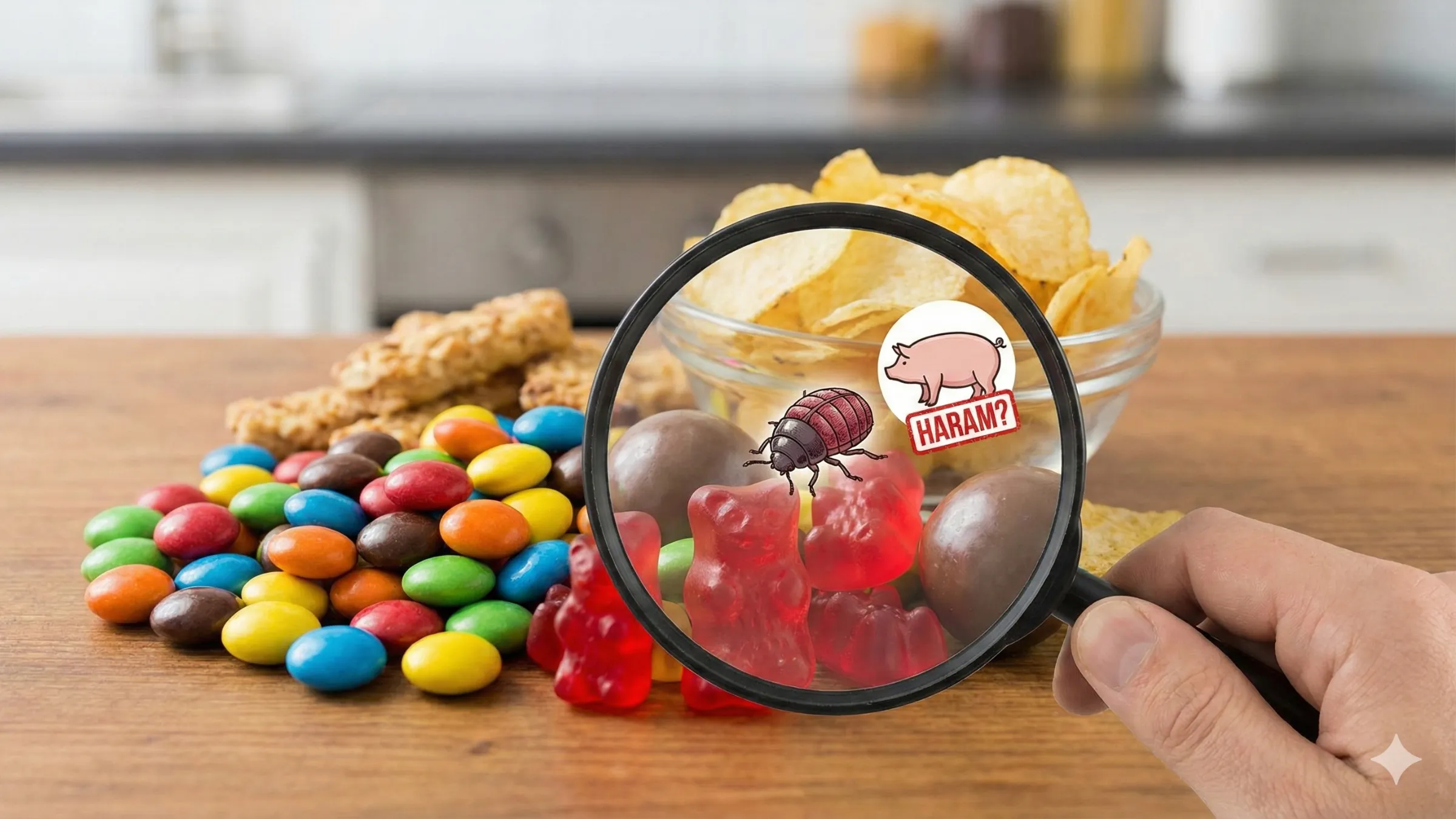
It’s movie night. You grab a bowl of popcorn, some shiny chocolate candies, and a bag of colorful gummy bears for the kids. It’s just a innocent treat, right?
We often let our guard down with snacks. They look fun, they taste sweet, and we assume that big, famous brands wouldn’t put anything “weird” in them.
This assumption is a massive mistake.
The global snack industry is filled with ingredients derived from insects, pork, and questionable sources, often hiding in products that look completely vegetarian.
When you are standing in the candy aisle, don’t guess. Scan the back of the package. Tayib’s AI instantly flags Shellac, Carmine, unidentified Gelatin, and doubtful Stearates. It gives you the power to say “No” to Haram and choose cleaner, Halal alternatives for your family.
Before you take another bite, check this list of the 5 most shocking Haram ingredients hiding in your pantry right now.
1. The Shiny Chocolates Trap: Shellac (E904)
You know those popular chocolate candies with a hard, shiny, colorful shell? That glossy shine isn’t just sugar.
The Hidden Ingredient: Shellac (E904). Also known as “Confectioner’s Glaze,” it is a resin secreted by the female lac bug on trees in forests of India and Thailand. To harvest it, the branches—often covered in thousands of live bugs—are scraped clean.
The Fiqh Verdict: While some scholars allow it because the final product is heavily processed, many consider consuming insect secretions to be repulsive and avoidable. Why eat bug secretions when plant-based waxes exist?
2. The Red Candy Trap: Carmine (E120)
We’ve mentioned this before, but it’s so common it needs repeating. If a candy, strawberry yogurt, or red velvet cake is vibrantly red or pink, be suspicious.
The Hidden Ingredient: Carmine (E120). It is made by boiling and crushing thousands of cochineal beetles. It is NOT vegetarian, and according to the majority of scholars (Hanafi, Shafi’i, Hanbali), it is Haram as insects are forbidden to consume.
3. The Marshmallow & Jell-O Trap: Pork Gelatin
This is the classic offender. Marshmallows, many chewy candies, and gelatin desserts owe their bouncy texture to collagen.
The Hidden Ingredient: Gelatin. In non-Muslim countries, unless specified otherwise, the cheapest and most common source is pork skin. If it’s beef, it’s almost certainly not Zabiha slaughtered.
Tayib Tip: Always look for “Halal Certified” or “Vegan” on marshmallows.
4. The Savory Chip Trap: Animal Stearates
You buy a packet of cheese-flavored chips. They are just potatoes and spices, right?
The Hidden Ingredient: Magnesium Stearate / Stearic Acid (E570). These act as anti-caking agents or flavor carriers. They can be derived from plant oils, but are often derived from animal fat (pork or non-Halal beef) because it’s cheaper for manufacturers. The label rarely tells you which one it is.
5. The Bakery Trap: L-Cysteine in Donuts & Bagels
That soft, fluffy donut or bagel you grab for breakfast might have a horrifying secret.
The Hidden Ingredient: L-Cysteine (E920). An industrial dough conditioner used to speed up production. As discussed in previous articles, its most common commercial source is dissolved human hair or pig bristles. While synthetic versions exist, cheap industrial bakeries often use the “natural” (hair/pig) source.
The Solution: Trust Is Good, Scanning Is Better.
When scanning candy ingredients, you will often see vague terms that manufacturers use to hide trade secrets. The most frustrating one is “Natural Flavors.” It sounds innocent, but it’s actually the ultimate Halal loophole. Read what they are really hiding in “flavors” here.
Learning these ingredients is horrifying. You might feel like throwing out half your pantry.
But you don’t have to live in fear of every snack. You just need the right tool.
Tayib was built for this exact problem.
Protect your family from hidden Haram. Download Tayib today.

Written by Tayib
Founder & Halal Food Analyst
Tayib is dedicated to making Halal consumption transparent and stress-free. Through rigorous ingredient analysis, E-number decoding, and direct contact with brands, we help the Muslim community make informed and safe choices every day.
Read our strict verification methodology