October 22, 2026
The Hidden Pork in Emulsifier 322: A Complete Soy Lecithin Guide
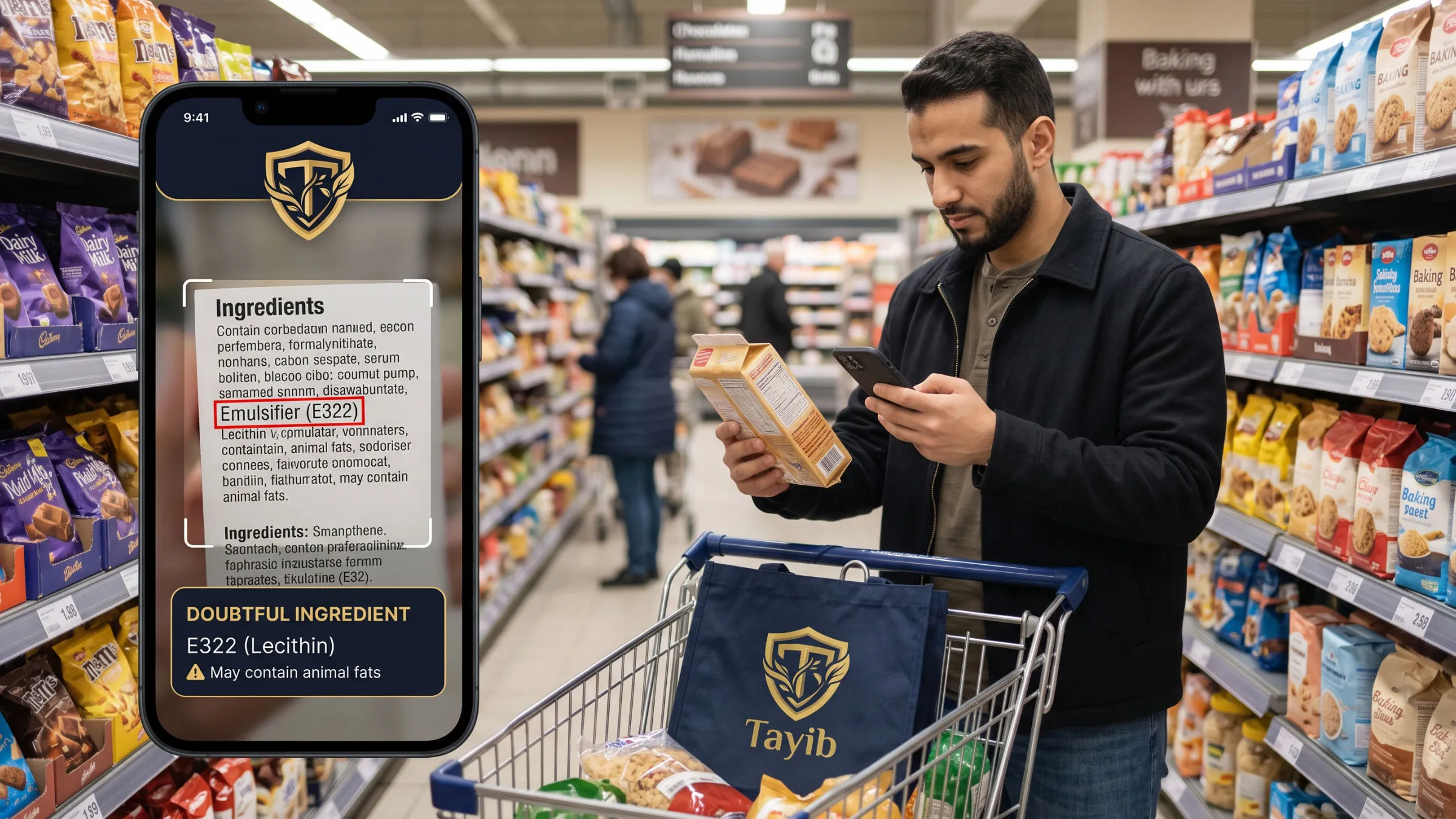
You are holding a chocolate bar and spot an ingredient called E322 on the back. You might assume it is just a harmless plant extract.
Here is the truth. While plant-based soy lecithin is perfectly Halal, commercial E322 can also be made from hidden pork fat or non-Zabiha beef. For a quick technical breakdown, check our official E322 Halal Dictionary entry.
As part of our Ultimate Guide to Halal E-Numbers, we are breaking down the complex supply chain of this popular emulsifier. Here is why you must treat it with extreme caution.
The Identity of Emulsifier 322
Food manufacturers use emulsifiers to blend water and oil smoothly. E322—often labeled as Emulsifier 322 or INS 322—is a common additive with a hidden risk.
You will find it in everyday items like baked goods, margarine, and mayonnaise to keep the texture perfect. When extracted from soybeans or sunflower seeds, this ingredient is entirely Halal. The FDA heavily regulates these plant-based extracts for consumer safety.
The problem starts when factories decide to cut costs.
Why is E322 Mushbooh?
In the food industry, cheap animal lipids are readily available. Emulsifier 322 can legally be isolated from porcine tissue (pork fat) or uncertified bovine tallow (beef fat).
Because packaging labels rarely disclose the exact origin of the fat, Muslim consumers face a tangible risk. Any ingredient derived from a pig is unequivocally Haram. Any ingredient derived from a cow that was not slaughtered according to Islamic law (Zabiha) is also forbidden.
This ambiguity firmly categorizes unverified lecithin as Mushbooh (doubtful). Read our guide on the 5 Sneakiest Haram Ingredients to see where else animal fats hide.
The Geographical Danger of Lecithin
Food supply chains are global, but recipes are strictly local. This creates a massive danger for Muslim shoppers.
The exact same chocolate bar might use safe soy lecithin in London, but cheap animal fats in New York. You cannot rely on brand loyalty alone. A product that is Halal-suitable in one country might become strictly Haram when imported to another.
See how regional recipes affect other snacks in our Cheetos UK vs USA Guide.
How to Spot Safe Halal Lecithin
You do not need to abandon your favorite treats. You just need to know what to look for on the label.
Always search the packaging for a “Suitable for Vegetarians” or “Vegan” logo. Vegetarians do not consume pork or beef fat. If a product carries this certification, the emulsifier inside is guaranteed to be plant-based and safe for a Halal diet.
Stop Guessing: Scan Complex Ingredient Lists
Food labels are intentionally confusing. You should not have to gamble with your faith just to enjoy a snack.
This is why you need Tayib. Tayib is your personal AI Halal scanner. Do not rely on outdated barcode apps that fail on imported goods. Just point your phone’s camera at the actual ingredient list.
Tayib’s smart Optical Character Recognition (OCR) AI reads the text instantly. It identifies the region, spots generic E322, and checks for vegan certifications in real-time. It tells you exactly if your snack is safe or doubtful in one second.
Is That Emulsifier Safe?
Don't let hidden animal fats ruin your snack time. Let Tayib's AI scan the ingredient list to detect pork-based E-numbers instantly.



Written by Tayib
Founder & Halal Food Analyst
Tayib is dedicated to making Halal consumption transparent and stress-free. Through rigorous ingredient analysis, E-number decoding, and direct contact with brands, we help the Muslim community make informed and safe choices every day.
Read our strict verification methodology