April 7, 2025
The Ultimate Halal Loophole: What Are They Hiding in "Natural & Artificial Flavors"?
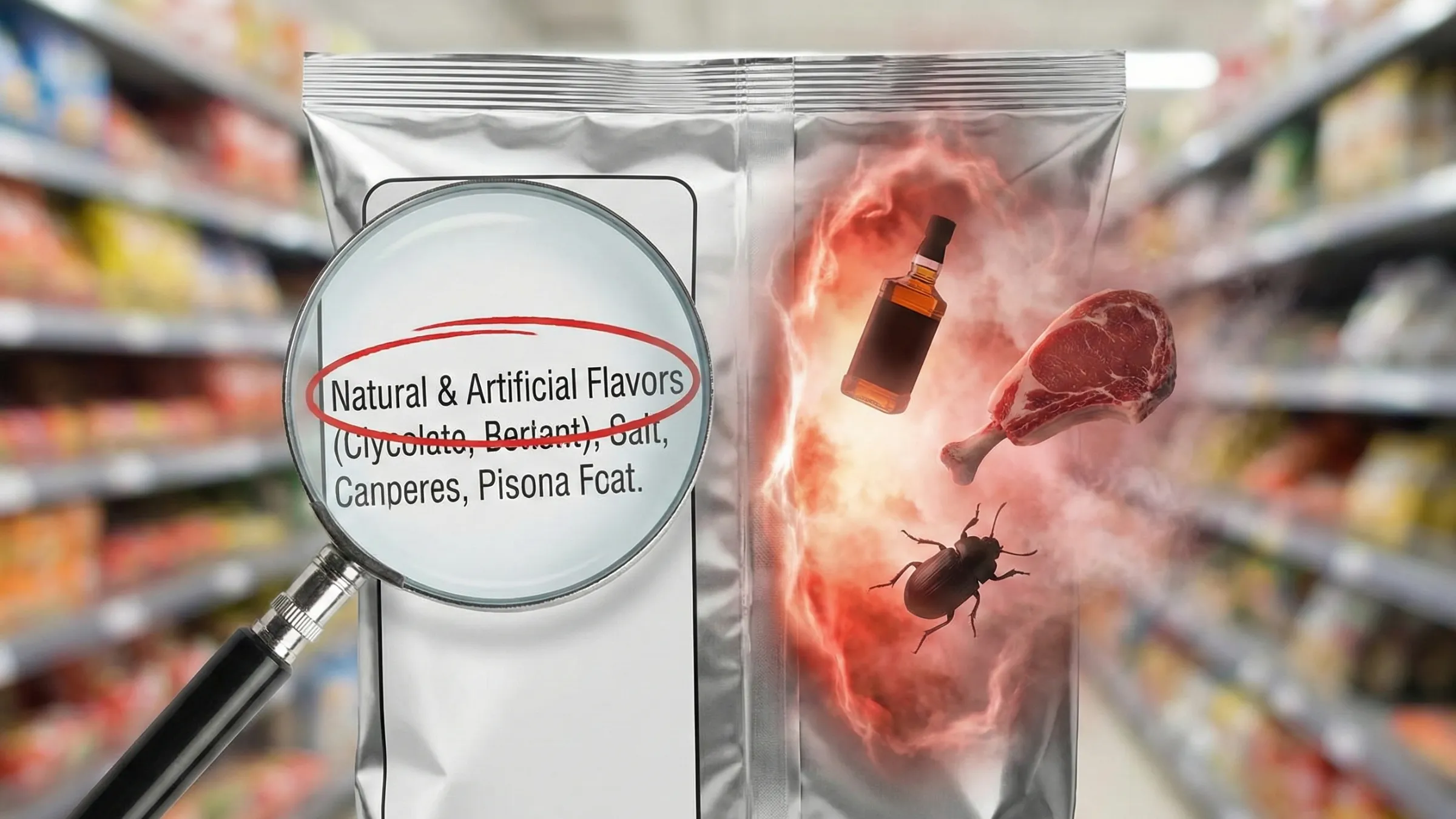
You are scanning an ingredient list. Everything looks fine. No gelatin, no carmine, no E471. You are about to put the product in your cart.
Then you see it at the very end of the list: “Natural Flavors” or “Artificial Flavoring.”
You hesitate. Do you buy it and hope for the best? Or put it back?
This vague term is the single most frustrating thing for a Halal consumer. It is the legal loophole that allows food companies to hide hundreds of ingredients under one generic umbrella to protect their “trade secrets.”
Here is why these two little words are a minefield for Muslims.
What Does “Natural Flavor” Actually Mean?
Legally, in the US and EU, a “natural flavor” is anything derived from a plant OR an animal source whose primary function is flavor rather than nutrition.
That’s it. It’s terrifyingly broad.
If a flavor chemist extracts a taste compound from cooked beef, roasted chicken skin, or even certain secretions of wildlife (like Castoreum from beavers, used historically for vanilla/raspberry flavor), they can legally list it as just “Natural Flavor.”
They do not have to declare the animal source unless it’s a major allergen like milk or shellfish.
The 3 Big Risks Hiding in the “Flavor” Black Box
Because companies won’t tell us what’s inside, we have to assume the worst risks.
Risk #1: The Alcohol Carrier (The Most Common Threat)
Flavor compounds are highly concentrated chemicals. You can’t just dump them into a soda or a cake mix; they need to be dissolved in a liquid carrier first.
The most effective, cheapest, and most common industry carrier is Ethanol (Alcohol) or Propylene Glycol.
While the alcohol often evaporates during processing, many “alcohol-free” drinks or baked goods use flavors originally carried in alcohol. For strict observers of Halal, this contamination is unacceptable.
Risk #2: Hidden Meat Extracts
To make savory snacks (like barbecue chips or instant noodles) taste “meaty” without using expensive real meat, manufacturers use flavor extracts derived from beef tallow, chicken fat, or pork derivatives.
Unless the product is “Vegetarian Certified,” that savory “Natural Flavor” could easily be non-Zabiha beef or pork.
Risk #3: The “Proprietary Secret” Wall
If you call a food company and ask, “Does your natural flavor contain alcohol or animal products?” their standard legal answer is often: “That is proprietary information we cannot share.”
They are protecting their recipe, leaving the Muslim consumer completely in the dark.
The Fiqh Reality: A State of Constant Doubt (Mushbooh)
Because it is impossible to know the source, products containing generic “flavorings” without a Halal or Vegan certification fall squarely into the category of Mushbooh (Doubtful).
The Prophet Muhammad (peace be upon him) advised believers to “leave that which makes you doubt for that which does not make you doubt.” Yet, avoiding “Natural Flavors” completely in the modern world is almost impossible.
The Solution: You Can’t Fight “Secrets” with Human Eyes
Reading the label won’t help you here. The label is designed to hide the truth. You cannot know if “Natural Flavor” in Brand A’s cookies means vanilla bean, while in Brand B’s cookies it means vanilla extract in alcohol.
This is where Tayib’s AI is revolutionary.
We aren’t just reading the words; we are building a massive intelligence database.
Tayib analyzes the context. If “Natural Flavor” appears in a savory beef stew mix that isn’t Halal certified, our AI flags it as a high risk for non-Zabiha meat. If it appears in a “Vegan” certified cookie, the AI knows it’s safe from animal products but might still flag for alcohol risk depending on your settings.
Stop being tricked by generic labels. Let AI uncover the truth. Download Tayib.

Written by Tayib
Founder & Halal Food Analyst
Tayib is dedicated to making Halal consumption transparent and stress-free. Through rigorous ingredient analysis, E-number decoding, and direct contact with brands, we help the Muslim community make informed and safe choices every day.
Read our strict verification methodology