December 24, 2025
The Ultimate Muslim Traveler’s Guide to Finding Halal Food Worldwide
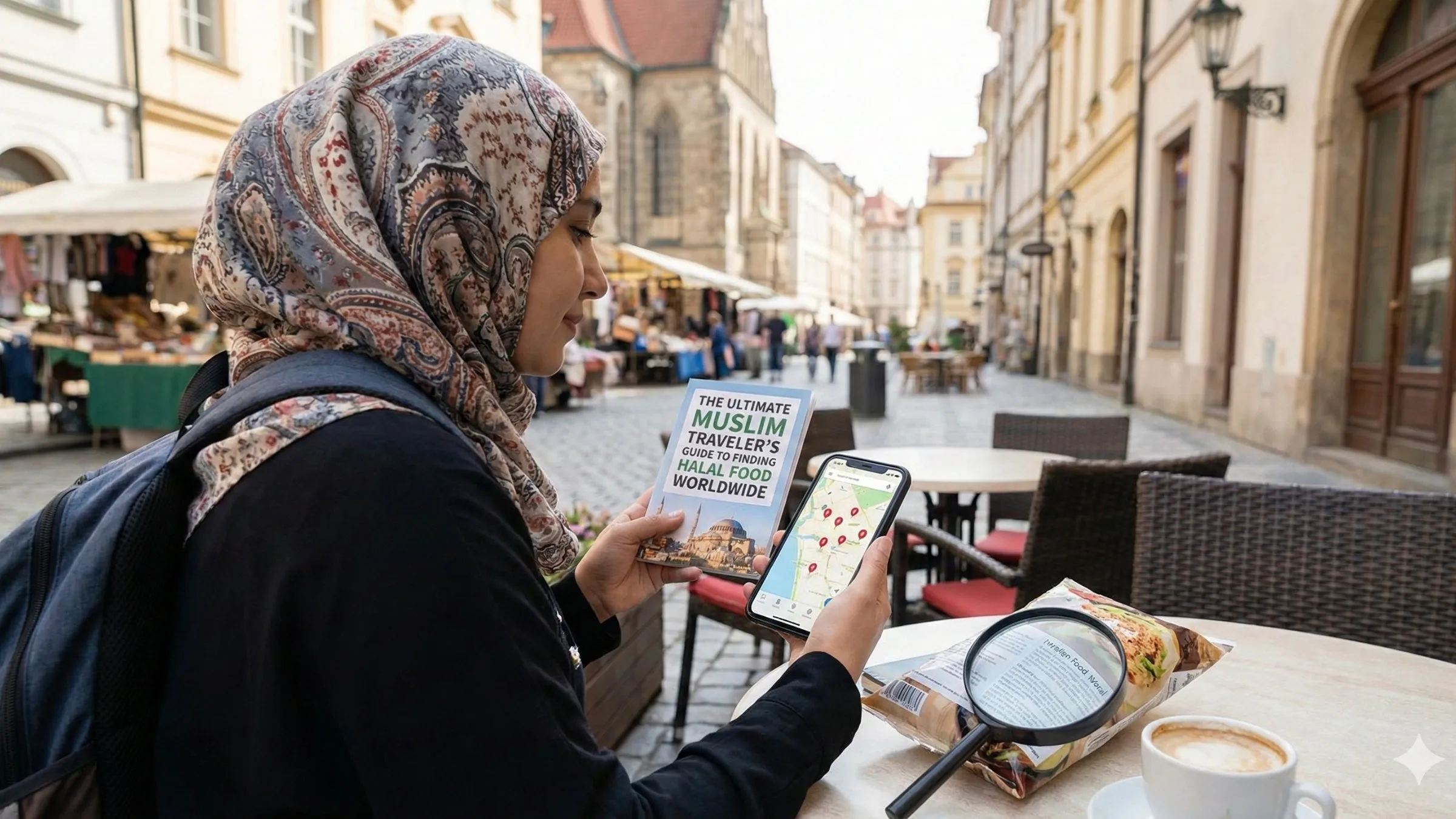
Traveling to a non-Muslim country is an incredible experience, but finding Halal food often turns into a stressful daily chore. When you don’t speak the local language, every restaurant menu and supermarket aisle feels like a trap.
Many Muslim travelers end up compromising by eating plain fish or vegetarian dishes every single day. But what if that “safe” vegetarian pasta is cooked with white wine? What if that cheese sandwich uses animal rennet?
You shouldn’t have to survive on bread and water during your dream vacation. This comprehensive guide gathers all our survival tips, detailed city guides, and strategies to help you eat confidently anywhere in the world—from fast-food chains to Michelin-starred restaurants.
Don’t let the language barrier ruin your trip. Download the Tayib Halal Scanner App to instantly translate and analyze foreign supermarket ingredients in over 50 languages using your camera.
Halal Survival Tips in Non-Muslim Countries
Before you pack your bags, you need to understand the golden rules of eating abroad. Leaving your home country means leaving behind your familiar Halal certifications.
Knowing how to ask the right questions at a restaurant is crucial. Are the fries cooked in the same oil as the bacon? Is the sauce deglazed with alcohol? We break down the exact phrases and strategies you need in our guide on how to eat Halal while traveling in non-Muslim countries.
If you prefer dining at local restaurants rather than hunting for specific Halal spots, our eating out Halal survival guide is essential reading. Finally, never assume a meat-free dish is safe; learn why vegetarian is not always Halal when dealing with hidden animal fats and cooking wines.
Europe Halal City Guides
Europe is a culinary paradise, but navigating its food scene requires strict attention to detail, especially regarding hidden pork and alcohol.
France & UK (Paris & London)
Paris and London boast some of the largest Muslim populations in Europe, making them incredibly Halal-friendly if you know where to look.
- Paris: From street food to elegant bistros, explore our Halal food guide to Paris. If you are celebrating a special occasion, don’t miss our curated Halal fine dining and Michelin guide for Paris.
- London: London is a Halal hotspot. Navigate the city’s diverse boroughs with our Halal food guide to London, and experience classic British culture with our Halal high tea in London guide.
Germany & The Alps
Traveling further east or hitting the slopes?
- Germany: Navigating sausages and bakeries can be tricky. Read our Is Germany Halal-friendly guide to learn the local keywords for “Pork-free.”
- The Alps: Planning a winter getaway? Discover how to enjoy traditional mountain food safely with our skiing in Zermatt and Courchevel Halal fondue guide.
Asia: Navigating the Halal Scene in Japan
Japan is a dream destination, but it is notorious for hiding Haram ingredients in seemingly innocent foods. Traditional Japanese cuisine heavily relies on Mirin (sweet cooking rice wine), Sake, and Dashi (broths that often contain pork extracts). Even the famous soy sauce usually contains added alcohol.
To survive without compromising your beliefs, start with our comprehensive Japan Halal travel guide. Once you arrive in the capital, use our Halal food guide for Tokyo. And yes, you can experience the world’s best beef; just check our Japanese A5 Wagyu Halal guide to find certified restaurants.
North America & Theme Parks
Traveling to the United States presents a different set of challenges, primarily due to lax regulations on food additives and artificial flavorings.
Whether you are navigating the street carts of Manhattan with our Halal food guide to NYC or shopping at local supermarkets using our guide on how to identify Halal products in the USA, vigilance is key.
Traveling with family? Theme parks are notorious for cross-contamination. Make sure you read our Halal food at Disney World survival guide before buying those famous Mickey-shaped snacks.
Luxury Halal Travel & Resorts
If you are planning a honeymoon or a luxury escape, you shouldn’t have to stress about the buffet. Many high-end resorts now cater specifically to Muslim guests with fully segregated Halal kitchens and alcohol-free mocktail menus. Discover the best options in our Maldives resort guide for Halal kitchens.
The Essential Travel App for Muslims
Even with the best restaurant guides in the world, every traveler eventually ends up in a local convenience store—whether it’s a 7-Eleven in Tokyo, a Lawson in Osaka, or a Carrefour in Paris—looking for a quick late-night snack or a bottled drink.
This is where traditional Halal barcode scanners fail. They rely on Western databases that simply do not recognize foreign barcodes.
This is why Tayib is the best Halal app for travel. Tayib doesn’t rely on barcodes. It uses advanced AI to read the actual text on the packaging. Whether the ingredient list is in Japanese Kanji, German, or Thai, Tayib instantly translates the text, scans for hidden Haram additives like pork shortening or wine vinegar, and gives you a clear result on your screen.
Your Global Halal Companion
Don't let foreign languages dictate your diet. Download Tayib today to read and translate ingredient labels anywhere in the world.
Download TayibFrequently Asked Questions about Halal Travel
Is eating 'Vegetarian' or 'Vegan' always a safe Halal option when traveling?
No. While 'Vegan' guarantees no meat, dairy, or insect derivatives, it does not guarantee the absence of alcohol. Many vegan dishes in Europe use wine reductions, and in Asia, they use Mirin (rice wine). 'Vegetarian' is even riskier, as it can include cheeses made with animal rennet (from unslaughtered calves).
Can I just eat seafood when traveling abroad?
The seafood itself is Halal, but the preparation is the danger zone. In Asia, fish is frequently marinated in alcohol (Sake) or cooked in pork broths (Dashi). In the West, fried fish is often battered in beer (Beer-Battered Fish) or fried in the exact same oil as pork bacon. Always ask how the seafood is prepared.
Can I eat bread and pastries from local bakeries abroad?
You must be cautious. In countries like Japan, South Korea, and even parts of Europe, bakeries frequently use 'shortening' or lard (animal fat) to keep the bread soft, or brush the pastries with animal-based glazes. Always ask if the bakery uses 100% butter or vegetable oil.
If a restaurant chef says the alcohol 'cooks off' in the sauce, is it Halal?
No. According to Islamic dietary laws, if alcohol (Khamr) is intentionally added to a dish, it becomes Haram, regardless of how much evaporates during the cooking process. Scientifically, trace amounts of alcohol always remain in the food anyway.
How do I request a Halal meal on international flights?
When booking your flight, look for the 'Special Meals' section and select 'MOML' (Muslim Meal). You must do this at least 24 to 48 hours before departure. Note that flights departing from Muslim-majority countries often serve Halal food by default, but it is always safer to request the MOML code.
Why is finding Halal food in Japan and Korea so difficult?
Japanese and Korean cuisines rely heavily on two ingredients: Pork (often hidden as extracts in instant noodles, broths, and snacks) and Alcohol (Mirin, Sake, or cooking wines used in glazes and soy sauces). The language barrier makes reading these labels nearly impossible for foreigners.
Can I eat at Kosher restaurants when traveling in the USA or Europe?
Yes, Kosher meat (Shechita slaughter) is generally considered Halal by the majority of Islamic scholars, and Kosher laws strictly forbid pork. However, you must be vigilant about alcohol. Kosher law allows the consumption of alcohol, so avoid Kosher dishes cooked with wine or desserts containing rum.
What is 'Cross-Contamination' in non-Muslim restaurants?
Cross-contamination happens when your Halal or vegetarian food touches Haram items. For example, a restaurant might cook your vegetable patty on the exact same grill where they just cooked pork bacon, or cut your cheese pizza with the same knife used for pepperoni.
How can I navigate non-Halal hotel breakfast buffets?
Stick to the safest options: whole uncut fruits, boiled eggs, cereal with plain milk, and plain toast with butter or honey. Avoid the hot food section if sausages and bacon are present, as the serving spoons are often mixed up by other guests.
How do I ask if food is Halal in a foreign language?
Do not just ask 'Is it Halal?'. Most locals outside the Muslim world do not know what Halal means, or they think it just means 'no pork'. You must ask specifically: 'Does this contain meat, pork, animal fat, gelatin, or alcohol?'
Do standard Halal barcode scanners work in foreign countries?
Usually, no. Traditional apps rely on static Western databases (like Open Food Facts). If you scan a local Thai or German snack, the app will return a 'Product Not Found' error because that specific barcode isn't in their system.
How can I check supermarket ingredients in a language I don't read?
This is where the Tayib app is essential. Instead of a barcode, Tayib uses Optical Character Recognition (OCR) AI. You just point your camera at the text on the package, and the app instantly translates the foreign language, analyzes the additives, and tells you if it is Halal, Haram, or Mushbooh.

Written by Tayib
Founder & Halal Food Analyst
Tayib is dedicated to making Halal consumption transparent and stress-free. Through rigorous ingredient analysis, E-number decoding, and direct contact with brands, we help the Muslim community make informed and safe choices every day.
Read our strict verification methodology