November 7, 2026
Are Marshmallows Halal? The 2026 Gelatin Guide
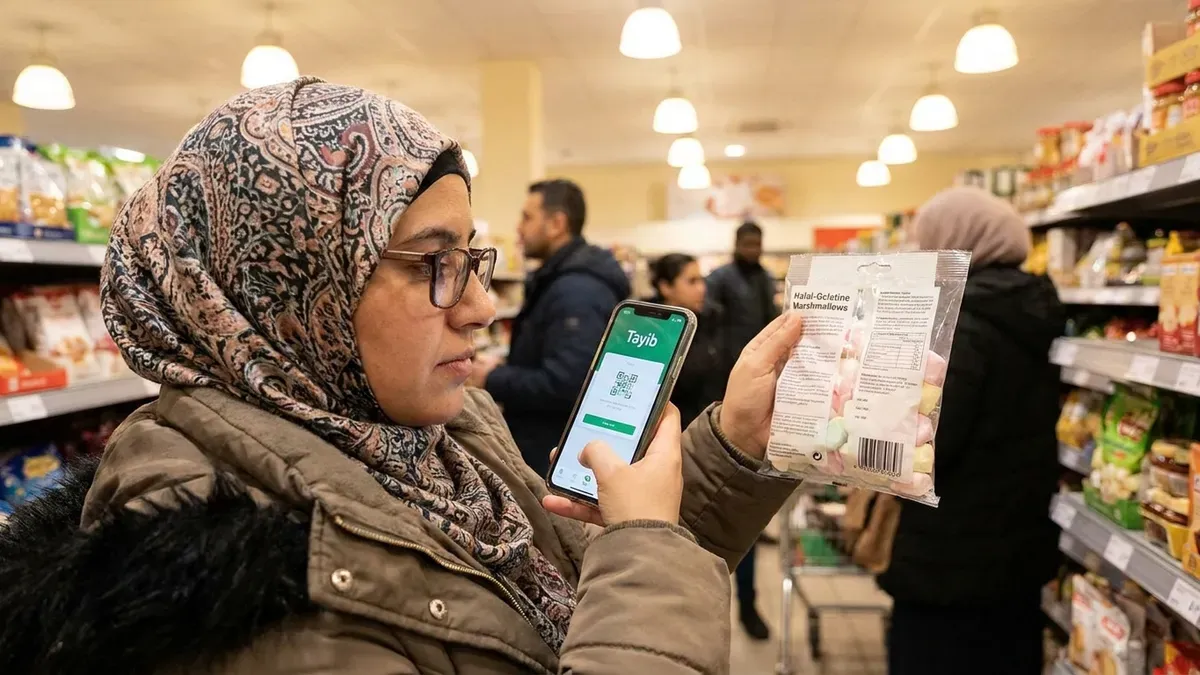
School events, summer campfires, and winter hot chocolate parties bring one recurring anxiety for Muslim parents: the marshmallow bag. You look at the back of the pack and see one word: gelatin.
Here is the bottom line: Standard Western marshmallows are Haram due to hidden pork gelatin, while certified Halal and vegan alternatives are completely safe.
The Quick Verdict
Standard mass-market marshmallows sold in the US, UK, and Europe are NOT halal. Almost all conventional supermarket brands use porcine (pork) gelatin to create their fluffy texture.
Marshmallows are only permissible if they meet specific rules. They must be made with 100% Zabiha beef gelatin, fish gelatin, or plant-based gelling agents like pectin, agar-agar, or carrageenan. Always look for a trusted Halal certification symbol on the bag.
Check this quick reference table before you buy:
| Product Type | Verdict | Key Ingredient |
|---|---|---|
| Kraft Jet-Puffed (US) | Haram | Contains conventional porcine (pork) gelatin |
| Campfire (Domestic US) | Haram | Standard US production uses pork collagen |
| Campfire (Export SKU) | Halal | Certified Halal bovine gelatin by HTO |
| Haribo Chamallows (EU/UK/US) | Haram | Manufactured in Western plants with pork gelatin |
| Haribo Chamallows (Turkey) | Halal | 100% Halal beef gelatin (TSE & GIMDES certified) |
| Kraft Marshmallow Creme | Halal | Gelatin-free; uses dried egg whites |
| Dandies Vegan Marshmallows | Halal | 100% plant-based (tapioca starch & carrageenan) |
| Lucky Charms Marshmallows (US) | Haram | Dehydrated marbits contain pork gelatin |
The Food Science: E-Numbers and Hidden Ingredients
To know if a marshmallow is safe, you need to understand how it is made in a factory. Even a simple white candy hides tricky chemical additives.
E441 / Gelatin (The Structural Core)
Why do marshmallows need gelatin in the first place? Gelatin (often listed as E441 in Europe) creates a microscopic foam matrix. This traps air bubbles and gives the candy its signature bounce and melt-in-your-mouth feel.
Food factories make gelatin through collagen hydrolysis. They boil animal skins, tendons, and bones in acid or alkali solutions. In Western factories, pork skin is the cheapest and most common raw material.
To understand how widespread this issue is, read our breakdown on how gelatin is sourced in American groceries.
What about the chemical transformation debate?
Some people wonder if boiling pork skin changes it into a completely pure, new substance (a concept in Islamic law called Istihalah).
Here is the truth: Mainstream global scholars reject this for pork gelatin. Bodies like the Assembly of Muslim Jurists of America (AMJA) , the European Council for Fatwa and Research (ECFR), and Malaysia’s JAKIM rule that turning pork collagen into gelatin is only a physical change, not a full chemical transformation. Laboratory tests can still detect porcine DNA markers in finished marshmallows. Because the pork origin remains, the gelatin is strictly Haram.
E120 Carmine (The Pink Marshmallow Trap)
Plain white marshmallows are not the only risk. Fruit-flavored or pink-and-white swirled marshmallows often hide a bug-based dye called Carmine (also labeled as E120, Cochineal, or Natural Red 4).
Carmine is made by drying and crushing female scale insects. Because it comes from bugs, Islamic scholars disagree on whether you can eat it:
- Hanafi and Shafi’i schools: Strictly Haram. These schools view crushed land insects without flowing blood as impure for food use.
- Maliki school and Indonesia’s MUI: Permissible (Halal), categorizing the dried insect alongside locusts.
Before buying strawberry or pastel marshmallows, learn more about the truth about carmine and insect dyes (E120).
E471 Emulsifiers & E476 in Chocolate Marshmallows
If you buy chocolate-coated marshmallows or gourmet s’mores kits, check the label for E471 (mono- and diglycerides of fatty acids) and E476 (polyglycerol polyricinoleate).
Factories use these emulsifiers to keep fats and sugars from separating. While E476 is almost always plant-based, E471 is Mushbooh (doubtful). It can be made from soybean oil, or it can be rendered from slaughtered pork fat (lard) and non-Zabiha beef fat (tallow). Unless the package is certified vegan or Halal, avoid E471.
Vanilla Flavoring & Industrial Ethanol
Every marshmallow recipe needs vanilla flavoring to mask the smell of cooked gelatin. Under US Food and Drug Administration (FDA) rules, pure vanilla extract must contain at least 35% ethyl alcohol by volume to extract the flavor from the beans.
In industrial candy making, most of this alcohol evaporates during the high-heat cooking stage. Because the remaining trace alcohol cannot cause intoxication, authorities like Singapore’s MUIS allow synthetic flavorings with trace ethanol (usually under 0.5% in the final product). However, if you follow a strict zero-alcohol opinion, look for marshmallows flavored with alcohol-free vanillin powder instead of pure vanilla extract.
The Marshmallow Fluff Exception
Here is some great news for your pantry: Marshmallow Fluff (or marshmallow creme) is Halal-friendly.
Unlike solid marshmallows that need gelatin to hold their cube shape, jarred marshmallow creme stays soft and spreadable. Brands like Kraft Jet-Puffed Marshmallow Creme and Durkee Marshmallow Fluff use whipped dried egg whites (albumen), corn syrup, and xanthan gum instead of animal gelatin. Always double-check the label, as this makes a great Halal substitute for baking and hot cocoa.
Unsure About the Gelatin in Your Snacks?
Ensure your lifestyle is compatible with your values.
The Supply Chain Reality: Regional Differences & Factory Traps
Never judge a marshmallow bag by its brand logo alone. Multinational food companies use different recipes depending on which country the factory is in.
The Haribo Dilemma: Turkey vs. Europe/USA
Haribo Chamallows are among the most popular marshmallows in the world, and they are a classic trap for Muslim shoppers. Haribo runs a split supply chain:
- Made in Germany, the UK, or the USA: These factories use pork gelatin. If you grab a bag at a standard supermarket in London, Paris, or New York, it is Haram.
- Made in Turkey: Haribo operates a massive factory in Hadımköy, Istanbul. Every single gummy and marshmallow made in this Turkish facility uses 100% Halal-certified bovine (beef) gelatin, audited by TSE and GIMDES.
Why does this matter? Ethnic grocery stores in the US and Europe often import Turkish Haribo bags. Do not just look at the front of the bag. Flip it over and look for “Made in Turkey” and the official Halal stamp. For more details on spotting safe bags, check out our comprehensive Haribo Halal guide.
Campfire’s Domestic vs. Export Formulation
The American brand Campfire Marshmallows runs a similar two-track operation.
If you buy a bag of Campfire Marshmallows at a regular grocery store inside the United States, it contains pork gelatin and is Haram.
However, Campfire produces a special export version for the Middle East, Southeast Asia, and international Halal markets. These export bags are made with Halal beef gelatin and carry certification from Halal Transactions of Omaha (HTO) . Always look for the HTO logo on the packaging before buying.
The Regulatory Shift: Indonesia’s Halal Mandate Update (2028)
Global marshmallow ingredients are slowly changing thanks to strict new laws in Muslim-majority countries. The biggest driver is Indonesia’s Halal Product Assurance Law (Law No. 33/2014), known as Wajib Halal.
Originally, Indonesia required all imported foods and candies to be strictly Halal-certified by October 2024, then October 2026. Under Government Regulation No. 42 of 2024, the Indonesian government officially extended the compliance deadline for imported food and beverages to October 18, 2028.
This gives American and European candy giants two extra years to clean up their supply chains, switch from pork to Halal beef or plant gels, and pass official audits to keep selling in Southeast Asia.
How to Verify Instantly with Tayib (Why Barcode Scanners Fail)
When you are standing in the grocery store aisle, how do you know which bag is safe? Many shoppers use old barcode-scanning apps, and this is a risky mistake.
Here is the problem with barcode apps:
- Outdated databases: Barcode apps rely on static, user-submitted databases. If a company changes its recipe from beef to pork gelatin, the barcode number stays the same, and the app gives you wrong, outdated info.
- Private label swaps: Store brands (like Walmart’s Great Value or Aldi’s private labels) hire different third-party factories to fill their bags without changing the barcode.
- Import blind spots: A barcode scanner often cannot tell if a Haribo bag was imported from Turkey or Germany if the distributor places a sticker over the original code.
You can read more about why traditional barcode scanners fail shoppers in our deep-dive tech report.
The Tayib Live OCR Advantage:
Tayib does not guess based on an old barcode. It uses AI-powered Optical Character Recognition (OCR) to read the exact ingredient text printed on the package right in front of you.
- Reads text directly: Point your camera at the ingredient list. Tayib reads the words in real time—no barcode needed.
- Spots hidden E-numbers: Tayib instantly flags hidden codes like E441 (Gelatin), E120 (Carmine), and E471, telling you right away if they are Halal, Haram, or Mushbooh.
- Works worldwide in 11+ languages: Travelling in Europe or Asia? Scan foreign marshmallow wrappers and get an instant breakdown in clear English.
- Personalized to your Madhab: Whether you follow the Hanafi, Shafi’i, Maliki, or Hanbali school of thought, Tayib adapts its rulings (like the E120 insect dye debate or trace alcohol rules) to match your personal standards.
Stop Relying on Outdated Barcode Apps
Ensure your lifestyle is compatible with your values.
Frequently Asked Questions
Are Kraft Jet-Puffed marshmallows halal?
No. Kraft Jet-Puffed marshmallows sold in the United States contain gelatin derived from pork. Kraft Heinz customer support has confirmed that domestic Jet-Puffed products use porcine gelatin.
Can Muslims eat regular store-bought marshmallows?
Generally, no. Most conventional marshmallows sold in North America and Western Europe contain pork gelatin. Muslims should only eat marshmallows that carry a recognized Halal certification, specify 100% Zabiha beef gelatin, or are 100% plant-based/vegan.
Are vegan marshmallows automatically halal?
Yes, in terms of animal derivatives. Vegan marshmallows (such as Dandies) use plant-based gelling agents like tapioca starch and carrageenan rather than animal gelatin. However, consumers should check for any alcohol-based flavor carriers if they follow strict zero-ethanol rulings.
Is Marshmallow Fluff (creme) halal?
Yes, most commercial marshmallow fluff products (including Kraft Marshmallow Creme) are permissible. They achieve their fluffy consistency using whipped egg whites and corn syrup rather than animal gelatin.
Does boiling pork bones make gelatin pure (Istihalah)?
According to major Islamic bodies including AMJA, ECFR, and JAKIM, industrial gelatin production is a physical denaturing process rather than complete chemical transformation (Istihalah). Porcine DNA markers remain, meaning pork-derived gelatin remains Haram.
Are marshmallows in Lucky Charms halal?
No. The dehydrated marshmallow shapes ("marbits") in standard General Mills Lucky Charms cereal contain pork gelatin, making the cereal impermissible for a Halal diet.
Are Haribo Chamallows halal?
Haribo Chamallows manufactured in Germany, the UK, or the US contain pork gelatin and are Haram. However, Haribo products manufactured in Turkey are made with 100% Halal-certified beef gelatin and are safe to consume. Check the back of the bag for "Made in Turkey."
What is a safe substitute for marshmallows in s'mores or hot chocolate?
Safe alternatives include certified Halal beef-gelatin marshmallows (often found in Middle Eastern grocery stores), certified vegan marshmallows like Dandies or Freedom Confectionery, or using Marshmallow Fluff (egg-white based).

Written by Tayib
Founder & Halal Food Analyst
Tayib is dedicated to making Halal consumption transparent and stress-free. Through rigorous ingredient analysis, E-number decoding, and direct contact with brands, we help the Muslim community make informed and safe choices every day.
Read our strict verification methodology