November 7, 2026
Is Ice Cream Halal? 2026 Guide to E471 & Hidden Alcohol
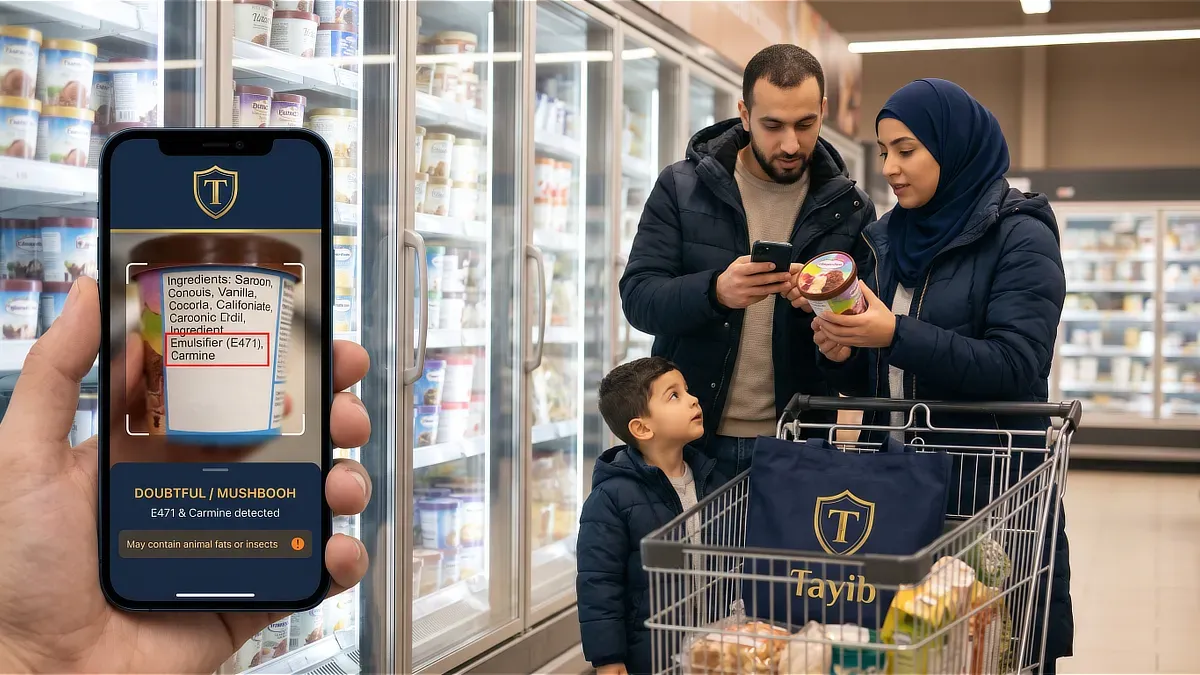
Standing in the supermarket freezer aisle and wondering is ice cream halal? You are not alone.
Here is the truth:
While plain milk and cream are naturally Halal, commercial ice cream is frequently Mushbooh (doubtful) or Haram in Western markets like the USA, UK, and Europe. This happens because brands add animal-derived emulsifiers (E471), insect dyes (E120), and alcohol-based flavor carriers.
In contrast, ice cream produced for the GCC or Southeast Asia is strictly certified Halal. Let us break down exactly what is hiding in your favorite pint.
The Quick Verdict
Ice cream is not automatically Halal. Even simple flavors like vanilla or strawberry often contain hidden animal fats, alcohol flavor carriers, and crushed insect dyes.
Why does this matter?
Where you buy your ice cream matters much more than the brand name on the tub. A pint sold in London or New York uses a completely different recipe than the exact same brand sold in Dubai or Kuala Lumpur.
| Brand | USA / UK (Voluntary Market) | UAE / GCC (ESMA Regulated) | Southeast Asia (JAKIM / BPJPH) | Main Compliance Risk |
|---|---|---|---|---|
| Ben & Jerry’s | Mushbooh / Uncertified | Halal Certified | Halal Certified | E471 source & vanilla ethanol |
| Magnum (Unilever) | Mushbooh / Uncertified | Halal Certified | Halal Certified | E471 in chocolate coating |
| Häagen-Dazs | Mushbooh / Uncertified | Halal Certified | Halal Certified | Trace ethanol in vanilla extract |
| Breyers | Select Flavors Certified | Not Distributed | Not Distributed | Undisclosed E471 sourcing |
The Food Science: 4 Hidden Additives in the Freezer Aisle
Modern ice cream is a complex science project. To keep it cheap and creamy, factories use hidden additives that create major Halal compliance issues.
1. Mono- and Diglycerides of Fatty Acids (E471 / E472)
Have you ever wondered why store-bought ice cream stays so smooth? Manufacturers use E471 and E472 as emulsifiers. These additives blend fat and water together and stop annoying ice crystals from forming.
Here is the problem:
Producers make mono- and diglycerides of fatty acids from either plant oils (like soy or palm) or animal fats (like pork lard or non-Zabiha beef tallow).
Chemically, plant E471 and pork E471 look identical. Western brands rarely print the source on the label. This makes any uncertified ice cream with E471 automatically Mushbooh (doubtful).
2. Trace Ethanol in Vanilla & Flavor Extracts
You might think plain vanilla ice cream is the safest choice in the freezer. Unfortunately, it is one of the biggest traps.
Real vanilla flavor comes from soaking vanilla beans in water and ethyl alcohol. In fact, the U.S. Food and Drug Administration (FDA) requires pure vanilla extract to contain at least 35% alcohol by volume.
There is a big difference between alcoholic drinks (like Rum Raisin, which is strictly Haram) and trace alcohol used to carry flavor. However, the ethanol used in vanilla extract is still a major debate among scholars.
Many Halal certifiers, such as IFANCA , cap trace ethanol at 0.1% in the final product. Gulf standards (GSO 2538) allow up to 0.2% if it comes from non-grape sources and cannot intoxicate you. Without a Halal logo, you cannot know how much alcohol remains in your scoop.
3. Carmine / Cochineal Extract (E120)
Do you love strawberry, raspberry, or cherry ice cream? Check the label for Carmine or Cochineal extract (E120).
Food companies use E120 to give berry ice cream a bright pink or red color without using artificial chemical dyes.
What is E120 made of?
It is made by crushing dried cochineal beetles. Because it comes from insects, there is a strict theological split. E120 is Haram under the Hanafi Madhab, while some Maliki scholars permit it.
4. Gelatin (E441) and Hydrocolloid Thickeners
Most premium ice cream pints use plant-based thickeners like pectin, guar gum, or locust bean gum. These are 100% Halal.
However, cheap soft-serve mixes, frozen yogurt, and novelty tubs with marshmallow swirls or gummy candies frequently use gelatin (E441).
Unless the tub explicitly states “Halal bovine gelatin” or “fish gelatin,” commercial gelatin in the West usually comes from pork skins or non-Halal beef bones.
The Vegan Trap: Why “Plant-Based” Doesn’t Equal Halal
Many Muslim shoppers grab “Dairy-Free” or “Vegan” pints to avoid animal fats like E471 and gelatin. This creates a false sense of security.
Remember this rule:
Vegan food is not always Halal. A vegan label guarantees zero animal tallow or dairy. However, it does not screen for intoxicating liqueurs, rum flavorings, or high levels of ethyl alcohol solvents in vanilla and fruit extracts.
Standing in the Freezer Aisle Second-Guessing the Label?
Don't let confusing E-codes like E471 ruin dessert. Point your phone camera at any ingredient list, and Tayib's live AI scanner decodes hidden animal fats and alcohol carriers in seconds.


The Global Supply Chain: Why Your Ice Cream Changes by Country
Global ice cream brands do not use one single recipe. They change their ingredients based on local laws.
The GCC Gold Standard (UAE / Saudi Arabia)
If you buy ice cream in Dubai, Riyadh, or Doha, you can eat with peace of mind.
The GCC enforces strict rules through the ESMA (UAE.S 2055-1) standard and Saudi Arabia’s ZAD registration system. Every imported tub must have a valid Halal certificate before it touches supermarket shelves.
For example, Unilever Arabia manufactures Halal-certified Magnum, Cornetto, and Carte D’Or products specifically for Middle Eastern shoppers. They use 100% plant-based E471 and alcohol-free flavorings.
Southeast Asia & The BPJPH 2026 Mandate
Southeast Asia holds the strictest Halal food standards in the world. Malaysia’s JAKIM framework requires rigorous factory audits for all dairy imports.
In Indonesia, the strict BPJPH mandate took full legal effect in October 2026. By law, all imported food and dairy must hold an official Halal Product Conformity Report. If a foreign ice cream brand is not certified, it must legally display a large “NON HALAL” warning label on the front of the package.
The Western Market Void (USA, UK, Europe)
In the US, UK, and Europe, Halal certification is completely voluntary.
Multinational giants like Unilever and Froneri rarely certify their standard domestic pints in the West. They swap supply chains constantly to save money. One batch of Ben & Jerry’s or Breyers might use plant-based E471, while the next batch uses animal tallow.
Without a certified logo on the tub, Western shoppers are left guessing.
How to Verify Any Ice Cream Instantly with Tayib
Reading tiny ingredient labels on a freezing cold tub is frustrating.
Many shoppers try to use traditional barcode scanning apps, only to get an “Item Not Found” error. There is a clear reason why static barcode scanners fail.
Barcode apps rely on outdated, crowdsourced databases. When an ice cream brand quietly changes its recipe, the barcode stays the same, giving you false and dangerous information. Worse, barcode apps fail completely when you scan foreign or specialty pints.
Here is how Tayib solves this:
- Live Camera OCR: Tayib does not use barcodes. Simply point your camera at the physical ingredient list. Our AI reads the actual text in real time.
- Additive Decryption: Tayib instantly spots E471, E120, gelatin, and hidden alcohol carriers right on your screen.
- Madhab-Specific Customization: Set your personal Madhab in the app. For example, Tayib will automatically flag E120 (Carmine) as Haram if you follow the Hanafi school.
- 11 Languages: Traveling abroad? Tayib translates and analyzes foreign ingredient labels instantly. It is perfect for checking imported Italian gelato or Japanese matcha pints.
Frequently Asked Questions
Is vanilla ice cream Halal?
Not always. Pure vanilla extract is traditionally extracted using ethyl alcohol as a solvent. While some Islamic scholars allow trace extraction alcohol under 0.1% to 0.2%, uncertified tubs with standard vanilla flavoring remain doubtful (Mushbooh) unless certified.
Is Ben & Jerry's ice cream Halal in the US and UK?
Most standard retail Ben & Jerry's pints in the US and UK are uncertified and considered doubtful. They contain mono- and diglycerides (E471) from undisclosed sources and vanilla flavorings using alcohol solvents. However, Ben & Jerry's sold in the GCC and Southeast Asia is Halal-certified.
Is Magnum ice cream Halal?
Magnum ice cream sold in the UK, USA, and Europe is generally uncertified and uses E471 emulsifiers in both the dairy base and chocolate shell without confirming a plant origin. In contrast, all Magnum products manufactured for and sold in the UAE, GCC, and Southeast Asia are certified Halal.
Is E471 in ice cream always Haram?
No. E471 can be synthesized from plant oils (such as palm or soy) or animal fats (including beef and pork). If the packaging does not specify 'vegetable origin' or carry a trusted Halal certification, its source is unknown and classified as doubtful.
Is strawberry ice cream Halal?
It depends on the coloring agent. Many commercial strawberry and berry ice creams use Carmine or Cochineal (E120), a natural red dye made from insects. E120 is considered Haram by the Hanafi school of thought, though permitted by some Maliki scholars.
Is vegan ice cream automatically Halal?
No. While vegan ice cream guarantees zero animal fats or dairy, it can still contain trace ethyl alcohol used as a flavor solvent, or alcohol-based flavorings like rum, liqueur, or bourbon.
Does soft-serve ice cream contain pork gelatin?
Some commercial soft-serve mixes, frozen yogurt bases, and ice cream tubs containing marshmallow or candy swirls use gelatin (E441) as a stabilizer. Unless specified as Halal bovine or fish gelatin, commercially used gelatin in Western countries is often pork-derived.
Can I eat Häagen-Dazs ice cream?
Flavors containing actual alcohol (like Baileys or Rum Raisin) are strictly Haram. Standard flavors (like Vanilla or Belgian Chocolate) are uncertified in North America due to trace alcohol carriers, but Häagen-Dazs products produced for Malaysia, Indonesia, and GCC markets hold official Halal certifications.
How do I know if an ice cream brand is safe while traveling?
Rather than relying on barcode apps that fail on foreign packaging, use Tayib. Its live OCR camera scans the printed foreign ingredient list in real-time, translating across 11 languages to flag hidden animal fats, gelatin, and alcohol instantly.
Never Guess What's in Your Food Again
Outdated barcode apps leave you stuck on reformulated or imported tubs. Download Tayib to unlock real-time OCR label scanning, customized Madhab preferences, and support across 11 languages.

Written by Tayib
Founder & Halal Food Analyst
Tayib is dedicated to making Halal consumption transparent and stress-free. Through rigorous ingredient analysis, E-number decoding, and direct contact with brands, we help the Muslim community make informed and safe choices every day.
Read our strict verification methodology