November 8, 2026
Is Red Bull Halal? 2026 Hidden Alcohol & Red Dye Risk
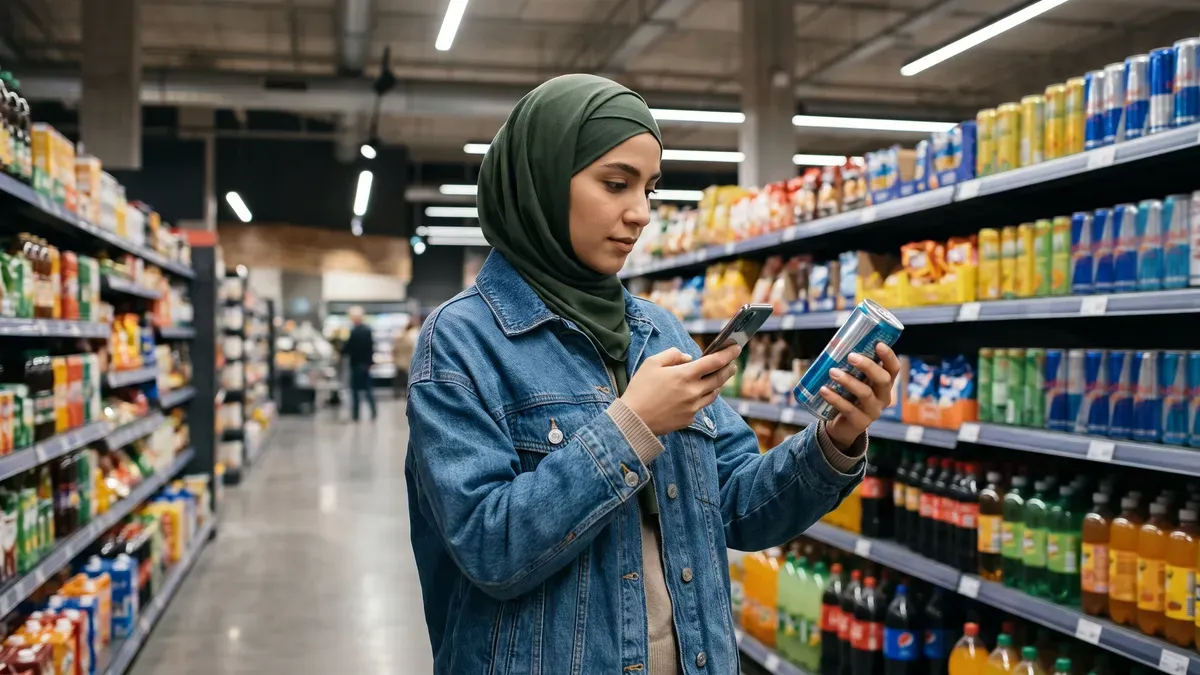
Let us clear up the biggest internet myth right away. Red Bull does not contain bull sperm or ox bile. The taurine inside every can is 100% synthetic, plant-friendly, and made in a laboratory.
However, the final Halal ruling depends on where you buy your can and which flavor you choose. In Western markets, Original Red Bull is Mushbooh (doubtful) due to uncertified ethanol flavor carriers. Certified cans sold in OIC markets like the UAE, Malaysia, and South Africa are Halal, while specific red or pink editions containing E120 Carmine are strictly Haram.
The Quick Verdict
When inspecting the physical label on shelves, you will notice that ingredient disclosures vary by flavor and region. Here is how each version ranks under Islamic dietary law.
| Product Type | Verdict | Key Ingredient |
|---|---|---|
| Original / Sugarfree (Western Markets) | Mushbooh | Synthetic taurine, but relies on uncertified flavor solvents (trace ethanol). |
| Original / Sugarfree (GCC / OIC Certified) | Halal | Audited supply chain certified by ESMA, SFDA, or MJC. |
| Red Edition (Watermelon) / Berry Editions | Haram | Contains E120 (Carmine/Cochineal) derived from crushed scale insects. |
| Coconut & Berry Edition | Mushbooh | Contains E445 stabilizer; glycerol source is not declared plant-derived. |
Decoding the Ingredients: Taurine, E120 Carmine, and Ethanol Solvents
The Taurine Myth
The word taurine comes from the Latin word taurus, which means bull or ox. Scientists first isolated this amino acid from ox bile in 1827. Today, Red Bull GmbH manufactures purely pharmaceutical, synthetic taurine from chemical compounds, making the active stimulant completely vegetarian and Halal.
The E120 Carmine Danger
If you check the back of pink, red, or berry-flavored cans in Europe or North America, you may spot Carmine or Cochineal (listed as E120). Manufacturers make this bright red dye by crushing dried scale insects.
According to the European Food Safety Authority (EFSA) , E120 is a natural food colorant. However, the Hanafi, Shafi’i, and Hanbali schools of thought classify insects (except locusts) as Haram Maitah (unslaughtered dead meat). Only the Maliki madhab permits insect extracts under specific conditions.
If you frequently purchase flavored energy beverages, review our comprehensive investigation on whether E120 carmine is Halal or Haram to understand how insect-derived red colorants are treated under Islamic jurisprudence.
The Flavor Solvent Dilemma
When you read the physical aluminum can in the US or UK, you will see “natural and artificial flavors” at the bottom of the ingredient list. Under FDA regulations, companies do not have to disclose the microscopic solvents used to dissolve these flavor oils.
Beverage makers frequently use ethyl alcohol (ethanol) as an industrial flavor carrier. Under the Hanafi principle of Istihlak (extreme dilution), trace synthetic ethanol that leaves zero intoxicating effect in the final drink is often tolerated. Yet strict certifiers like HMC UK and IFANCA maintain heavy restrictions on any intentional ethanol addition, making uncertified Western cans Mushbooh.
To better understand how microscopic ethanol carriers are evaluated across different madhabs, read our detailed analysis on the 0.5% alcohol rule in energy drinks and fermented beverages before making a purchase.
The E445 Stabilizer Question
In cloudy flavors like the Coconut & Berry Edition, Red Bull uses Glycerol Esters of Wood Rosins (E445) to keep the fruit oils from separating. While wood rosin comes from pine trees, the glycerol backbone can come from either plant oils or animal fat. Without a verified Halal logo on the tin, the exact source of E445 remains doubtful.
Unsure About Your Energy Drink?
Cans change recipes across borders. Use Tayib's live OCR camera to scan ingredients and detect hidden alcohol solvents or E120 instantly.
Regional Recipes: Why UK & US Cans Differ from Gulf & OIC Countries
Red Bull produces most of its core supply in Austria and Switzerland. However, export batches destined for Muslim-majority countries undergo specialized ingredient swaps and third-party audits.
| Region / Market | Manufacturing Hub | Official Halal Certification | Consumer Guidance |
|---|---|---|---|
| United States & Canada | Austria / Switzerland | None (Uncertified) | Mushbooh: Natural flavors not certified ethanol-free. |
| United Kingdom & EU | Austria / Switzerland | None (Uncertified) | Mushbooh: Avoid Red editions with E120 Carmine. |
| GCC (UAE, Saudi Arabia) | Austria (Export Line) | Halal Certified (ECAS / SFDA audited) | Halal: Meets GSO 1926:2009 standards; E120 prohibited. |
| South Africa | Austria / Regional | MJC-SA Halal Certified | Halal: Audited CIP sanitation and certified flavor carriers. |
| Southeast Asia (MY / ID) | Regional Hubs | JAKIM / BPJPH Compliant | Halal: Meets 2026 mandatory import certification rules. |
In Gulf countries like Saudi Arabia and the UAE, imported cans must meet GSO 1926:2009 Halal standards. Export lines replace E120 insect dye with plant-based black carrot juice concentrate or synthetic Red 40, and flavorings use propylene glycol instead of ethanol. In Malaysia, products must satisfy strict JAKIM import guidelines.
You might notice that Saudi Arabia enforces a 100% excise tax on Red Bull and bans its advertising. The Saudi Food and Drug Authority (SFDA) enacted this rule under the Islamic legal principle of preventing physical harm (Dharar) due to high sugar and caffeine levels, not because the ingredients are Haram.
Safe Halal Alternatives to Red Bull
If you live in Europe or North America and want to avoid doubtful flavor carriers, you have several clean alternatives:
- Certified Energy Brands: Look for regional energy drinks carrying an official Halal seal on the physical tin, such as Karabag or imported GCC-spec beverages in ethnic grocery stores.
- Clean-Label Matcha & Yerba Mate: Canned organic yerba mate and green tea infusions rely on brewed botanical leaves rather than lab-made flavor solvents.
- Electrolyte Cold Brews: Black cold brew coffee cans sweetened with raw cane sugar offer a reliable caffeine boost without E-numbers or hidden carriers.
For consumers comparing formulation differences across market leaders, explore our ingredient audit on whether Monster Energy is Halal and if it contains alcohol for a can-by-can breakdown.
Verify Any Red Bull Package with Tayib
Shopping for beverages gets confusing when the exact same brand uses insect dye in London and plant dye in Dubai. Traditional barcode scanning apps frequently fail here because global manufacturers reuse the same EAN/UPC barcodes across different regional batches.
Regional formulation shifts highlight the critical reasons why conventional Halal barcode scanners fail and why AI OCR text scanners provide superior protection when shopping internationally.
Tayib solves this problem by skipping the barcode entirely. When you point your phone camera at the back of a Red Bull can, Tayib’s AI OCR engine reads the actual printed text in 11 languages. It flags E120 Carmine, identifies E445 glycerol risks, and filters the results according to your personal Madhab settings in seconds.
Never Guess Halal Status at the Grocery Store
Barcode databases go out of date, and 'natural flavors' often hide alcohol carriers. Tayib analyzes the physical text on the can in 11 languages with custom Madhab rulings. Shop with certainty.


Frequently Asked Questions
Does Red Bull contain bull sperm or ox bile?
No. This is an urban legend based on the Latin word taurus. Red Bull uses 100% synthetic taurine produced in pharmaceutical laboratories without any animal materials.
Is Original Red Bull Halal in the United States and the United Kingdom?
It is classified as Mushbooh (doubtful). While the active stimulants are synthetic, Red Bull holds no Halal certification in the US or UK, and its proprietary 'natural flavors' may utilize trace ethanol as an industrial carrier solvent.
Why are some flavored Red Bull cans classified as Haram?
Flavored variants such as the Red Edition (Watermelon) and certain berry editions historically utilize E120 (Carmine or Cochineal). E120 is extracted from crushed insects, which the Hanafi, Shafi'i, and Hanbali schools classify as impermissible to consume.
Is Red Bull certified Halal in Muslim countries?
Yes. In the UAE, Saudi Arabia, Malaysia, and other OIC markets, imported Red Bull must pass strict compliance audits by bodies such as ESMA and the SFDA, ensuring the supply chain is certified Halal.
Does the caffeine in Red Bull make it Haram?
No. Islamic scholars agree that caffeine is a permissible stimulant. However, excessive consumption that leads to physical harm violates the broader Quranic principle of preserving bodily health (Tayyib).
What is E445 in Red Bull, and is it permissible?
E445 (Glycerol Esters of Wood Rosins) is a stabilizer found in editions like Coconut & Berry. While wood rosin comes from plants, the glycerol can theoretically originate from animal fats. Without Halal certification, E445 remains Mushbooh.
Can Hanafi Muslims drink Red Bull containing trace ethanol carriers?
Many contemporary Hanafi scholars permit beverages with microscopic, non-intoxicating ethanol from non-grape and non-date sources under the principle of Istihlak (dilution). However, strict certifiers advise avoidance when official certification is absent.

Written by Tayib
Founder & Halal Food Analyst
Tayib is dedicated to making Halal consumption transparent and stress-free. Through rigorous ingredient analysis, E-number decoding, and direct contact with brands, we help the Muslim community make informed and safe choices every day.
Read our strict verification methodology