November 10, 2026
Is Sainsbury's Meat Halal? Safe vs Haram Check (2026)
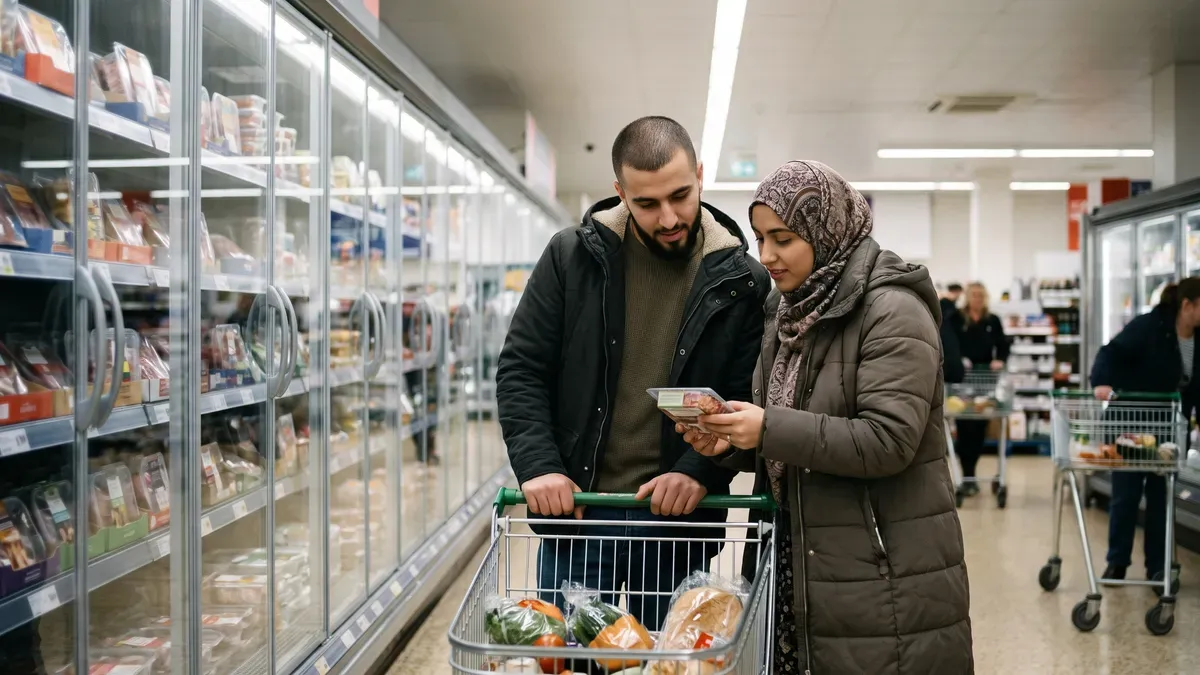
Sainsbury’s standard own-brand fresh meat is not certified Halal. While Sainsbury’s requires all of its standard livestock to be stunned before slaughter, these cuts do not undergo Islamic slaughter rites or dedicated Halal supervision. For Muslim shoppers, all regular Sainsbury’s private-label beef, lamb, and poultry are Haram.
However, Sainsbury’s operates a hybrid model across the UK. In select large superstores with high Muslim demographics, the supermarket stocks third-party certified Halal brands such as Tariq Halal and The Halal Food Company. When inspecting the physical label on shelves, you must look for these specific concession brands rather than standard store packaging.
Shopping across other leading chains? Read our complete Tesco Halal Shopping Guide to learn which supermarket own-brand products are certified safe.
Halal Shopping at Sainsbury’s: The Quick Verdict
Before filling your trolley, you need to know the difference between Sainsbury’s own-brand ranges, certified third-party concessions, and everyday perimeter items. Use this quick reference breakdown to check the status of key store departments.
| Product Type | Verdict | Key Ingredient |
|---|---|---|
| Sainsbury's Own-Brand Fresh Meat | Haram | 100% pre-stunned without Islamic slaughter rites or Halal certification. |
| Tariq Halal Meat (Pre-Packaged) | Halal | Independently certified Halal lines stocked in dedicated chiller sections. |
| The Halal Food Company Chilled Meals | Halal | Full third-party Halal certification with strictly segregated packaging. |
| Sainsbury's In-Store Fresh Bakery | Mushbooh | Uncertified emulsifiers (E471) and dough conditioners (E920) carry animal fat risks. |
| Sainsbury's Confectionery Aisles | Mushbooh | Widespread use of pork gelatin and carmine (E120) across own-brand gummies. |
Fresh Meat Counters vs. Regular Fridge Aisles
Understanding the supply chain at Sainsbury’s requires looking closely at where the meat is placed. Standard butcher counters and regular fridge aisles only hold uncertified meat. Certified Halal meat is strictly kept in separate World Foods or dedicated Halal chiller bays.
Sainsbury’s enforces a strict 100% pre-slaughter stunning policy across its entire private-label supply chain. This causes a major theological dispute among UK Muslims. Certifiers like the Halal Monitoring Committee (HMC) mandate non-stunned, manual slaughter by hand.
On the other hand, the Halal Food Authority (HFA) permits specific reversible stunning methods, provided a Muslim slaughters the animal while reciting the Tasmiyah. Sainsbury’s standard own-brand meat fails both standards because no Islamic rites take place at all. Only third-party brands like Tariq Halal bring verified Halal meat into Sainsbury’s stores.
| Meat Line / Counter | Slaughter Method | Certification Body | Chiller Placement | Verdict |
|---|---|---|---|---|
| Sainsbury’s Fresh British Beef & Lamb | Stunned | None (RSPCA Assured) | General Meat Chiller | Haram |
| Sainsbury’s Fresh British Chicken | Electric Waterbath Stun | None | General Poultry Aisle | Haram |
| Tariq Halal Fresh Cuts | Hand-Slaughtered (HMC/Independent) | Third-Party Halal Certified | World Foods / Halal Chiller | Halal |
| The Halal Food Co. Pre-Cooked Lines | Controlled Halal Process | HFA / Independent Audit | Ethnic Chilled Section | Halal |
| Butcher Service Counter Cuts | Standard UK Slaughter | None | Fresh Service Counter | Haram |
Confused about mechanical slaughter and stunning rules in UK abattoirs? Learn the exact theological differences in our comprehensive guide on Halal vs. Zabiha Slaughter Rules.
Unsure About a Chiller Label?
Don't risk guessing in the supermarket aisles. Use Tayib's live camera scan to verify additives, animal enzymes, and Halal status in seconds.
3 Major Danger Zones in Sainsbury’s Aisles (Bakery, Snacks, Sweets)
While avoiding uncertified fresh meat is straightforward, hidden animal ingredients often lurk in everyday grocery aisles. Watch out for these three high-risk zones during your weekly shop.
Zone 1: Fresh In-Store Bakery
Loose loaves, crusty rolls, and fresh pastries from the in-store bakery rarely have full ingredient lists attached. Many commercial bakeries rely on dough conditioners like L-cysteine (E920), which is frequently made from animal hair or duck feathers.
They also use mono- and diglycerides of fatty acids (E471) as emulsifiers. Unless the physical packaging explicitly states “Suitable for Vegans,” E471 can be sourced from pork fat or non-Halal beef tallow.
Zone 2: Confectionery & Candies
Sainsbury’s own-brand sweets and gummy candies are a major trap for Muslim families. When inspecting the physical label on shelves, you will find pork gelatin listed on the back of many popular store-brand gummies and marshmallows.
Red and pink sweets also frequently use carmine (E120). This red food dye is crushed from cochineal insects, which the vast majority of Islamic scholars rule as Haram. Always look for the official Vegan logo on Sainsbury’s sweets as a safe starting baseline.
Zone 3: Ready Meals and Chilled Gravies
Even if you pick up a vegetable lasagne or a fish pie from the chilled aisle, you must read the fine print. Sainsbury’s Taste the Difference range often uses white wine, sherry, or cider to flavour sauces and gravies.
Many chilled desserts and mousses also rely on bovine gelatin as a cheap thickener. Because this beef gelatin comes from uncertified slaughterhouses, it makes the entire dessert Haram.
Comparing supermarket meat aisles across the UK? Check our detailed Asda Halal Shopping Guide to see how their chilled meat counters and snack selections stack up against Sainsbury’s.
Hidden Gems: Safe Store-Brand Snacks
Shopping at Sainsbury’s is much easier when you know how to spot safe store-brand snacks. Sainsbury’s has expanded its plant-based labeling across hundreds of pantry staples, crisps, and biscuits.
When checking a packet of Sainsbury’s own-label tortilla chips or cookies, flip the box over to the back panel. Look for the official “Suitable for Vegetarians” or “Suitable for Vegans” stamp near the allergy advice box.
Under UK Food Standards Agency (FSA) guidelines, a vegan claim guarantees the product contains no animal rennet, pork lard, or animal-derived E471. Just do a quick two-second check of the ingredient text to ensure no alcohol flavourings are present, and you are good to go.
How to Scan Sainsbury’s Private Labels with Tayib
Relying on old-fashioned barcode scanner apps at Sainsbury’s can easily lead to mistakes. Supermarkets frequently change their suppliers and tweak ingredient recipes to cut costs without changing the barcode on the packet. Because legacy apps rely on static, outdated barcode databases, they often give false Halal approvals on changed recipes.
Wondering why simple barcode lookups often report out-of-date ingredient lists? Discover Why Halal Barcode Scanners Fail and why real-time OCR text recognition is essential.
Tayib solves this problem by ditching outdated barcode lookups entirely. Instead, the Tayib app uses advanced AI Optical Character Recognition (OCR) to read the actual physical text printed on the ingredient label right in front of you.
In seconds, Tayib translates confusing E-numbers and flags hidden alcohol, porcine enzymes, or questionable animal fats in 11 languages. You can also customize the app to match your personal Madhab—whether Hanafi, Shafi’i, Maliki, or Hanbali—to filter complex rulings on animal rennet, shellac, and chemical transformation (istihalah).
Shop Sainsbury's with Complete Peace of Mind
Supermarket formulations change without warning. Tayib scans the live ingredient list on the back of the box—detecting hidden E-numbers, porcine enzymes, and alcohol across 11 languages.


Frequently Asked Questions
Is standard Sainsbury's own-brand chicken Halal?
No. Sainsbury's standard private-label chicken is not certified Halal. While the birds are pre-stunned under UK animal welfare regulations, they do not undergo Islamic slaughter rituals (Dhabihah) or Halal supervisory audits.
Does Sainsbury's sell any Halal meat?
Yes. Sainsbury's stocks independent, certified Halal brands such as Tariq Halal in select larger superstores. These items are clearly marked with Halal certification logos and are kept in dedicated ethnic or world food chillers.
Are Sainsbury's bakery loaves Halal?
Many loose, unpackaged loaves carry a risk of animal-derived emulsifiers like E471 or dough conditioners like E920. Look for packaged loaves explicitly labeled "Suitable for Vegans" or scan the ingredient text using Tayib to confirm plant origins.
Does Sainsbury's sell HMC-certified meat?
Sainsbury's own-brand meats are never HMC-certified because Sainsbury's mandates 100% pre-slaughter stunning. However, select branded concession products stocked in demographic hubs may carry HMC or similar strict manual slaughter accreditations.
How can I tell if a meat package at Sainsbury's is Halal?
Inspect the packaging for an authentic Halal certification logo (such as HFA or an accredited Halal inspection board). If the label merely says "Sainsbury's" without an external certifier seal, it is not Halal.
Are Sainsbury's vegan ready meals automatically Halal?
Not always. While vegan ready meals exclude animal flesh, dairy, and eggs, they may still contain trace alcohol, wine reductions, or unevaporated ethanol flavouring carriers that breach Halal standards.
Why don't all Sainsbury's stores carry Halal meat?
Sainsbury's allocates branded Halal meat lines based on local demographic demand. Superstores in areas like East London, Birmingham, Bradford, and Manchester carry broad selections, while smaller convenience stores rarely stock them.

Written by Tayib
Founder & Halal Food Analyst
Tayib is dedicated to making Halal consumption transparent and stress-free. Through rigorous ingredient analysis, E-number decoding, and direct contact with brands, we help the Muslim community make informed and safe choices every day.
Read our strict verification methodology