November 9, 2026
Is Whole Foods Meat Halal? 2026 Safe vs Haram Audit
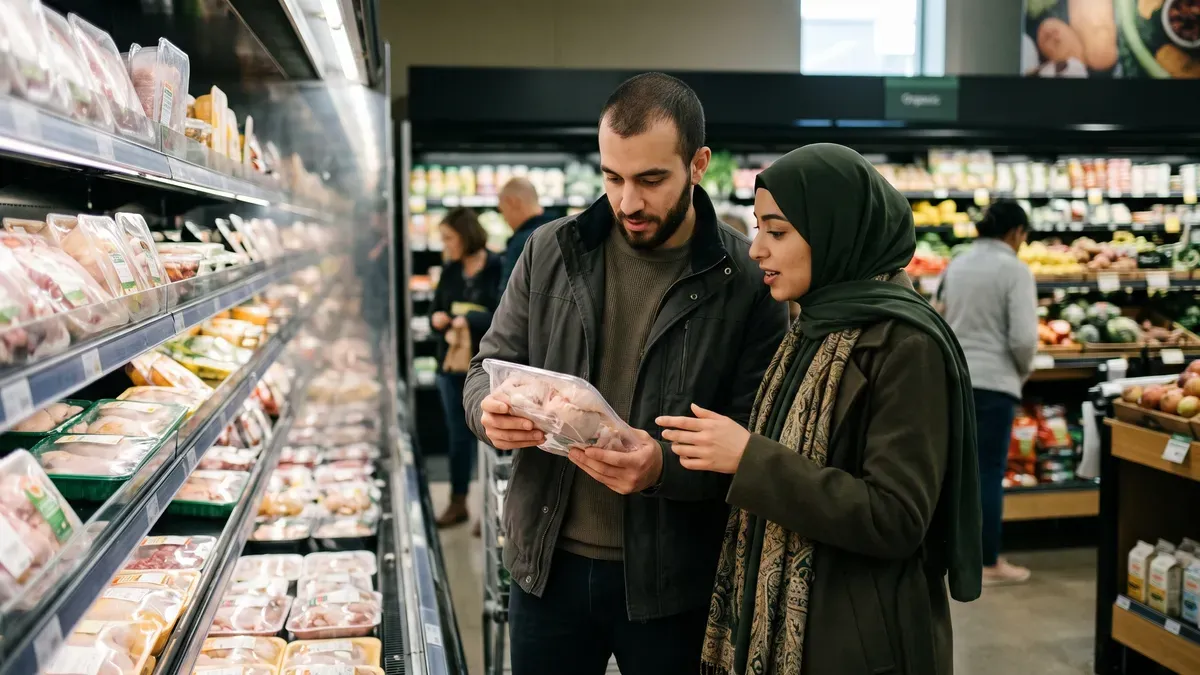
Whole Foods Market is famous for clean ingredients, organic produce, and high animal welfare standards. Many Muslim shoppers assume this commitment to quality makes their meat safe to eat.
The unbranded, fresh meat behind the Whole Foods butcher counter is NOT Halal. Whole Foods mandates pre-slaughter stunning under its Global Animal Partnership (GAP) rules, and its house butcher meat is not slaughtered according to Islamic rites.
However, you do not have to leave the store empty-handed. Whole Foods does carry select third-party pre-packaged meats, such as Crescent Foods and Saffron Road, that are 100% Halal certified.
Halal Shopping at Whole Foods: The Quick Verdict
Whole Foods house-brand and open butcher counter meats are Haram because suppliers use mandatory pre-slaughter stunning without Islamic invocation. However, shoppers can safely buy third-party, factory-sealed meats like Crescent Foods poultry and Saffron Road frozen meals, which carry official Halal certifications on the physical packaging.
| Product Type | Verdict | Key Ingredient |
|---|---|---|
| Butcher Counter Beef & Lamb | Haram | Mandatory pre-slaughter stunning with no Islamic ritual slaughter or Tasmiyah. |
| 365 Brand Fresh Chicken | Haram | Industrial machine slaughtered without Halal oversight or certification. |
| Crescent Foods Packaged Poultry | Halal | Certified hand-slaughtered Zabiha Halal, sealed at an inspected facility. |
| Saffron Road Frozen Entrees | Halal | Certified Halal by IFANCA; fully sealed and protected from store contamination. |
| Hot Bar & Rotisserie Chicken | Haram | Severe cross-contact risk with pork products, shared ovens, and open tongs. |
Looking for a complete grocery breakdown? Read our comprehensive Whole Foods Halal Guide 2026: Safe Meat & Hidden Haram to navigate every aisle safely.
Fresh Meat Counters vs. Regular Fridge Aisles
Walking up to the glass butcher case at Whole Foods can be misleading. The cuts of beef, lamb, and poultry look clean and fresh, but they present two major problems for Muslim consumers.
First is the butcher glass case trap. Unpackaged cuts of beef, lamb, and chicken in the display case are prepared right behind the counter. Store butchers use the same cutting boards, knives, scales, and prep tables to slice pork sausages and uncured bacon. This introduces direct najis (impurity) cross-contamination onto the beef and poultry.
Second is the Global Animal Partnership (GAP) standard. Whole Foods requires all of its fresh meat suppliers to meet strict GAP animal welfare rules. These rules mandate mechanical bolt stunning, electrical waterbath stunning, or gas stunning before slaughter. Because the animals are stunned without a Muslim slaughterer reciting the Tasmiyah, the meat does not meet Zabiha standards.
Curious how industrial processing affects your meat? Learn about commercial slaughterhouse practices in our detailed review of Halal vs. Zabiha: The Truth About Machine Slaughter & Stunning before visiting your local counter.
To find permissible meat, walk past the open butcher counter and check the pre-packaged refrigerated aisles. Here, you will find third-party brands like Crescent Foods. When inspecting the physical label on shelves, you will see a clear “Hand-Slaughtered Zabiha Halal” seal. Because Crescent Foods seals their chicken and beef at a dedicated Halal facility, there is zero risk of cross-contamination inside the grocery store.
Unsure About That Meat Package?
Scan the full ingredient label in seconds with Tayib to detect hidden non-halal additives and cross-contact risks.
3 Major Danger Zones in Whole Foods Aisles
Meat is not the only tricky section in the store. Several prepared food departments carry high risks of hidden Haram ingredients and cross-contact.
1. The Hot Bar & Rotisserie Counter
The Whole Foods hot bar is a high-risk zone for Muslim diners. Even if a dish is labeled vegan or vegetarian, shoppers frequently swap serving tongs and ladles between trays of pork ribs, wine-braised beef, and vegetable sides.
You should also skip the famous Whole Foods rotisserie chicken. These birds are not sourced from Halal suppliers. Worse yet, staff roast them in shared commercial ovens where pork roasts and bacon-wrapped items drip fat across the racks.
Avoid dangerous deli buffet traps by reading our guide on Whole Foods Hot Bar Halal? Hidden Alcohol & Pork 2026 before filling your takeout container.
2. The Bakery & Viral Desserts (Berry Chantilly Cake)
Whole Foods is famous for its bakery, especially the viral Berry Chantilly Cake. When inspecting the physical label on the cake box, you will find vanilla extract listed in the frosting and sponge. By FDA law, pure vanilla extract must contain at least 35% ethanol alcohol by volume as a solvent.
Bakery frostings and glazes also rely on emulsifiers like mono- and diglycerides (E471) and glycerin. Unless the box carries a Kosher or vegan symbol, these fatty acids can come from pork or non-halal beef fat.
3. Bulk Bins and Deli Slicers
Next to the bakery, the deli counter slices roast beef, turkey breast, and cheeses to order. However, deli workers slice artisanal pork meats like prosciutto, salami, and pancetta on those exact same mechanical blades.
Unless you buy factory-sealed deli meat from a certified brand, avoid freshly sliced cold cuts due to direct fat transfer on the slicer blade.
Hidden Gems: Safe Store-Brand Snacks
While the fresh meat under the “365 by Whole Foods Market” brand is Haram, the 365 pantry aisles are packed with safe snacks. Because Whole Foods bans artificial flavors and hydrogenated fats, many of their dry goods use very simple ingredients.
When shopping the center aisles, look for these safe options:
- Organic Raw Nuts & Trail Mixes: Stick to plain roasted nuts and dried fruits. Check the back label on glazed nuts to ensure they do not use shellac or animal glycerin.
- 365 Brand Cheeses: Many 365 block cheeses use microbial or vegetable rennet instead of animal enzymes. Look for a Kosher dairy stamp (like OU-D or OK-D) on the wrapper to confirm the cheese is free of animal rennet.
- Certified Vegan Crackers & Chips: Most 365 pita chips, tortilla chips, and seed crackers carry a “Certified Vegan” logo on the back panel, guaranteeing zero animal fats or pork-based enzymes.
Keep in mind that private-label store brands use different regional suppliers across the country. A box of crackers in New York might use a different recipe than the exact same box in Texas.
How to Scan Whole Foods Private Labels with Tayib
Shopping for store brands like “365 by Whole Foods Market” can be frustrating if you rely on old-school Halal barcode scanner apps. Legacy barcode apps fail because supermarkets change their private-label factories and recipes all the time without changing the barcode number. A static database might tell you a snack is Halal based on last year’s recipe, missing a new alcohol-based flavoring added last month.
Tayib solves this problem by skipping the barcode completely. Instead, the Tayib app uses advanced AI Optical Character Recognition (OCR) to read the actual physical text on the ingredient label right through your phone’s camera.
In seconds, Tayib translates confusing E-numbers like E471, flags hidden alcohol in bakery extracts, and spots animal rennet in gourmet cheeses. Because the app adjusts to your personal Madhab and supports 11 languages, you get an accurate verdict based on the exact package in your hand.
Never Guess at the Grocery Store Again
From Whole Foods meat aisles to viral bakery items, Tayib's live AI camera scans ingredients instantly according to your Madhab.


Frequently Asked Questions
Is the fresh meat behind the Whole Foods butcher counter halal?
No. Whole Foods butcher counter beef, lamb, and chicken are not slaughtered according to Islamic requirements. They also face severe cross-contamination risks from shared cutting surfaces where pork is prepared.
Does Whole Foods sell any halal-certified meat?
Yes, but only pre-packaged brands in the refrigerated or frozen sections. Look for third-party certified brands like Crescent Foods in the fresh poultry section or Saffron Road in the frozen aisle.
Is Whole Foods rotisserie chicken halal?
No. Whole Foods rotisserie chickens are not sourced from halal-slaughtered poultry. They are also cooked in shared commercial ovens alongside non-halal meats and pork products.
Why does Whole Foods animal welfare policy conflict with halal slaughter?
Whole Foods requires all suppliers to meet Global Animal Partnership (GAP) standards, which mandate pre-slaughter electrical or gas stunning. Many strict Islamic authorities do not permit stunning or machine-kill practices.
Are 365 by Whole Foods Market raw chicken and beef halal?
No. The 365 brand meat products are industrially processed for standard U.S. supermarkets. They lack Islamic slaughter supervision, Tasmiyah recitation, and halal certification.
Is the Whole Foods Berry Chantilly Cake halal?
No, it is considered Mushbooh (doubtful). The cake recipe contains vanilla extract prepared with an alcohol carrier, along with mono- and diglycerides (E471) and glycerin from unverified plant or animal sources.
How can I verify if a meat item at Whole Foods is safe?
Check for an authentic third-party Halal certification seal (such as HMS or IFANCA) directly on the sealed package. You can also use the Tayib app to scan the full ingredient list instantly for hidden additives.

Written by Tayib
Founder & Halal Food Analyst
Tayib is dedicated to making Halal consumption transparent and stress-free. Through rigorous ingredient analysis, E-number decoding, and direct contact with brands, we help the Muslim community make informed and safe choices every day.
Read our strict verification methodology