November 9, 2026
Whole Foods Hot Bar Halal? Hidden Alcohol & Pork 2026
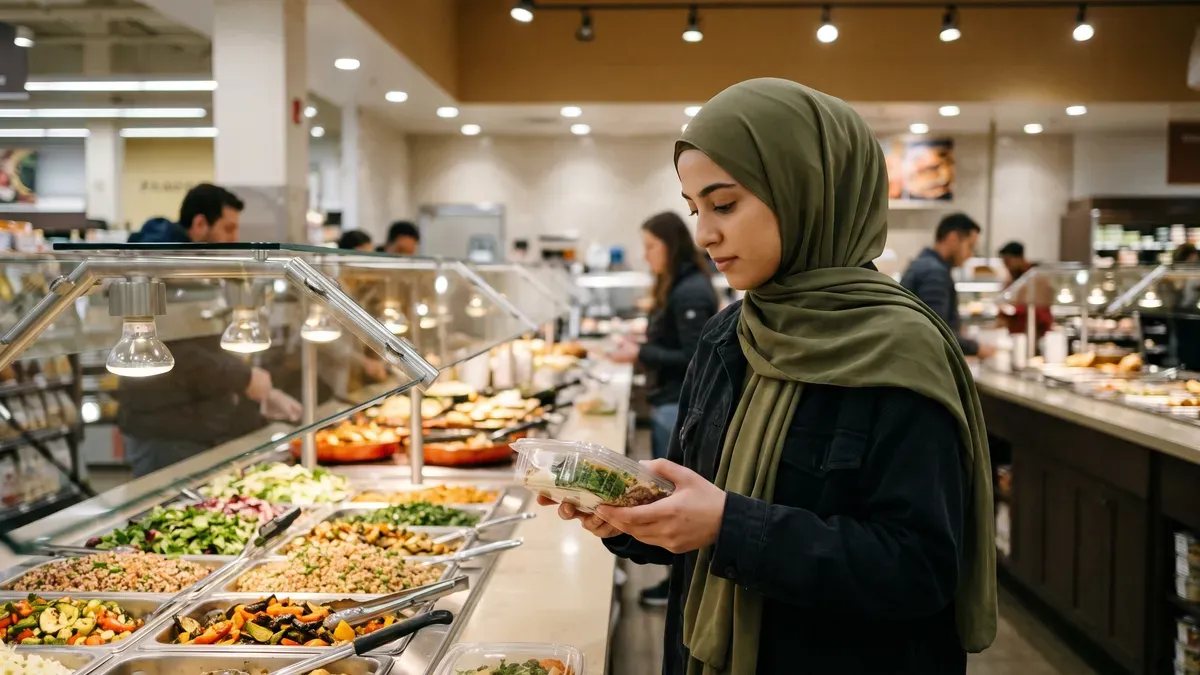
The Whole Foods hot bar is not Halal. None of the meat dishes are Halal-certified, and all poultry and beef come from standard commercial suppliers that use non-Zabiha slaughter methods.
Even vegetarian sides carry a Mushbooh (doubtful) status. Because it is an open self-serve buffet, customers regularly mix up serving tongs between pork dishes, wine-glazed meats, and plain vegetables.
Halal Dining at Whole Foods: The Quick Verdict
When inspecting the physical display placards above the steam tables, you will notice that Whole Foods clearly labels allergens like dairy, wheat, and soy. However, they do not hold Halal certification from bodies like the Islamic Food and Nutrition Council of America (IFANCA) .
Between hidden cooking wines in the sauces and heavy cross-contamination from shared spoons, the hot bar presents major risks for Muslim shoppers. Here is how the most popular hot bar items break down.
Similar cross-contamination issues occur at other major grocers, which we examine closely in our guide on whether Publix deli fried chicken is halal and safe from shared pork fryers.
If you decide to skip the prepared food section and cook raw cuts at home, check our breakdown on Whole Foods butcher counter meat halal certification to avoid cross-contamination risks.
| Product Type | Verdict | Key Ingredient |
|---|---|---|
| Hot Bar Chicken & Beef Entrees | Haram | Sourced from non-Zabiha commercial suppliers with mandatory animal stunning. |
| Breaded Orange Chicken & Glazed Items | Haram | Sauce formulations contain culinary alcohol solvents (such as cooking sake and mirin). |
| Macaroni & Cheese / Creamy Sides | Mushbooh | Potential animal enzymes or microbial rennet ambiguity; high utensil cross-contact risk. |
| Steamed Jasmine Rice & Roasted Veggies | Mushbooh | Ingredients are plant-based but face heavy cross-contamination from customer shared tongs. |
Hot Bar Meat vs. Pre-Packaged Fridge Aisles
Many shoppers assume that because Whole Foods sells Halal items in the grocery aisles, their hot bar uses the same meat. This is a dangerous misconception.
While the frozen and refrigerated aisles often stock certified Zabiha brands like Saffron Road, the hot bar operates on a completely different supply chain. Hot bar meats—including the popular Chicken Tikka Masala and Italian meatballs—are mass-produced in third-party commercial kitchens.
These off-site facilities use standard industrial meat processed with pre-slaughter stunning and mechanical blades. The meat is never blessed or hand-slaughtered according to Islamic law.
Even when meat looks acceptable, industrial processing rules matter; understand the difference between stunning and true Zabiha in our breakdown of Halal vs. Zabiha: The Truth About Machine Slaughter & Stunning.
3 Major Danger Zones at the Hot Bar
Even if you skip the beef and poultry trays, picking out a safe meal from the steam tables is tricky. Three major failure points make the hot bar a minefield for strict Halal diets.
1. Hidden Culinary Alcohol
When reading the tiny print on the sneeze-guard placards, you will find alcohol hiding in unexpected places. Whole Foods chefs and suppliers frequently use wine, beer, and rice wine to flavor sauces and tenderize meats.
For example, their famous Breaded Orange Chicken contains culinary sake (Japanese rice wine) right in the glaze. Beef stews, mushroom gravies, and marinades often rely on red or white wine reductions that do not fully evaporate during cooking.
Alcohol often hides behind savory names in prepared marinades; read about culinary ethanol risks in The “Invisible Alcohol” Epidemic: Why Ethanol is Hiding in Your Vanilla, Soy Sauce, and Mouthwash.
2. Shared Utensils & Splash Contact
Open buffets have zero protection against customer mistakes. During a busy lunch rush, shoppers frequently use the bacon or pork carnitas tongs to grab roasted broccoli or mac and cheese.
In addition, trays sit side-by-side in the heated steam wells. Liquid from non-Halal meat gravies easily splashes over the metal dividers into adjacent vegetarian pans when people scoop their food.
Eating from open buffets requires extreme caution; learn how to identify hidden hazards in our comprehensive guide: The Muslim’s Survival Guide to Eating Out: How to Spot Hidden Haram in “Safe” Restaurant Foods.
3. Off-Site Factory Production
It is easy to think that Whole Foods chefs chop and cook everything fresh in the back kitchen. However, store employees have confirmed on public forums that staples like Chicken Tikka Masala, soups, and vegetable samosas arrive frozen in plastic bags from third-party industrial processors.
These factories handle pork, alcohol, and non-Zabiha meats on shared production lines. Furthermore, fried appetizers like samosas and spring rolls are often reheated in the store’s shared kitchen fryers alongside non-Halal chicken tenders.
Unsure About Prepared Food Labels?
Hot bar scale stickers change daily. Scan the printed ingredients instantly with Tayib to detect hidden wine, pork enzymes, and non-Halal broths in seconds.
Global Store Comparison: Hot Bar Formulations
Whole Foods operates across North America and the United Kingdom. While their quality standards remain similar, local supply chains and certification norms create slight differences in risk levels.
| Product / Hot Bar Station | US Market Status | UK Market Status | Cross-Contamination Risk | Primary Haram Ingredient / Issue |
|---|---|---|---|---|
| Chicken Tikka Masala | Haram | Haram | High (Steam table proximity) | Non-Zabiha factory poultry; uncertified cream base |
| Orange Chicken / Asian Bar | Haram | Haram | High (Shared scoops) | Culinary sake/rice wine used in glaze formulation |
| Macaroni & Cheese | Mushbooh | Mushbooh | Severe (Bacon topping drift) | Dairy enzymes/whey source unverified; shared tongs |
| Vegetable Samosas / Rolls | Mushbooh | Halal-Friendly | Moderate (Deep fryer sharing) | Fried in shared oil with non-Halal meat appetizers |
| Roasted Root Vegetables | Mushbooh | Halal-Friendly | High (Customer tong swap) | Shared butter glazes and airborne meat juices |
In the UK, regulatory oversight from groups like the Halal Monitoring Committee (HMC UK) has made vegetarian enzyme labeling much clearer on store signage. In the US, however, FDA labeling rules allow generic terms like “enzymes” on buffet tags without stating if they come from pigs, calves, or microbes.
Hidden Gems: Safe Store-Brand Hot & Cold Snacks
If you are hungry at Whole Foods, skip the open hot bar and walk over to the sealed grab-and-go coolers. Because these items are pre-packaged in controlled facilities, you avoid the risk of a fellow shopper dropping pork tongs into your lunch.
Look for sealed 365 by Whole Foods Market vegetarian wraps, hummus cups, and cold pasta salads. When checking the physical packaging, look for a Kosher Dairy (KD) or Parve symbol, which guarantees the product is free from pork, shellfish, and meat-dairy mixing.
Just be sure to still check the text for wine vinegars or alcohol-based flavorings. You can also heat up a certified Halal frozen meal from brands like Saffron Road using the microwave in the store’s dining area.
To safely navigate the rest of the grocery aisles and discover which 365 brand cheeses and snacks are permissible, read our complete Whole Foods Halal shopping guide.
How to Scan Whole Foods Prepared Foods with Tayib
Shopping the prepared food coolers and deli counters at Whole Foods exposes a huge flaw in legacy Halal barcode scanner apps. Standard barcode apps rely on static, pre-existing databases of national UPC codes.
When you buy a tub of soup, a deli sandwich, or a cold salad at Whole Foods, the store prints a custom thermal scale sticker based on weight. Legacy barcode apps fail completely on these dynamic in-store barcodes, leaving you with a “Product Not Found” error.
Tayib solves this problem using advanced AI Optical Character Recognition (OCR). Instead of scanning a useless barcode, you simply point your camera at the physical ingredient text printed on the Whole Foods scale sticker or buffet placard.
Tayib reads the actual words in real time across 11 languages. It instantly flags hidden culinary sake, red wine vinegar, animal rennet, and suspicious E-numbers like E471 (mono- and diglycerides), tailoring the final verdict to your specific Madhab.
When buying prepared foods with custom scale stickers, barcode databases fail completely; see why real-time text analysis matters in Why Halal Barcode Scanners Fail (And Why AI OCR Text Scanners Are the Future).
Never Guess at the Grocery Store Again
Legacy barcode apps fail on custom deli labels and prepared foods. Tayib's AI camera scans printed ingredient lists in 11 languages to verify Halal compliance with your preferred Madhab.


Frequently Asked Questions
Is the chicken at the Whole Foods hot bar Halal?
No. The chicken served at the Whole Foods hot bar is sourced from commercial poultry suppliers that do not practice Zabiha slaughter. The meat is subjected to mandatory pre-slaughter stunning and lacks Halal certification.
Can Muslims eat vegetarian dishes from the Whole Foods hot bar?
Vegetarian items do not contain meat, but they remain Mushbooh (doubtful). Customers frequently mix tongs between trays, meaning a vegetable spoon may have touched bacon or non-Halal chicken minutes prior.
Does Whole Foods use wine or alcohol in hot bar recipes?
Yes. Multiple hot bar and prepared food recipes use cooking wine, sake, or beer in glazes and reductions, such as their popular Breaded Orange Chicken which incorporates culinary sake.
Is the Chicken Tikka Masala at Whole Foods Halal?
No. Although Chicken Tikka Masala is a traditional South Asian recipe, Whole Foods sources this dish pre-made from third-party industrial kitchens using standard commercial, non-Halal poultry.
Are the Whole Foods hot bar vegetable samosas safe to eat?
While the filling is vegetarian, samosas are commonly deep-fried in shared oil with non-Halal meat appetizers, and they are handled using the same display trays and serving equipment.
Does Whole Foods sell any certified Halal meat?
Yes, but primarily in the frozen or pre-packaged refrigerated aisles from select third-party brands like Saffron Road. The fresh butcher counter and hot bar rarely carry Halal-certified meats.
How can I verify the ingredients on Whole Foods grab-and-go tubs?
Grab-and-go tubs feature custom thermal scale stickers rather than standard UPC barcodes. Use the Tayib app to scan the printed ingredient text directly to detect animal rennet, gelatin, or hidden alcohol.

Written by Tayib
Founder & Halal Food Analyst
Tayib is dedicated to making Halal consumption transparent and stress-free. Through rigorous ingredient analysis, E-number decoding, and direct contact with brands, we help the Muslim community make informed and safe choices every day.
Read our strict verification methodology